A Call To The Remnant

Scottish Warriors for Christ- http://www.facebook.com/acalltotheremnant

Posts Tagged ‘church institutions’

𝐓𝐇𝐄𝐒𝐄 𝐀𝐑𝐄 𝐓𝐇𝐄 𝐓𝐈𝐌𝐄𝐒 𝐓𝐇𝐀𝐓 𝐓𝐑𝐘 𝐌𝐄𝐍’𝐒 𝐒𝐎𝐔𝐋𝐒

Posted by appolus on July 22, 2026

𝑻𝑯𝑬 𝑳𝑶𝑵𝑮 𝑾𝑰𝑵𝑻𝑬𝑹 𝑶𝑭 𝑫𝑰𝑺𝑪𝑶𝑵𝑻𝑬𝑵𝑻

Thomas Paine wrote the immortal words, “These are the times that try men’s souls,” in December of 1776, when the American cause appeared to be collapsing. Washington’s army was retreating through New Jersey. Enlistments were expiring, men were deserting, and the hope of independence was fading. Paine understood that there are moments in history when a man can no longer hide among the crowd. He must look deeply into his own soul and decide whether that which he professes to believe is truly worth suffering for, standing for, and, if necessary, dying for.

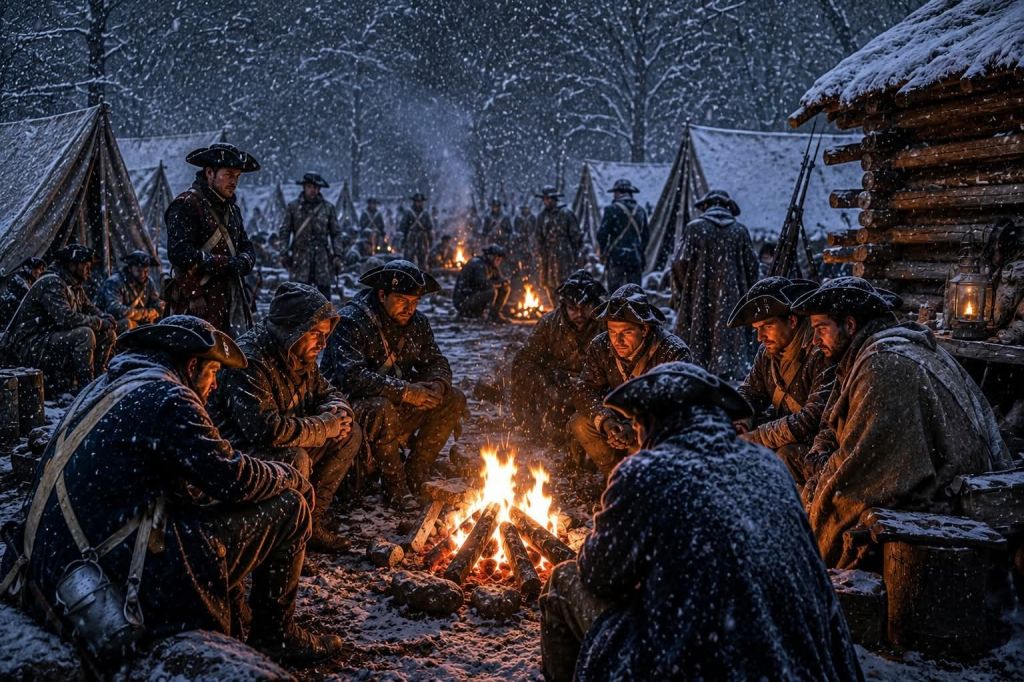
The winter at Valley Forge would come the following year and would embody Paine’s warning in flesh and blood. It was the long, cold winter of discontent. Men were hungry, poorly clothed, and ravaged by sickness. Disease was virulent, despair was everywhere, and death walked freely through the camp. It was there, in the cold and misery, that lofty declarations were tested. The question was no longer whether liberty sounded noble when spoken beside a warm fire. The question was whether liberty was still worth possessing when the price was hunger, disease, loneliness, and the grave.

We saints live in such a time as that.

𝐓𝐑𝐔𝐓𝐇 𝐇𝐀𝐒 𝐅𝐀𝐋𝐋𝐄𝐍 𝐈𝐍 𝐓𝐇𝐄 𝐒𝐓𝐑𝐄𝐄𝐓𝐒

Truth has fallen in the streets. The foundations are being destroyed. That which was once openly condemned is now celebrated, while that which was once regarded as holy is mocked, despised, and increasingly treated as evil. The very language of truth has been corrupted. Words no longer mean what they once meant. Men demand the right to redefine reality itself, and a fearful generation bows before the lie.

The vandals and the Visigoths, figuratively, but only just figuratively, are at the gates, and they have destruction in mind. They do not merely seek a place at the table. They seek to overturn the table, burn the house, tear down its foundations, and condemn everyone who remembers what once stood there.

Yet the greater crisis is not merely outside the Church. The greater crisis is that much of the Church has neither the spiritual strength nor the moral courage to resist it.

𝐓𝐇𝐄 𝐒𝐔𝐍𝐒𝐇𝐈𝐍𝐄 𝐒𝐀𝐈𝐍𝐓

Paine spoke of the summer soldier and the sunshine patriot, the man who loved the cause when the weather was pleasant but disappeared when the struggle became costly. The Church has her own summer Christians and sunshine saints.

They will sing of victory while victory costs them nothing. They will speak of the cross while carefully avoiding every road that leads to Calvary. They will proclaim Christ so long as Christ does not threaten their comfort, their reputation, their employment, their friendships, or their place within respectable society.

But these times will reveal every man.

The sunshine saint will shrink from the reproach of Christ. The summer Christian will compromise with the spirit of the age. The religious spectator will wait for some institution, some pastor, some movement, or some celebrated personality to tell him what to believe and how far he may safely go.

Yet the remnant cannot live by permission from men.

𝐖𝐇𝐄𝐍 𝐓𝐇𝐄 𝐅𝐎𝐔𝐍𝐃𝐀𝐓𝐈𝐎𝐍𝐒 𝐀𝐑𝐄 𝐃𝐄𝐒𝐓𝐑𝐎𝐘𝐄𝐃

“If the foundations are destroyed, what can the righteous do?”

The answer is not that the righteous can do nothing. The answer is found in the following words: “The Lord is in His holy temple, the Lord’s throne is in heaven.”

When every earthly foundation is shaking, the throne of God remains immovable. When truth is cast down in the streets, Christ remains the Truth. When men tear down ancient boundaries, the Word of God remains forever settled in heaven.

The righteous must return to that which cannot be shaken.

We must know God for ourselves. We must hear His voice for ourselves. We must draw water from the wells of salvation for ourselves. We must possess an inward life strong enough to endure when every outward support is removed.

It is no longer enough to attend. It is no longer enough to observe. It is no longer enough to borrow another man’s convictions and repeat another man’s revelation. Every saint must know in whom he has believed.

𝐓𝐇𝐄 𝐂𝐑𝐈𝐒𝐈𝐒 𝐖𝐈𝐓𝐇𝐈𝐍 𝐓𝐇𝐄 𝐂𝐇𝐔𝐑𝐂𝐇

Many Christians have been prepared for comfort, but very few have been prepared for conflict. They have been taught how to attend meetings, support ministries, follow programs, and listen to sermons, but they have not been taught how to stand alone before God.

They have been made dependent upon religious institutions at the very moment when those institutions are proving themselves incapable of meeting the crisis.

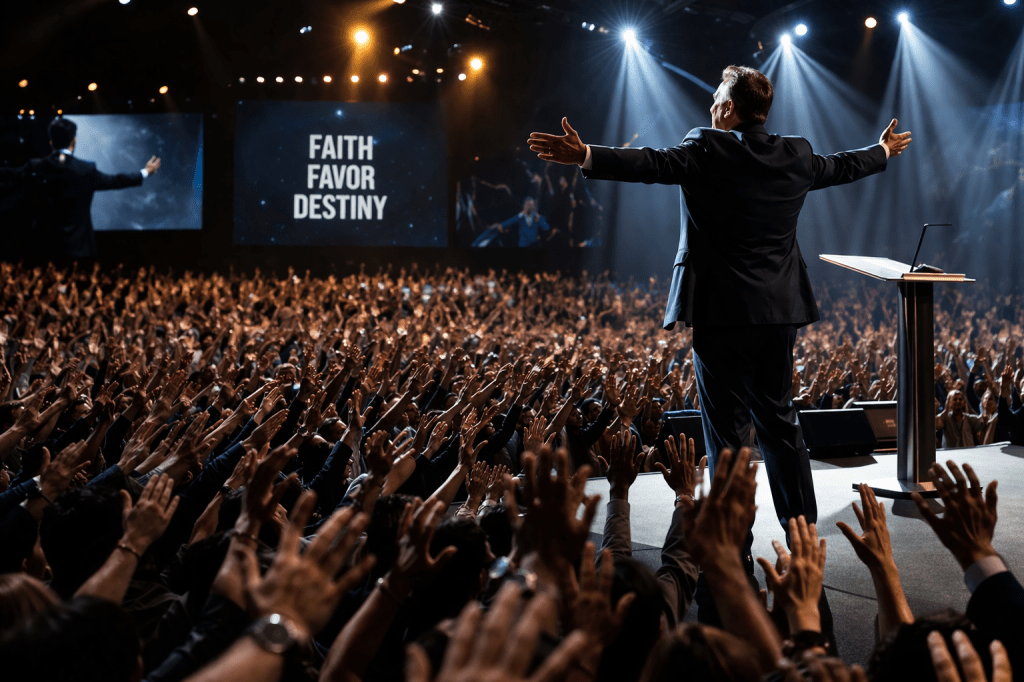
The machinery still operates. The lights still shine. The bands still play. The sermons are still delivered. The calendars remain full. Yet in many places the saints remain weak, passive, undiscerning, and utterly unprepared for the hour that has come upon us.

The veil was torn, yet men have busily sewn it back together. Christ died to create a kingdom of priests, yet the priesthood of all believers has been reduced to the ministry of the few.

This arrangement may survive in peaceful times. It will not survive the winter.

𝐈𝐒 𝐂𝐇𝐑𝐈𝐒𝐓 𝐖𝐎𝐑𝐓𝐇 𝐓𝐇𝐄 𝐂𝐎𝐒𝐓?

There comes a moment when every man must look into his own soul and ask the question that cannot be answered by his pastor, his denomination, his family, or his friends.

Is Christ worth the cost?

Is He worth the loss of reputation?

Is He worth the loss of comfort?

Is He worth the loss of employment?

Is He worth the loss of friends?

Is He worth imprisonment?

Is He worth death?

The early saints answered that question in the arenas, in prisons, in caves, beneath the sword, and upon the flames. They overcame by the blood of the Lamb and by the word of their testimony, and they did not love their lives unto death.

We have sung their hymns, read their stories, and admired their courage. Now the question comes to us.

What do we truly believe?

𝐓𝐇𝐄 𝐑𝐄𝐌𝐍𝐀𝐍𝐓 𝐌𝐔𝐒𝐓 𝐒𝐓𝐀𝐍𝐃

These are the times that reveal the remnant. These are the times when empty profession is separated from living faith. These are the times when the double-minded are swept away, the fearful retreat, and the faithful discover that Christ is sufficient.

The remnant must not retreat into silence. Neither must they place their confidence in politics, institutions, personalities, or movements. We are not called to preserve a religious culture. We are called to bear witness to the truth.

We must speak while truth is falling in the streets.

We must stand while the foundations are being torn down.

We must strengthen the weak hands and make firm the feeble knees.

We must warn those who are asleep.

We must encourage those who are standing alone.

We must become, once again, the royal priesthood Christ purchased with His own blood.

𝐓𝐇𝐄 𝐖𝐈𝐍𝐓𝐄𝐑 𝐖𝐈𝐋𝐋 𝐍𝐎𝐓 𝐋𝐀𝐒𝐓 𝐅𝐎𝐑𝐄𝐕𝐄𝐑

Valley Forge was not the end of the American struggle. The winter passed. The army that entered weak, hungry, divided, and diseased emerged disciplined and prepared for the battles ahead.

And so it shall be with the remnant.

The winter will expose us, but it will also refine us. The cold will reveal whether our faith possesses substance. The darkness will force our roots deeper into Christ. The loss of outward supports will teach us that the Lord Himself is our support.

God is preparing a people who cannot be bought by comfort, frightened by opposition, or silenced by the fear of men.

A people who know their God.

A people who love the truth.

A people who have counted the cost.

A people who have settled the question of whether Christ is worth dying for because they have already discovered that He is worth living for.

𝐀 𝐅𝐈𝐍𝐀𝐋 𝐖𝐎𝐑𝐃

These are not merely dangerous times. They are revealing times. They are separating times. They are purifying times. They are the times that try men’s souls.

The vandals are at the gates. Truth has fallen in the streets. The foundations are being destroyed. Despair and deception are virulent, and the long winter of discontent is upon us.

Yet the throne of God remains unshaken.

Christ is still building His Church.

The Spirit is still gathering the remnant.

Therefore, let every saint look deeply into his own soul and settle the question now.

Will we be summer Christians and sunshine saints, or will we stand with Christ when the cost of standing is everything?

The hour is late.

The winter is here.

The battle is at the gate.

And now we shall discover what we truly believe.
𝐓𝐇𝐄𝐒𝐄 𝐀𝐑𝐄 𝐓𝐇𝐄 𝐓𝐈𝐌𝐄𝐒 𝐓𝐇𝐀𝐓 𝐓𝐑𝐘 𝐌𝐄𝐍’𝐒 𝐒𝐎𝐔𝐋𝐒

𝑻𝑯𝑬 𝑳𝑶𝑵𝑮 𝑾𝑰𝑵𝑻𝑬𝑹 𝑶𝑭 𝑫𝑰𝑺𝑪𝑶𝑵𝑻𝑬𝑵𝑻

Thomas Paine wrote the immortal words, “These are the times that try men’s souls,” in December of 1776, when the American cause appeared to be collapsing. Washington’s army was retreating through New Jersey. Enlistments were expiring, men were deserting, and the hope of independence was fading. Paine understood that there are moments in history when a man can no longer hide among the crowd. He must look deeply into his own soul and decide whether that which he professes to believe is truly worth suffering for, standing for, and, if necessary, dying for.

The winter at Valley Forge would come the following year and would embody Paine’s warning in flesh and blood. It was the long, cold winter of discontent. Men were hungry, poorly clothed, and ravaged by sickness. Disease was virulent, despair was everywhere, and death walked freely through the camp. It was there, in the cold and misery, that lofty declarations were tested. The question was no longer whether liberty sounded noble when spoken beside a warm fire. The question was whether liberty was still worth possessing when the price was hunger, disease, loneliness, and the grave.

We saints live in such a time as that.

𝐓𝐑𝐔𝐓𝐇 𝐇𝐀𝐒 𝐅𝐀𝐋𝐋𝐄𝐍 𝐈𝐍 𝐓𝐇𝐄 𝐒𝐓𝐑𝐄𝐄𝐓𝐒

Truth has fallen in the streets. The foundations are being destroyed. That which was once openly condemned is now celebrated, while that which was once regarded as holy is mocked, despised, and increasingly treated as evil. The very language of truth has been corrupted. Words no longer mean what they once meant. Men demand the right to redefine reality itself, and a fearful generation bows before the lie.

The vandals and the Visigoths, figuratively, but only just figuratively, are at the gates, and they have destruction in mind. They do not merely seek a place at the table. They seek to overturn the table, burn the house, tear down its foundations, and condemn everyone who remembers what once stood there.

Yet the greater crisis is not merely outside the Church. The greater crisis is that much of the Church has neither the spiritual strength nor the moral courage to resist it.

𝐓𝐇𝐄 𝐒𝐔𝐍𝐒𝐇𝐈𝐍𝐄 𝐒𝐀𝐈𝐍𝐓

Paine spoke of the summer soldier and the sunshine patriot, the man who loved the cause when the weather was pleasant but disappeared when the struggle became costly. The Church has her own summer Christians and sunshine saints.

They will sing of victory while victory costs them nothing. They will speak of the cross while carefully avoiding every road that leads to Calvary. They will proclaim Christ so long as Christ does not threaten their comfort, their reputation, their employment, their friendships, or their place within respectable society.

But these times will reveal every man.

The sunshine saint will shrink from the reproach of Christ. The summer Christian will compromise with the spirit of the age. The religious spectator will wait for some institution, some pastor, some movement, or some celebrated personality to tell him what to believe and how far he may safely go.

Yet the remnant cannot live by permission from men.

𝐖𝐇𝐄𝐍 𝐓𝐇𝐄 𝐅𝐎𝐔𝐍𝐃𝐀𝐓𝐈𝐎𝐍𝐒 𝐀𝐑𝐄 𝐃𝐄𝐒𝐓𝐑𝐎𝐘𝐄𝐃

“If the foundations are destroyed, what can the righteous do?”

The answer is not that the righteous can do nothing. The answer is found in the following words: “The Lord is in His holy temple, the Lord’s throne is in heaven.”

When every earthly foundation is shaking, the throne of God remains immovable. When truth is cast down in the streets, Christ remains the Truth. When men tear down ancient boundaries, the Word of God remains forever settled in heaven.

The righteous must return to that which cannot be shaken.

We must know God for ourselves. We must hear His voice for ourselves. We must draw water from the wells of salvation for ourselves. We must possess an inward life strong enough to endure when every outward support is removed.

It is no longer enough to attend. It is no longer enough to observe. It is no longer enough to borrow another man’s convictions and repeat another man’s revelation. Every saint must know in whom he has believed.

𝐓𝐇𝐄 𝐂𝐑𝐈𝐒𝐈𝐒 𝐖𝐈𝐓𝐇𝐈𝐍 𝐓𝐇𝐄 𝐂𝐇𝐔𝐑𝐂𝐇

Many Christians have been prepared for comfort, but very few have been prepared for conflict. They have been taught how to attend meetings, support ministries, follow programs, and listen to sermons, but they have not been taught how to stand alone before God.

They have been made dependent upon religious institutions at the very moment when those institutions are proving themselves incapable of meeting the crisis.

The machinery still operates. The lights still shine. The bands still play. The sermons are still delivered. The calendars remain full. Yet in many places the saints remain weak, passive, undiscerning, and utterly unprepared for the hour that has come upon us.

The veil was torn, yet men have busily sewn it back together. Christ died to create a kingdom of priests, yet the priesthood of all believers has been reduced to the ministry of the few.

This arrangement may survive in peaceful times. It will not survive the winter.

𝐈𝐒 𝐂𝐇𝐑𝐈𝐒𝐓 𝐖𝐎𝐑𝐓𝐇 𝐓𝐇𝐄 𝐂𝐎𝐒𝐓?

There comes a moment when every man must look into his own soul and ask the question that cannot be answered by his pastor, his denomination, his family, or his friends.

Is Christ worth the cost?

Is He worth the loss of reputation?

Is He worth the loss of comfort?

Is He worth the loss of employment?

Is He worth the loss of friends?

Is He worth imprisonment?

Is He worth death?

The early saints answered that question in the arenas, in prisons, in caves, beneath the sword, and upon the flames. They overcame by the blood of the Lamb and by the word of their testimony, and they did not love their lives unto death.

We have sung their hymns, read their stories, and admired their courage. Now the question comes to us.

What do we truly believe?

𝐓𝐇𝐄 𝐑𝐄𝐌𝐍𝐀𝐍𝐓 𝐌𝐔𝐒𝐓 𝐒𝐓𝐀𝐍𝐃

These are the times that reveal the remnant. These are the times when empty profession is separated from living faith. These are the times when the double-minded are swept away, the fearful retreat, and the faithful discover that Christ is sufficient.

The remnant must not retreat into silence. Neither must they place their confidence in politics, institutions, personalities, or movements. We are not called to preserve a religious culture. We are called to bear witness to the truth.

We must speak while truth is falling in the streets.

We must stand while the foundations are being torn down.

We must strengthen the weak hands and make firm the feeble knees.

We must warn those who are asleep.

We must encourage those who are standing alone.

We must become, once again, the royal priesthood Christ purchased with His own blood.

𝐓𝐇𝐄 𝐖𝐈𝐍𝐓𝐄𝐑 𝐖𝐈𝐋𝐋 𝐍𝐎𝐓 𝐋𝐀𝐒𝐓 𝐅𝐎𝐑𝐄𝐕𝐄𝐑

Valley Forge was not the end of the American struggle. The winter passed. The army that entered weak, hungry, divided, and diseased emerged disciplined and prepared for the battles ahead.

And so it shall be with the remnant.

The winter will expose us, but it will also refine us. The cold will reveal whether our faith possesses substance. The darkness will force our roots deeper into Christ. The loss of outward supports will teach us that the Lord Himself is our support.

God is preparing a people who cannot be bought by comfort, frightened by opposition, or silenced by the fear of men.

A people who know their God.

A people who love the truth.

A people who have counted the cost.

A people who have settled the question of whether Christ is worth dying for because they have already discovered that He is worth living for.

𝐀 𝐅𝐈𝐍𝐀𝐋 𝐖𝐎𝐑𝐃

These are not merely dangerous times. They are revealing times. They are separating times. They are purifying times. They are the times that try men’s souls.

The vandals are at the gates. Truth has fallen in the streets. The foundations are being destroyed. Despair and deception are virulent, and the long winter of discontent is upon us.

Yet the throne of God remains unshaken.

Christ is still building His Church.

The Spirit is still gathering the remnant.

Therefore, let every saint look deeply into his own soul and settle the question now.

Will we be summer Christians and sunshine saints, or will we stand with Christ when the cost of standing is everything?

The hour is late.

The winter is here.

The battle is at the gate.

And now we shall discover what we truly believe.

Posted in Uncategorized | Tagged: , , , , , , , , , , , , | 3 Comments »

How Then Shall We Gather

Posted by appolus on July 17, 2026

Over many years I become convinced that many of our assumptions about church life deserve to be re-examined, not in light of tradition, but in light of Scripture.

The New Testament draws a distinction between office and gift. Elders (or overseers) are appointed to oversee the flock, guard sound doctrine, and ensure the health of the church (Acts 20:17, 28; Titus 1:5–9; 1 Timothy 3:1–7; 1 Peter 5:1–3). Deacons serve in practical ways so that those entrusted with spiritual oversight are not diverted from prayer and the ministry of the Word (Acts 6:1–4).

By contrast, Ephesians 4:11–16 and 1 Corinthians 12–14 describe the ministry gifts Christ has given to His Body. The emphasis is not on one man performing nearly all the ministry, but on the whole Body functioning under the headship of Christ. “Each of you has…” (1 Corinthians 14:26) presents a gathering in which believers contribute according to the gifts Christ has distributed, with everything being done decently and in order.

One of the striking features of the New Testament is that the most detailed description of a church gathering is found in 1 Corinthians 14. Paul concludes the chapter by saying, “The things which I write to you are the commandments of the Lord” (1 Corinthians 14:37). If that is so, then the pattern deserves careful attention.

Today, the vast majority of Protestant churches follow a liturgy centred on a single speaker, often leaving little or no opportunity for the participatory ministry described in 1 Corinthians 14. Yet nowhere does the New Testament explicitly replace that pattern with a sermon-centred gathering led by a “senior pastor.” The expression “senior pastor” itself does not appear in Scripture, while elders and deacons are plainly appointed.

This raises an important question: have we gradually exchanged the apostolic pattern for one shaped more by later history than by the Scriptures themselves?

The issue is not whether preaching is biblical—it is. The issue is whether the gathered church is meant to be the ministry of one gifted man, or the orderly ministry of the whole Body under the oversight of faithful elders.

If the New Testament itself has altered the apostolic pattern, then let us gladly submit to that. But if it has not, then surely our responsibility is not to defend tradition, but to return to the Scriptures and allow them to shape the life of Christ’s church.

Posted in Uncategorized | Tagged: , , , , , , , , , , , , , , , , | 2 Comments »

𝙃𝙊𝙒 𝙏𝙃𝙀 𝙋𝙍𝙄𝙀𝙎𝙏𝙃𝙊𝙊𝘿 𝙊𝙁 𝘼𝙇𝙇 𝘽𝙀𝙇𝙄𝙀𝙑𝙀𝙍𝙎 𝙒𝘼𝙎 𝙇𝙊𝙎𝙏

Posted by appolus on July 10, 2026

The one man system, over time, has largely shut down the functioning of the body and quenched the participation of the saints. When one man is expected to do all the preaching, all the leading, all the ministering, and all the hearing from God on behalf of everyone else, the rest of the body inevitably becomes passive. 𝗧𝗵𝗲 𝗽𝗿𝗶𝗲𝘀𝘁𝗵𝗼𝗼𝗱 𝗼𝗳 𝗮𝗹𝗹 𝗯𝗲𝗹𝗶𝗲𝘃𝗲𝗿𝘀 𝘀𝗹𝗼𝘄𝗹𝘆 𝗴𝗶𝘃𝗲𝘀 𝘄𝗮𝘆 𝘁𝗼 𝗮 𝗰𝗹𝗲𝗿𝗴𝘆 𝗮𝗻𝗱 𝗹𝗮𝗶𝘁𝘆 𝘀𝘆𝘀𝘁𝗲𝗺 𝘁𝗵𝗮𝘁 𝗶𝘀 𝗳𝗼𝗿𝗲𝗶𝗴𝗻 𝘁𝗼 𝘁𝗵𝗲 𝘀𝗽𝗶𝗿𝗶𝘁 𝗼𝗳 𝘁𝗵𝗲 𝗡𝗲𝘄 𝗧𝗲𝘀𝘁𝗮𝗺𝗲𝗻𝘁.

But the responsibility does not lie there alone.

Many among the congregation have become content with such an arrangement. They want to attend for an hour, tick the religious box, and then return to their lives until the following week.𝗟𝗶𝗸𝗲 𝗜𝘀𝗿𝗮𝗲𝗹 𝗼𝗳 𝗼𝗹𝗱, 𝘁𝗵𝗲𝘆 𝗱𝗲𝘀𝗶𝗿𝗲 𝗮 𝗽𝗲𝗿𝘀𝗼𝗻𝗮𝗹 𝗠𝗼𝘀𝗲𝘀. They would rather someone else ascend the mountain, someone else hear from God, and someone else bring back the word.

Yet this was never God’s intention.

𝗘𝘃𝗲𝗿𝘆 𝗯𝗲𝗹𝗶𝗲𝘃𝗲𝗿 𝗵𝗮𝘀 𝗮𝗰𝗰𝗲𝘀𝘀 𝘁𝗼 𝘁𝗵𝗲 𝘁𝗵𝗿𝗼𝗻𝗲 𝗼𝗳 𝗴𝗿𝗮𝗰𝗲.Every saint is called to seek the Lord for himself. Every member should be daily gathering manna, receiving some fresh word, some fresh insight, some encouragement from the Lord that could be shared for the edification of others. We are told to always be ready. But readiness implies preparation, pursuit, and personal communion with Christ.

Thus the problem is multifaceted. There are systems that have fostered passivity, and there are people who have willingly embraced it because it demands less of them.

And then there are the few.

There are always the few.

There are those who sit quietly among the congregation, year after year, with an increasing sense that something is missing. They cannot fully articulate it at first, but deep within they know that the biblical pattern has been lost. They know there must be more than this. They know that the body of Christ was never meant to be a gathering of spectators watching a few perform.

Eventually, many of these saints can bear it no longer. 𝗧𝗵𝗲𝘆 𝗹𝗲𝗮𝘃𝗲, 𝗻𝗼𝘁 𝗯𝗲𝗰𝗮𝘂𝘀𝗲 𝘁𝗵𝗲𝘆 𝗱𝗲𝘀𝗽𝗶𝘀𝗲 𝘁𝗵𝗲 𝗖𝗵𝘂𝗿𝗰𝗵, 𝗯𝘂𝘁 𝗯𝗲𝗰𝗮𝘂𝘀𝗲 𝘁𝗵𝗲𝘆 𝗹𝗼𝘃𝗲 𝗵𝗲𝗿 𝘁𝗼𝗼 𝗺𝘂𝗰𝗵 𝘁𝗼 𝘀𝗲𝘁𝘁𝗹𝗲 𝗳𝗼𝗿 𝗮 𝘀𝘂𝗯𝘀𝘁𝗶𝘁𝘂𝘁𝗲.They go searching for that which they know in their hearts to be true, a gathering where Christ is central, where every member can function, where spiritual gifts are exercised, where fellowship is genuine, and where the Lord Himself is free to lead His people.

For deep calls unto deep, and 𝗼𝗻𝗰𝗲 𝗮 𝗯𝗲𝗹𝗶𝗲𝘃𝗲𝗿 𝗵𝗮𝘀 𝘁𝗮𝘀𝘁𝗲𝗱 𝘀𝗼𝗺𝗲𝘁𝗵𝗶𝗻𝗴 𝗼𝗳 𝘁𝗵𝗲 𝗱𝗲𝗽𝘁𝗵𝘀 𝗼𝗳 𝗖𝗵𝗿𝗶𝘀𝘁, 𝗺𝗲𝗿𝗲 𝗿𝗲𝗹𝗶𝗴𝗶𝗼𝘂𝘀 𝗿𝗼𝘂𝘁𝗶𝗻𝗲 𝗰𝗮𝗻 𝗻𝗼 𝗹𝗼𝗻𝗴𝗲𝗿 𝘀𝗮𝘁𝗶𝘀𝗳𝘆 𝘁𝗵𝗲 𝘀𝗼𝘂𝗹.

Posted in Uncategorized | Tagged: , , , , , , , , , , | 3 Comments »

EXALTING THE MOST EMINENT APOSTLES

Posted by appolus on April 4, 2026

EXALTING THE MOST EMINENT APOSTLES

When Paul spoke of the “most eminent apostles,” he was not honoring them. He was exposing them. His words were edged with holy sarcasm. He was tearing down men who had exalted themselves, men who drew disciples after their own name, men who clothed pride in the language of Christ.

So ask yourself plainly:Who would Paul call “super apostles” today? (hyperlian apostolon) 2 Cor 11:5

Who, in our own time, has taken to themselves titles of authority, power, and spiritual supremacy? Who has stood before multitudes and presented themselves not merely as servants of Christ, but as the voice to be obeyed, the authority not to be questioned?

These are not outsiders.
Not pagans.
Not those who openly reject Christ.

These are men who speak His name.
Men who preach in His name.
Men who build vast followings under His banner.

And yet, like those in Corinth, they exalt themselves.

They boast in power.
They boast in revelation.
They boast in influence, in miracles, in numbers.
They draw attention to themselves, and in doing so, they rob Jesus of His preeminence and take that preeminence for themselves. You will never hear them boasting of their infirmities. They wouldn’t do it and their audience dont want to hear that.

Paul would not be impressed.

For he said, “Though we walk in the flesh, we do not war according to the flesh.”
His weapons were not carnal. They were not built on personality, persuasion, or platform. They were mighty in God, for pulling down strongholds.

And what were those strongholds?

Arguments.
Prideful reasonings.
Every high thing that exalts itself against the knowledge of God.

These men, then and now, construct systems of thought and authority that rise up, not against religion in general, but against the true knowledge of Christ. They speak of Him, yet elevate themselves. His name is invoked only so their own name can be elevated.

This is why Paul says:
“Bringing every thought into captivity to the obedience of Christ.”

Not to a man.
Not to a movement.
Not to a personality.

To Christ.

These leaders exercise enormous influence. Hundreds of thousands, even millions, sit under them. Their words shape thinking, their authority directs lives.

But we are without excuse.

We have the Spirit of God.
We have the Word of God.

And we are commanded to take every thought captive.

Every sermon.
Every claim.
Every display of power.
Every declaration of authority.

All must be brought under Christ.

Paul refused to compete with these men on their terms.
He would not boast in greatness.

Instead, he says, “I will boast in the things which concern my infirmities.”

Weakness.
Suffering.
Dependence on God.

That is the mark of a true servant.

So the question is not merely who these men are.

The question is this:

Will we recognize the difference?

Will we discern between those who exalt Christ, and those who exalt themselves in His name?

And will we take every thought captive,

or will we ourselves be taken captive?

Posted in Charismatic, Christian, Christianity, Daily devotional, Devotions, Jesus, remnant church, the crucified life, the deeper life, the gospel, the remnant, The State of the Chuch and Manifest presence, the state of the church, theology | Tagged: , , , , , , , , | 2 Comments »

Separation of the wheat from the tares.

Posted by appolus on February 19, 2026

We stand in a time when the Lord’s description of the harvest is no longer theoretical, but increasingly observable, to the point that what once lay hidden within the field can now be discerned as the age moves toward its consummation.


The Lord did not frame the close of the age as a single moment, but as a harvest season, as He Himself declared when opening the parable of the field [Matthew 13:24].


A closing span in which what has long grown together can no longer conceal its nature, for the harvest, He said, is the end of the age [Matthew 13:39].


When the grain reaches fullness, weight comes upon the head of the true wheat. It bows, heavy with formed life, while the tare, light and fruitless, remains upright, exposed by its own barrenness.


This is why there must be a period of unveiling. The distinction, once hidden in the green blade, becomes undeniable in the ripened field, just as He taught that both must grow together until the harvest [Matthew 13:30].


What could not safely be touched in the early growth can now be handled without harm to the wheat, because maturity has made separation just, visible, and irreversible.
So within the synteleia tou aiōnos (Matthew 13:39), the consummation of the age, there unfolds a measured work of exposure and removal.


It is not haste, but precision. Not impulse, but ripeness that governs the reaping.
The tares are taken from among the wheat because their habitation was never separate, reflecting His own words that the enemy sowed them among the wheat while men slept [Matthew 13:25].


They shared the same soil, the same rain, the same sun, yet bore no grain.
And when the reapers move, they do so in a window of divine timing, for He said the reapers are the angels sent forth at the close of the age [Matthew 13:39–41].


In that solemn interval, the uprightness of the tare becomes its own testimony, and the harvest, long foretold, proceeds without injury to the wheat, fulfilling His declaration that all things that offend would be gathered out of His kingdom [Matthew 13:41].


And in an actual field, as the season turns and the wind moves across the ripened grain, another distinction appears.


The wheat does not only bow from weight, it moves differently.


When the gusts come, the true wheat sways in unified rhythm, heavy heads yielding, bending without breaking, the whole field rolling like waves of gold.


But the tares, stiffer and lighter, resist the movement. They jut upward, visually discordant, unable to flow with the humbled harvest around them, a living contrast between fruitfulness and barrenness.
Farmers have long known that near reaping time, the mixed field reveals itself not merely by fruit, but by motion, posture, and response to pressure.


And so too in the closing span of this age, when the winds of testing, exposure, and judgment begin to blow across the house of God, ministries once indistinguishable from the surrounding wheat find themselves revealed by how they stand, echoing the apostolic warning that judgment must begin at the house of God [1 Peter 4:17].


The recent unravelings surrounding International House of Prayer Kansas City and controversies touching streams connected to Bethel Church have, for many, felt like that late season wind moving across the field.


Not creating what was hidden, but revealing what maturity and pressure made visible.
For the first labor of the harvest is not the gentle gathering of the wheat, but the careful and deliberate removal of the tares from among it.


Separation is the primary work.
For they did not grow in distant fields, but intertwined in the same soil, their roots wrapped together beneath the surface, their blades indistinguishable in the early season.
And so when the harvest begins, the more exacting task comes first, just as the Lord instructed, gather the tares first and bind them [Matthew 13:30].


The tares must be identified, drawn out, and gathered away with precision, lest the wheat be harmed in the process.
It is a judicial work before it is a restorative one, a clearing of the field before the securing of the grain.


Only when that difficult labor has been sufficiently accomplished does the harvest of the wheat proceed with swiftness and clarity.
For once the choking growth has been removed, the bowed heads stand unobstructed, ready for the reaper’s hand.


Then the work becomes one of gathering rather than separating, of bringing in rather than casting out, fulfilling His promise that the righteous would be gathered into His barn [Matthew 13:30].


The barn awaits what the field has produced, and the weight of the wheat, once hidden among the tares, is now brought safely home.
The paradigm shift has taken place in the world.


Thus the parable and the apostolic warning converge, revealing that the exposure of the tares is not reserved for a distant day, but is taking place even now.


What was planted in secrecy is being uncovered in the present hour.
The likeness that once concealed is breaking down, and the field itself is bearing witness to the difference.


For the harvest is advancing, the separation is underway, and the righteous stand on the threshold of that moment when they will shine forth as the sun in the kingdom of their Father [Matthew 13:43].

Posted in Christian, christian blog, christian living, Christianity, Church history, Counterfeit Jesus, Daily devotional, Devotions, discernment, faith, false prophecy, False Prophets, false teachers, Greedy Shepherds, Jesus, leaving the church, New Apostolic Reformation, new wineskins, prophetic movement, prosperity gospel, remnant church, revival, Spiritual warfare, testimony, the crucified life, the deeper life, the gospel, the persectuted church, The presence of God, the remnant, The State of the Chuch and Manifest presence, the state of the church | Tagged: , , , , , , , , , , , , , , , , , | 5 Comments »

Church attendance is not Discipleship.

Posted by appolus on August 25, 2024

Some poor deluded folks think that by attending a church they are being disciples. Very sad. I’ve known disciples who attend a church, I’ve known disciples who gather together in small groups, I’ve even known disciples who meet just “where two or three are gathered,” but I’ve known very few disciples. They are the few. They are the remnant. Just as the Lord said it would be. The vast majority I’ve known are church goers, which is a world apart from disciples……bro Frank.

Charles Simeon 1759-1836 wrote…………

Isaiah 29:13, “The Lord says: These people come near to Me with their mouth and honor Me with their lips, but their hearts are far from Me!”

In our church services, we go through all the external bodily motions; but as to the prostration of the soul, we are for the most part oblivious and unconcerned. We think that we have done our duty to God, if we have gone through the appointed external rituals, though our heart has not accorded with the body in any part of the service. In truth, our services have been hypocritical throughout.

Had a stranger come into one of our church services, and overheard our glowing praises, and our solemn confessions, petitions, and thanksgivings–he would have supposed that we were the most humble, spiritual, and devout people in the universe!

But had he been privy to the real state of our hearts–then how little would he have seen:
of earnest ardor in our praises,
or of honest humiliation in our confessions,
or of sincere fervor in our petitions,
or of genuine gratitude in our thanksgivings!

He would see that the state of our hearts indicated that we felt nothing, and meant nothing–at the very time that we professed to mean so much and feel so much!

For the most part, he would have seen that the whole of our service was only a solemn mockery; that instead of being genuine worshipers of our majestic and holy God–for the most part, we were but insincere hypocrites!

Let me ask, in the name of God Himself: What reason you can have to think that God would accept such services as these?

If, indeed, God were like ourselves, and could see only the outward appearance, then we might hope that, being deceived by us–He would be pleased with us.

But when we bear in mind, that the omniscient God knows . . .
our every secret thought,
our every secret desire,
our every secret motive,
and that He perfectly searches our heart, and knows our thoughts–then we must be sure that our very services are an abomination in His sight!

“Isaiah was right when he prophesied about you hypocrites; as it is written: These people honor me with their lips, but their hearts are far from me! They worship Me in vain.” Mark 7:6, 7

J.C. Ryle: In all our Christian duties, whether giving or praying, the great thing to be kept in mind, is that we have a heart-searching and all-knowing God! Everything like mere formal worship, is abominable and worthless in God’s sight. The one thing which His all-seeing eye looks at, is the nature of our motives, and the state of our hearts!

“Serve Him with a whole heart and a willing mind; for the Lord searches all hearts, and understands every intent of the thoughts!” 1 Chronicles 28:9

Posted in Christian, christian blog, christian living, Christianity, Church history, churches, controlling churches | Tagged: , , , , , , , , , , | 6 Comments »

The narrow gate (part 2) Martin J Collison

Posted by appolus on September 21, 2013

THE CURRENT “INSTITUTIONALISED” EXPRESSIONS OF CHRISTIANITY

Therefore, to start at the “top” so to speak, the current church “institutions” within the Evangelical / Pentecostal / Charismatic systems are “led” by a group of humans, just as you and I are. Entirely susceptible to being taken captive by error. Capable of “cherry-picking” when it comes to truth. In addition, as human beings we are all entirely susceptible to patterns of behaviour which are not necessarily inspired by the Holy Spirit or ordained by God. Even if the claim is made that they are this is not necessarily the case.

Much of the “follow the group” behaviour and succumbing to desires to “fit in” are entirely human traits. In this I mean they derive from the flesh. Any secular psychologist or sociologist would identify these traits as being prevalent in any group of humans. The fact that we may call ourselves a “church” does not alter these human characteristics. It is the flesh again. We certainly cannot claim that we have arrived at being “the church” or Jesus would have returned by now.

Read the rest of this entry »

Posted in Christian, christian living, Christianity, church of scotland, end times, Jesus, pentecostal, revival, the remnant, the state of the church, theology | Tagged: , | 8 Comments »