A Call To The Remnant

Scottish Warriors for Christ- http://www.facebook.com/acalltotheremnant

Posts Tagged ‘Cultural Christianity’

𝗧𝗛𝗘 𝗖𝗥𝗢𝗦𝗦 𝗔𝗡𝗗 𝗧𝗛𝗘 𝗦𝗪𝗢𝗥𝗗!𝗔 𝗗𝗜𝗦𝗧𝗜𝗡𝗖𝗧𝗜𝗢𝗡𝗧𝗛𝗘 𝗖𝗛𝗨𝗥𝗖𝗛 𝗠𝗨𝗦𝗧 𝗡𝗘𝗩𝗘𝗥 𝗟𝗢𝗦𝗘

Posted by appolus on July 28, 2026

Whether you admire President Trump or oppose him, whether you love America or are deeply critical of her, Christians must be careful not to fall into one of Satan’s oldest snares. The author of confusion delights in blurring the distinctions that God Himself has established. He is the father of lies, the accuser of the brethren, the sophister who twists truth just enough to make error appear righteous. He sets man against man, nation against nation, and even Christian against Christian, all while disguising confusion as spiritual discernment.

One of the greatest confusions of our day is the merging of the Gospel of Jesus Christ with the responsibilities God has given to civil government. Once those two are blended together, both become distorted.

Jesus commanded His disciples to love their enemies, bless those who curse them, turn the other cheek, and overcome evil with good. Those commands reveal the character of Christ’s followers and the nature of His Kingdom. They were never given as a blueprint for civil government.

Scripture makes this distinction plainly. In Romans 13, Paul says the governing authority “does not bear the sword in vain,” but is “the minister of God, an avenger to execute wrath upon him that does evil.” The very sword Christ forbade Peter to use in defending Him is the same sword God entrusts to civil rulers for the restraint of evil. There is no contradiction. There are simply two different callings.

Peter reached for the sword to prevent the Cross. Jesus rebuked him because redemption would not come through violence but through the sacrifice of the Lamb. That moment cannot honestly be turned into a universal prohibition against every lawful use of force by every civil authority. If it were, Romans 13 could never have been written.

Nor should we emphasize one aspect of Christ while neglecting another. Revelation presents the Lamb who was slain, but it also presents the returning King who judges the nations in righteousness. The Lion conquers because He first became the Lamb. The same Christ who died for sinners will one day judge the living and the dead. His mercy and His justice are never in conflict.

The Cross reveals God’s astonishing love toward His enemies by providing salvation through His Son. Yet the same Scriptures declare that those who reject that salvation will face His righteous judgment. Mercy and justice meet perfectly in the character of God.

History itself reminds us why God ordained civil government. Had the nations refused to oppose Hitler, the Holocaust would have continued unchecked. Had governments stood aside against ISIS, countless more innocent people would have been slaughtered or enslaved. Likewise, if a regime such as Iran’s wages aggression against its neighbors, governments do not sin by seeking to restrain that evil. Government was never commissioned to save men’s souls. It was commissioned to restrain evil in a fallen world.

War is always tragic, and Christians should never celebrate it. During the Second World War an estimated 1.8 to 3 million German civilians died through bombing, displacement, starvation, and the chaos of war. Every one of those lives mattered before God. Yet would anyone seriously argue that Winston Churchill or Franklin D. Roosevelt were guilty of genocide? Of course not. They were not seeking the extermination of the German people. They were leading nations against a regime that was itself carrying out genocide on an unprecedented scale. There is a profound moral difference between intentionally exterminating a people and the tragic loss of civilian life while defeating those who are committing such evil.

The church certainly has a prophetic responsibility to call governments to justice, righteousness, and accountability before God. But it must never confuse its ministry of reconciliation with the ministry of justice entrusted to civil rulers. Christ gave His Church the Gospel, not the sword. God gave governments the sword, not the Gospel.

The Kingdom of God is not advanced by military victories, political parties, or national greatness. It advances one redeemed heart at a time through the preaching of Christ crucified and risen. Yet that glorious truth does not require us to deny the separate sphere in which God has ordained civil authority to restrain evil and protect the innocent.

The devil delights in collapsing these distinctions. If he cannot persuade the Church to abandon the Gospel, he will entangle it in endless political confusion until believers can no longer distinguish between the mission of Christ and the responsibilities of Caesar. Some will baptize politics with Christianity. Others will condemn every exercise of civil authority by appealing to commands that were never given to governments. Both errors spring from the same deception.

The Cross reconciles sinners to God. The sword restrains evil in a fallen world. Confuse the two, and both the Gospel and God’s purpose for civil government become distorted.

Our calling is not first to defend a nation, nor first to condemn one. It is to exalt Christ, proclaim His Gospel faithfully, and refuse the subtle deceptions of the evil one, who is forever seeking to mix what God has separated. The Church must remain the Church, governments must remain governments, and Christ alone must remain Lord over both.
Posted in Uncategorized | Tagged: , , , , , , , | Leave a Comment »

How Then Shall We Gather

Posted by appolus on July 17, 2026

Over many years I become convinced that many of our assumptions about church life deserve to be re-examined, not in light of tradition, but in light of Scripture.

The New Testament draws a distinction between office and gift. Elders (or overseers) are appointed to oversee the flock, guard sound doctrine, and ensure the health of the church (Acts 20:17, 28; Titus 1:5–9; 1 Timothy 3:1–7; 1 Peter 5:1–3). Deacons serve in practical ways so that those entrusted with spiritual oversight are not diverted from prayer and the ministry of the Word (Acts 6:1–4).

By contrast, Ephesians 4:11–16 and 1 Corinthians 12–14 describe the ministry gifts Christ has given to His Body. The emphasis is not on one man performing nearly all the ministry, but on the whole Body functioning under the headship of Christ. “Each of you has…” (1 Corinthians 14:26) presents a gathering in which believers contribute according to the gifts Christ has distributed, with everything being done decently and in order.

One of the striking features of the New Testament is that the most detailed description of a church gathering is found in 1 Corinthians 14. Paul concludes the chapter by saying, “The things which I write to you are the commandments of the Lord” (1 Corinthians 14:37). If that is so, then the pattern deserves careful attention.

Today, the vast majority of Protestant churches follow a liturgy centred on a single speaker, often leaving little or no opportunity for the participatory ministry described in 1 Corinthians 14. Yet nowhere does the New Testament explicitly replace that pattern with a sermon-centred gathering led by a “senior pastor.” The expression “senior pastor” itself does not appear in Scripture, while elders and deacons are plainly appointed.

This raises an important question: have we gradually exchanged the apostolic pattern for one shaped more by later history than by the Scriptures themselves?

The issue is not whether preaching is biblical—it is. The issue is whether the gathered church is meant to be the ministry of one gifted man, or the orderly ministry of the whole Body under the oversight of faithful elders.

If the New Testament itself has altered the apostolic pattern, then let us gladly submit to that. But if it has not, then surely our responsibility is not to defend tradition, but to return to the Scriptures and allow them to shape the life of Christ’s church.

Posted in Uncategorized | Tagged: , , , , , , , , , , , , , , , , | 2 Comments »

𝙃𝙊𝙒 𝙏𝙃𝙀 𝙋𝙍𝙄𝙀𝙎𝙏𝙃𝙊𝙊𝘿 𝙊𝙁 𝘼𝙇𝙇 𝘽𝙀𝙇𝙄𝙀𝙑𝙀𝙍𝙎 𝙒𝘼𝙎 𝙇𝙊𝙎𝙏

Posted by appolus on July 10, 2026

The one man system, over time, has largely shut down the functioning of the body and quenched the participation of the saints. When one man is expected to do all the preaching, all the leading, all the ministering, and all the hearing from God on behalf of everyone else, the rest of the body inevitably becomes passive. 𝗧𝗵𝗲 𝗽𝗿𝗶𝗲𝘀𝘁𝗵𝗼𝗼𝗱 𝗼𝗳 𝗮𝗹𝗹 𝗯𝗲𝗹𝗶𝗲𝘃𝗲𝗿𝘀 𝘀𝗹𝗼𝘄𝗹𝘆 𝗴𝗶𝘃𝗲𝘀 𝘄𝗮𝘆 𝘁𝗼 𝗮 𝗰𝗹𝗲𝗿𝗴𝘆 𝗮𝗻𝗱 𝗹𝗮𝗶𝘁𝘆 𝘀𝘆𝘀𝘁𝗲𝗺 𝘁𝗵𝗮𝘁 𝗶𝘀 𝗳𝗼𝗿𝗲𝗶𝗴𝗻 𝘁𝗼 𝘁𝗵𝗲 𝘀𝗽𝗶𝗿𝗶𝘁 𝗼𝗳 𝘁𝗵𝗲 𝗡𝗲𝘄 𝗧𝗲𝘀𝘁𝗮𝗺𝗲𝗻𝘁.

But the responsibility does not lie there alone.

Many among the congregation have become content with such an arrangement. They want to attend for an hour, tick the religious box, and then return to their lives until the following week.𝗟𝗶𝗸𝗲 𝗜𝘀𝗿𝗮𝗲𝗹 𝗼𝗳 𝗼𝗹𝗱, 𝘁𝗵𝗲𝘆 𝗱𝗲𝘀𝗶𝗿𝗲 𝗮 𝗽𝗲𝗿𝘀𝗼𝗻𝗮𝗹 𝗠𝗼𝘀𝗲𝘀. They would rather someone else ascend the mountain, someone else hear from God, and someone else bring back the word.

Yet this was never God’s intention.

𝗘𝘃𝗲𝗿𝘆 𝗯𝗲𝗹𝗶𝗲𝘃𝗲𝗿 𝗵𝗮𝘀 𝗮𝗰𝗰𝗲𝘀𝘀 𝘁𝗼 𝘁𝗵𝗲 𝘁𝗵𝗿𝗼𝗻𝗲 𝗼𝗳 𝗴𝗿𝗮𝗰𝗲.Every saint is called to seek the Lord for himself. Every member should be daily gathering manna, receiving some fresh word, some fresh insight, some encouragement from the Lord that could be shared for the edification of others. We are told to always be ready. But readiness implies preparation, pursuit, and personal communion with Christ.

Thus the problem is multifaceted. There are systems that have fostered passivity, and there are people who have willingly embraced it because it demands less of them.

And then there are the few.

There are always the few.

There are those who sit quietly among the congregation, year after year, with an increasing sense that something is missing. They cannot fully articulate it at first, but deep within they know that the biblical pattern has been lost. They know there must be more than this. They know that the body of Christ was never meant to be a gathering of spectators watching a few perform.

Eventually, many of these saints can bear it no longer. 𝗧𝗵𝗲𝘆 𝗹𝗲𝗮𝘃𝗲, 𝗻𝗼𝘁 𝗯𝗲𝗰𝗮𝘂𝘀𝗲 𝘁𝗵𝗲𝘆 𝗱𝗲𝘀𝗽𝗶𝘀𝗲 𝘁𝗵𝗲 𝗖𝗵𝘂𝗿𝗰𝗵, 𝗯𝘂𝘁 𝗯𝗲𝗰𝗮𝘂𝘀𝗲 𝘁𝗵𝗲𝘆 𝗹𝗼𝘃𝗲 𝗵𝗲𝗿 𝘁𝗼𝗼 𝗺𝘂𝗰𝗵 𝘁𝗼 𝘀𝗲𝘁𝘁𝗹𝗲 𝗳𝗼𝗿 𝗮 𝘀𝘂𝗯𝘀𝘁𝗶𝘁𝘂𝘁𝗲.They go searching for that which they know in their hearts to be true, a gathering where Christ is central, where every member can function, where spiritual gifts are exercised, where fellowship is genuine, and where the Lord Himself is free to lead His people.

For deep calls unto deep, and 𝗼𝗻𝗰𝗲 𝗮 𝗯𝗲𝗹𝗶𝗲𝘃𝗲𝗿 𝗵𝗮𝘀 𝘁𝗮𝘀𝘁𝗲𝗱 𝘀𝗼𝗺𝗲𝘁𝗵𝗶𝗻𝗴 𝗼𝗳 𝘁𝗵𝗲 𝗱𝗲𝗽𝘁𝗵𝘀 𝗼𝗳 𝗖𝗵𝗿𝗶𝘀𝘁, 𝗺𝗲𝗿𝗲 𝗿𝗲𝗹𝗶𝗴𝗶𝗼𝘂𝘀 𝗿𝗼𝘂𝘁𝗶𝗻𝗲 𝗰𝗮𝗻 𝗻𝗼 𝗹𝗼𝗻𝗴𝗲𝗿 𝘀𝗮𝘁𝗶𝘀𝗳𝘆 𝘁𝗵𝗲 𝘀𝗼𝘂𝗹.

Posted in Uncategorized | Tagged: , , , , , , , , , , | 3 Comments »

The Dividing of Soul and Spirit (part 1)

Posted by appolus on July 2, 2026

The Soul, the Spirit, and the Self-Life- This subject sounds overly theological, but it’s not, its of vital importance to sanctification.

It is my conviction that there exists a definite distinction between the soul and the spirit of man. While these terms are often used interchangeably by many Christians, I believe the Scriptures reveal a clear distinction between the two. This is not merely an academic matter, for it touches the very heart of sanctification and the Christian walk.

Scripture reveals that God created man as a threefold being:

“And the very God of peace sanctify you wholly; and I pray God your whole spirit and soul and body be preserved blameless unto the coming of our Lord Jesus Christ.” (1 Thessalonians 5:23)

All that God created was originally good, including man’s body, soul, and spirit. Yet through Adam’s fall, every facet of man’s being was corrupted by sin. The spirit of man died toward God and became incapable of true communion with Him. The soul became enslaved to the self-life, seeking its own rule and preservation apart from God. The body likewise became subject to corruption, decay, and death. Thus, the whole man—spirit, soul, and body—came under the dominion of the old Adamic nature and stood in desperate need of redemption.

It is my conviction that the spirit of man is that faculty by which man communes with God. Prior to conversion, the spirit is dead toward God:

“And you hath he quickened, who were dead in trespasses and sins.” (Ephesians 2:1)

At regeneration, God imparts new life to the spirit:

“That which is born of the Spirit is spirit.” (John 3:6)

The regenerated spirit, indwelt and empowered by the Holy Spirit, is intended to govern the whole man.

I believe that soul and spirit, though closely intertwined, are nevertheless distinct. The Scriptures indicate this distinction:

“For the word of God is quick, and powerful, and sharper than any twoedged sword, piercing even to the dividing asunder of soul and spirit.” (Hebrews 4:12)

The soul of man, though originally created by God, became deeply joined to the fallen life of Adam through the Fall. The mind, will, and emotions, once intended to serve God through the spirit, now naturally align themselves with the self-life and the flesh. Thus, the soul left to itself does not submit to the things of God, but seeks its own rule, satisfaction, and preservation. The Cross therefore deals not merely with outward sins, but with the entire self-life, bringing the soul under the government of the regenerated spirit indwelt by the Holy Spirit.

“For to be carnally minded is death; but to be spiritually minded is life and peace.” (Romans 8:6)

“Because the carnal mind is enmity against God: for it is not subject to the law of God, neither indeed can be.” (Romans 8:7)

The believer immediately discovers another principle at work:

“For the flesh lusteth against the spirit, and the spirit against the flesh: and these are contrary the one to the other.” (Galatians 5:17)

I have intentionally rendered “spirit” with a lower-case “s.” The original Greek manuscripts did not distinguish between upper and lower case letters in the manner of modern translations. Consequently, capitalization is an interpretive decision made by translators and is determined by context. It is my conviction that Paul is describing the conflict within the believer between the flesh and the regenerated human spirit, which has been redeemed and empowered by the indwelling Holy Spirit.

Thus, this conflict is experienced within the believer as the flesh seeks to regain dominion over the regenerated spirit, while the regenerated spirit, under the government of the Holy Spirit, wars against the self-life and the flesh.

Expressions such as “soulish worship” are often used to describe religious activity that originates from natural enthusiasm, emotionalism, or human effort rather than from the Holy Spirit. Such worship may stir the emotions while leaving the spirit untouched.

However, it is important not to conclude that all emotion is soulish or fleshly. The regenerated spirit itself possesses holy affections. The woman who was forgiven much loved much, and her tears upon the feet of Jesus were not fleshly sentiment but the outflow of a spirit transformed by grace:

“Her sins, which are many, are forgiven; for she loved much.” (Luke 7:47)

Likewise, Paul writes:

“For God hath not given us the spirit of fear; but of power, and of love, and of a sound mind.” (2 Timothy 1:7)

The spirit God has given His people is characterized by power, love, and a sound mind. Through the indwelling Holy Spirit, the believer possesses the very mind of Christ:

“For who hath known the mind of the Lord, that he may instruct him? But we have the mind of Christ.” (1 Corinthians 2:16)

The Christian life, therefore, is not emotionless. Rather, the Holy Spirit produces holy affections that are centered upon Christ rather than self. The regenerated spirit possesses love, power, and a sound mind, while the mind operating within the soulish realm continually seeks independence and self-rule.

The flesh itself remains incurably corrupt:

“For I know that in me (that is, in my flesh,) dwelleth no good thing.” (Romans 7:18)

Ultimately, the believer awaits not the perfection of the flesh, but its replacement, for corruption cannot inherit incorruption:

“It is sown in corruption; it is raised in incorruption.” (1 Corinthians 15:42)

“Now this I say, brethren, that flesh and blood cannot inherit the kingdom of God; neither doth corruption inherit incorruption.” (1 Corinthians 15:50)

Thus the great battle of sanctification is the battle between the old self-life and the life of Christ within. The Cross deals not merely with acts of sin, but with the very principle of self-rule:

“Knowing this, that our old man is crucified with him.” (Romans 6:6)

“I am crucified with Christ: nevertheless I live; yet not I, but Christ liveth in me.” (Galatians 2:20)

The Christian life is therefore not the improvement of the old man, but the progressive triumph of the life of Christ within the regenerated spirit. The mind of the flesh, operating through the soul, continually wars against the mind of Christ present within the spirit through the indwelling Holy Spirit. The Cross daily brings the self-life into death, that the life of Christ might be manifested through the believer.

This conflict constitutes the great battle of sanctification. The believer learns increasingly to walk not according to the flesh, nor according to the impulses of the soulish life, but according to the Spirit. As the self-life is brought to the Cross, the life of Christ gains greater expression through the believer.

Ultimately, the corruptible body will not be perfected but replaced, for flesh and blood cannot inherit the kingdom of God. Then the redeemed spirit, fully liberated from the presence of sin and clothed with an incorruptible body, shall forever manifest the life and glory of Christ.

Posted in Uncategorized | Tagged: , , , , , , , , , | Leave a Comment »

Modern Grace?

Posted by appolus on May 17, 2026

One of the subtle dangers of much modern talk about grace is that it can become a refuge for the flesh rather than a pathway to the Cross. Men speak of grace while quietly building for themselves a license to avoid the painful confrontation of sin before a holy God. They presume upon forgiveness without ever passing through brokenness. Yet Scripture never presents grace as God’s permission to remain unchanged, but as His divine provision for the man who has come to the end of himself. “My grace is sufficient for you” reveals the sufficiency of Christ in the life of one who has been emptied of self-reliance.

David understood the nature of grace in Psalm 51. He did not discover grace while defending himself, justifying himself, or minimizing his sin. He discovered it after exposure, after collapse, after the unbearable weight of conviction had brought him low before God. “The sacrifices of God are a broken spirit, a broken and a contrite heart.” It is there, in that secret place of inward dealings, that grace becomes more than doctrine. There the soul encounters the mercy of God not as a theological idea, but as a living reality that cleanses, restores, and renews. Grace is sweetest to the man who knows the bitterness of his own corruption.

The tragedy today is that many wish to speak continually of unconditional love while fleeing the very dealings that would bring them into intimacy with God. For true intimacy is never born through presumption, but through surrender. The Holy Spirit does not expose sin to destroy us, but to bring us to the place where Christ alone becomes our righteousness, our cleansing, and our sufficiency. Grace never comforts the sinner in his bondage. It is the love of God, revealed in mercy and grace, that breaks the sinner when he realizes that despite his state, and despite the horror of being exposed before a holy God, this same holy God has extended His hand to lead him out of bondage and into life.

Posted in Christian, christian blog, christian living, Christianity, Daily devotional, Frank McEleny, Jesus, revival, testimony, the crucified life, the deeper life, the persectuted church, The presence of God, the remnant, the state of the church | Tagged: , , , , , , , , , , | 5 Comments »

Wolves in Sheep’s clothing.

Posted by appolus on January 29, 2026

You get caught, the pressure builds, the crisis reaches critical mass, and suddenly something must be done. So the machinery groans into motion, statements are issued, gestures are made, hands are wrung. Damage control. Optics. Containment. It’s what politicians do, it’s what Hollywood does, it’s what the world does when exposure becomes unavoidable.

But it is not repentance. It is not the brokenness that comes when the Holy Spirit convicts a soul and strips it bare before God. It is theater, not truth. We’ve seen it before, paraded as humility, recycled as reform, trotted out whenever the spotlight burns too hot. But the repentance of the world does not lead to life, it leads to death.

And the system that birthed this spectacle, the swollen engine of charismania, is rotten clear through. It has flooded the earth with slogans instead of Scripture, promises instead of obedience, “name it and claim it” in place of the fear of the Lord.

Health and wealth, prosperity without holiness, gold dust and feathers, signs without substance, every unclean counterfeit dressed up as revival. Its leaders have fattened themselves on the flock and boasted in their excess without shame. This road has only one destination. It does not end in awakening. It ends in judgment.

Posted in Babylon, Benny Hinn, Charisma Magazine, Charismatic, Christian, christian blog, Christianity, consequences of sin, Daily devotional, Devotions, False Doctrine, false prophecy, False Prophet, False Prophets, False Prophets and Teachers, false teachers, heresy, Jesus, New Apostolic Reformation, remnant church, testimony, the crucified life, the deeper life, The State of the Chuch and Manifest presence, watchmen | Tagged: , , , , , , , | 5 Comments »

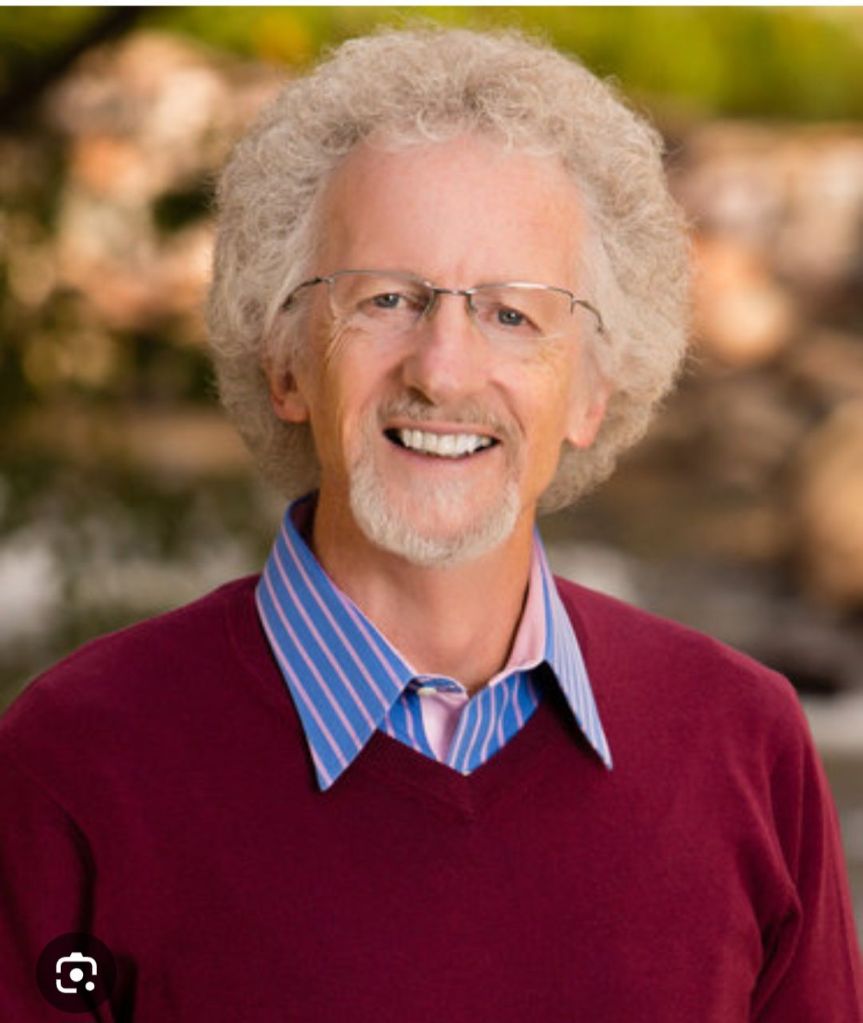
Philip Yancey- Cautionary Tale

Posted by appolus on January 10, 2026

Phillip Yancey ……..

I am less interested in his fall than I am in the response. Many who have read anything I have written over the years will note, much of it has been on grace, and of course, Phillip had much to write on that subject. This is my response to much of what I hear, and much of what I hear plays into “cheap grace,” and it’s multiple shades.

Grace That Saves vs. Grace That Reigns: A Cautionary Reflection

The issue before us is not whether sin is real, nor whether grace is necessary. Scripture is clear on both. The question is what kind of grace we are talking about, and what kind of Christianity it ultimately produces.

In recent years, public moral failures among respected Christian figures have often been framed almost exclusively as inevitable expressions of “shared human brokenness.” While this language sounds humble, it subtly shifts sin from a moral failing into some kind of inevitable human failing. In doing so, it does not merely acknowledge weakness, it lowers the expectation of transformation for the redeemed.

Scripture never denies that believers can sin. But it emphatically denies that sin remains our identity, our default, or our governing power.
“How shall we who died to sin still live in it?” (Romans 6:2)

When Christian theology repeatedly insists that believers are always on the brink of collapse, always fundamentally the same as before conversion, it may sound realistic, but it is not apostolic. It is Romans 7 isolated from Romans 6, and Romans 7 elevated over Romans 8. It treats ongoing struggle as the final word, rather than the cross, the resurrection, and the indwelling Spirit.

The familiar phrase “we are just sinners saved by grace” is often offered as a summary of humility, yet it is theologically inncorrect. Scripture does not primarily identify believers as sinners with an added provision. It calls them saints, new creations, those freed from sin, those led by the Spirit, those no longer under condemnation.

Grace in the New Testament is not merely pardon after failure. It is power for obedience. It is the power to overcome.
“For the grace of God has appeared… training us to renounce ungodliness and worldly passions.” (Titus 2:11–12)

When long-term, concealed patterns of sin emerge in the lives of Christian leaders, the appropriate response is not surprise, but neither is resignation. Scripture does not reduce such failures into “this is simply what humans do.” It speaks instead of accountability, sobriety, discipline, and, in some cases, disqualification.
“Be not many teachers, for you will incur a stricter judgment.” (James 3:1)

An extended pattern of deception is not merely a momentary lapse. It reflects a sustained resistance to conscience and to the sanctifying work of the Spirit. To explain such outcomes primarily in terms of “low anthropology” is to misdiagnose the problem. The issue is not that we expected too much of human nature, but that we expected too little of regeneration.

Grace does not erase distinctions between light and darkness, faithfulness and betrayal, maturity and self-indulgence. Nor does it dissolve moral responsibility under the banner of shared frailty.

The New Testament does not warn believers against being shocked so much as it warns them to be sober. It is not unspiritual to be sobered by contradiction between confession and conduct. It is a recognition that truth was professed while obedience was withheld.

Grace does not merely arrive after the wreckage. Grace, when obeyed, prevents the wreckage.
“The law of the Spirit of life in Christ Jesus has set you free from the law of sin and death.” (Romans 8:2)

To insist on this is not moralism, nor denial of weakness. It is fidelity to the gospel’s claim that sin no longer reigns, that believers are not trapped in inevitability, and that holiness is not exceptional but normative Christian life.

Grace that only forgives after the fall but never empowers before it is not amazing grace.
It is cheap grace.

And cheap grace inevitably reframes defeat as realism and victory as naïveté.

Posted in Christian, christian blog, christian living, Christianity, Daily devotional, Devotions, Jesus, revival, testimony, the crucified life, the deeper life, the gospel, the persectuted church, The presence of God, the remnant, The State of the Chuch and Manifest presence | Tagged: , , , , , , , | 7 Comments »

The Dragon’s Rage Against the Remnant: Branded for Death in the Last Days of the Genuine Church

Posted by appolus on September 16, 2025

The final reproach of the saints, when truth itself is branded as hate.

From the earliest days of the church, the saints of God have endured the reproach of being called what they are not. To stand for truth has always been to invite slander, and to speak the Word of God faithfully has never been received without hostility. As Jesus Himself said, “Blessed are you when they revile and persecute you, and say all kinds of evil against you falsely for My sake” (Matthew 5:11). History testifies that the righteous have consistently been accused of hatred, malice, and cruelty when, in reality, they were bearing witness to the love and holiness of God.

In our present age, particularly since the cultural shifts of the early twenty-first century, a new distortion has arisen. It is no longer permissible in much of society to disagree with the prevailing moral fashions without being branded a hater. A deliberate conflation has been made between disagreement and hatred, as if to question the legitimacy of homosexual practice or transgender ideology were to harbor malice against those who embrace it. But disagreement is not hatred. To call sin what Scripture calls sin is not to despise the sinner, but to speak truth in love (Ephesians 4:15), the truth that alone can set men free (John 8:32).

This inversion of meaning is no accident. It is the inevitable fruit of a culture that prefers sentimentality over truth, appearance over substance, and human approval over divine authority. The saints of God must see it for what it is: an attempt by the spirit of the age to silence the proclamation of the gospel by weaponizing false accusation. For if every Christian who holds to biblical teaching is deemed a “hater,” then every genuine believer is, by that definition, worthy of scorn and—according to some—even worthy of destruction.

And make no mistake, saint: the false accusers of the brethren have almost always come from within the ranks of what calls itself Christendom. Nearly all the martyrs of the last two thousand years were condemned at the insistence of religious institutions, who sought to preserve their own influence and protect their own power. Secular authorities and atheists may join in, but the fiercest opposition is often religious. Those who speak the truth boldly are always a danger to the religious establishment, because they expose its corruption, its hypocrisy, and its lifeless form. And so the institutions respond either by silencing themselves in cowardice or by attacking the voices of truth with fury—denouncing, separating, and historically, even putting to death those who dared to stand in the light of God’s Word.

This is the way of religion versus relationship. It has always been so, and it will always be so until the end of the age. Jesus reserved His harshest words not for pagans or atheists, but for the Pharisees, the Sadducees, and the scribes—the religious authorities of His day (Matthew 23). Though divided among themselves, Pharisees and Sadducees, Herodians and Zealots, even Rome itself, found common cause in their hatred of Christ. In an unholy alliance, they conspired to destroy Him because His very presence threatened every institution and every system of control. And kill Him they did.

That same religious spirit has not died. It has persisted through the centuries, raising its hand against prophets, apostles, reformers, and martyrs. And it remains strong today. As the end draws nearer, that spirit will only intensify, aligning with worldly powers to silence, discredit, and ultimately destroy those who walk in genuine relationship with the Lord Jesus Christ. For “the time is coming when whoever kills you will think he offers God service” (John 16:2).

Therefore, the genuine saint must not shrink back. He or she must understand that as the darkness increases, so too will the accusations, the betrayals, and the persecutions. Yet none of this is strange, for our Lord told us beforehand: “If the world hates you, you know that it hated Me before it hated you” (John 15:18). The darkness hates the light and will always seek to extinguish it (John 3:19–20).

But take heart. The slanders of men are but passing shadows. The record of heaven is clear, and the Judge of all the earth will vindicate His people. To be falsely accused is grievous, yes, but it is also glorious—it means we are walking in the footsteps of prophets, apostles, martyrs, and of Christ Himself, who “was despised and rejected by men, a Man of sorrows and acquainted with grief” (Isaiah 53:3).

So let the saints stand firm. Let them embrace the reproach of Christ as greater riches than the treasures of Egypt (Hebrews 11:26). For though the world brands them as haters, heaven knows them as beloved, faithful witnesses of the Light. And as the night grows darker, their testimony will shine all the more brightly until the Day dawns and the Morning Star arises in their hearts (2 Peter 1:19).

Posted in Babylon, christian living, Christianity, deception, end times, End Times Eschatology, Jesus, religious, remnant church, revival, testimony, the crucified life, the deeper life, the persectuted church, The presence of God, the remnant, The State of the Chuch and Manifest presence, the state of the church | Tagged: , , , , , | 8 Comments »

The Rise and Fall of a Movement: From Pentecost to Prosperity

Posted by appolus on August 3, 2025

At the turn of the 20th century, we witnessed the birth of two monumental Pentecostal movements. First, in 1904, came the Welsh Revival in Britain, and then, in 1906, the fires of revival swept through Azusa Street in Los Angeles. These were no ordinary stirrings, they were powerful outpourings of the Holy Spirit that would give rise to entire movements, such as the Elim Pentecostal Church in Britain and the Assemblies of God, which would spread globally and impact hundreds of millions.

From these humble beginnings, in every corner of the land, small Pentecostal churches began to emerge. Their message was simple: salvation through Jesus Christ, the power of the Holy Spirit, and the restoration of spiritual gifts. These fellowships sprang up in the shadow of massive denominational institutions, the Church of England, the Church of Scotland, and others, hige edifices steeped in their own traditions. Yet right beside them, in modest, unassuming buildings, were these Spirit-filled gatherings where lives were being radically transformed, adults were getting saved, and the gifts of the Spirit were active and alive.

This was a profound blow to the kingdom of darkness. The enemy, seeing the explosive growth of this movement, would not sit idly by. His question became clear: How can we bring this down? And so, beginning in the 1940s, we saw the emergence of new “theological,” trends, the Word of Faith movement, the Prosperity Gospel, and of course the Charismatic movement in the 60s, which would swallow up the others and become indistinguishable.

It was a cunning strategy: If you can’t beat them, buy them. The philosophy was simple, promise the very things that human beings everywhere fear to lose: health and wealth. Whether you’re in New York City or a remote village in the jungle, the universal concerns remain the same, our bodies and our bank accounts. The enemy offered a counterfeit gospel, one that shifted the focus from the cross of Christ to the desires of the flesh.

The Charismatic Movement became a Trojan horse. It infiltrated Pentecostal churches across the globe, not with persecution, but with promises. And it worked, brilliantly, tragically. The smoke from the fire of true revival has been replaced by the smoke machines of performance and entertainment. The altars were replaced by stages, the message by motivational speaking, and the Spirit by self-help and “self,” seeking

What followed was the tearing down of the very pillars upon which the early Pentecostal movement had stood. The purity of the Gospel was traded for a gospel of gain. Faith, once the precious link to Christ Himself, was twisted into a tool to manipulate blessings. Prosperity or tge lack of it, once counted as rubbish in comparison to knowing Christ, became the goal.Christ had become but a means to a materialistic end.

It was a disaster for the Church, and a stunning success for the enemy. The people rose up and played, just as they did before the golden calf in the wilderness. Think of “holy laughter,” and roaring like animals. And today, we stand in the shadow of that fall, in the ruins of what once was a mighty move of God.

These false ideologies, health and wealth, Name It and Claim It, the separation of faith from Christ Himself, have infected almost every corner of the modern Pentecostal and non-denominational world. Rare is the church untouched. Subtle or blatant, this taint remains, and it must be recognized for what it is.

Now, in this late hour, a remnant is rising, a people who are returning to the simplicity and the power of the cross, who walk not in the counsel of the world but in the fear of the Lord. Let us not be seduced by the glitter of gain or the lure of comfort. Let us remember the foundation laid in tears and prayer and holy fire. It is time to leave the circus behind, with all its many forms of entertainment, and “come out from among her.”

Posted in Babylon, bible, Charisma Magazine, Charismatic, Christian, christian blog, christian living, Christianity, Church history, church mafia, churches, consequences of sin, Counterfeit Jesus, Daily devotional, Devotions, end times, End Times Eschatology, False Prophets and Teachers, false teachers, Greedy Shepherds, Jesus, remnant church, revival, the crucified life, the deeper life, the gospel, the persectuted church, The presence of God, the remnant, The State of the Chuch and Manifest presence, the state of the church | Tagged: , , , , , , , , | 4 Comments »

The remnant that loves.

Posted by appolus on May 19, 2025

One of the most tragic realities of the contemporary church, most glaringly within the American context, yet by no means confined to it, is the widespread absence of the new birth among professing Christians. This foundational deficiency renders it utterly impossible for such individuals to love as the early church loved, for the very source and sustainer of that love is Christ Himself. It is He who binds believers together in divine unity.

The church, properly understood, is not a building, a denomination, or an institution, it is the living body of Christ. And unless one has been joined to that body through regeneration, one simply does not belong to the Church in the true, biblical sense, the ekklesia, the “called-out ones.”

It is spiritual folly to expect those outside of Christ, unregenerate and untouched by the Spirit of God, to manifest the supernatural love that defined the earliest believers. This love flows not from religious duty or communal sentiment, but from the indwelling presence of the Holy Spirit.

Oswald Chambers, in his meditations on the Sermon on the Mount, rightly observed that any attempt to live out Christ’s teachings apart from the new birth results in a miserable experience. For the unregenerate, the Sermon is not a light but a crushing burden, a lofty ideal that exposes the impossibility of genuine righteousness without divine transformation.

Religion, absent the life of Christ, becomes little more than a philosophy, a system of ethics, or a cultural form. It may produce momentary acts of kindness, but it cannot sustain the sacrificial, Spirit-wrought love of the saints. This love, that bears all things, believes all things, hopes all things, endures all things, does not arise from human effort but from the supernatural work of God in the soul.

Thus, what many interpret as disunity in the church is, in truth, the presence of multitudes who are members of religious organizations, but not members of Christ’s body. They are, at best, moralists striving in their own strength, at worst, deceived souls clinging to the form of godliness while denying its power.

The Scriptures are not silent on this. “Many are called, but few are chosen” (Matthew 22:14). The remnant, the few, are the truly born again, those who love with a love not their own, who recognize one another not by label or denomination, but by the Spirit of Christ within. When these encounter one another, there is immediate fellowship, unfeigned and deeply rooted in shared life.

To expect widespread spiritual unity in a landscape dominated by nominalism is to set oneself up for continual disillusionment. Indeed, the gap between our expectations and the reality of the religious world around us is often the precise measure of our grief.

But if we understand this reality, that true unity and true love exist only among the regenerate few, we will cease to be disheartened by the failures of the masses and instead rejoice to find, here and there, a brother or sister truly alive in Christ. For these are the Church. These are the Body. These are the beloved of God.


Posted in christian blog, christian living, Christianity, Daily devotional, God's love, Jesus, Oswald Chambers, remnant church, revival, testimony, the crucified life, the deeper life, the gospel, the persectuted church, The presence of God, the remnant, The State of the Chuch and Manifest presence, the state of the church | Tagged: , , , , , , , , , , , , , , | 4 Comments »

The Church on the narrow path ( part 1)

Posted by appolus on October 2, 2013

THE CHURCH ON THE NARROW PATH (PART 1)

The Remnant church is, at it’s core and most fundamentally, God’s witness here on earth. Truly we have been called first and foremost to be a witness. Now most saints know that this word in its Greek form translates to martyr. Does that mean that every saint, every witness since the beginning of the church has been called to martyrdom? Certainly not. Yet let us not forget brothers and sisters that in every century God’s people here on earth have been persecuted and martyred for their faith. The danger for us saints in the Western world in the last 100 years has been that we have not been so-called. Other saints around the world cannot say that, whether that is Africa or Asia or China or the Middle East, they have continued to be persecuted and martyred for their faith. For most of Europe and North America, this has not been the case with some noticeable exceptions during periods of war and so on. Now, one would imagine that living in an atmosphere where one is allowed to worship freely without any state or religious interference that Christendom would thrive, yet, if we look at the state of Europe and North America we see something that at best, is a shallow faith.

In the case of Europe we definitely see a post Christian society. In North America what is predominant is a cultural Christianity, a cross-less Christianity and a Christ-less Christianity and some cross-pollination or in many cases a hybrid of the all of these. Cultural Christianity would be a Christianity that is simply shaped to suit our culture. In this kind of Christianity Jesus would rarely be mentioned and God would be seen as some kind of Santa Claus. A cross-less Christianity would cover movements like the prosperity gospel, name it and claim it groups, Word of faith believers and health and wealth believers. Or again, a hybrid of all three. A Christ less Christianity would cover dead denominations for whom the Word of God has ceased to be authoritative even in pretense and where all things are acceptable, this would include things like gay marriage and gay ministers, abortion, divorce and so on.

Read the rest of this entry »

Posted in Christian, christian living, Christianity, church of scotland, end times, Jesus, pentecostal, revival, the remnant, the state of the church, theology | Tagged: | 4 Comments »