


My new website brings together my Christian writings, books, poetry, worship music, YouTube videos, Substack articles and the A Call to the Remnant archive.
Archive for the ‘Uncategorized’ Category
My New Website Is Now Live — Click the Link Below
Posted by appolus on September 19, 2026
Posted in Uncategorized | Leave a Comment »
Speak to Me Smooth Things.
Posted by appolus on September 17, 2026
“Do not prophesy to us right things; speak to us smooth things, prophesy deceits.”Isaiah 30:10
In verse eight of Isaiah 30, it was written that the words which follow are so important that they should be “written on a tablet.” Write it down on a scroll for all to see, for all the generations yet to come. Not only was the generation here spoken of wicked, trusting in oppression and perversity, but every proceeding generation would be in danger of falling into their perverse ways. The pattern would repeat itself over and over again, and it has, and shall continue to do so until the Lord Himself comes back again the second time. In Jesus’ day, He spoke to a wicked and perverse generation. We live today in such a generation. Not any old generation, mind you, but the generation that precedes the coming of the Lord, and therefore our generation bears the unmistakable marks of the days of Noah.
This generation, perhaps more than any other, demands that “smooth things” be spoken to them from the pulpit and from anywhere else that claims to speak for God. They do not desire to hear what is right. They would rather have their ears tickled. They would rather be comforted in their rebellion than confronted by the truth. God speaks directly to this condition: “Because you despise this word, and trust in oppression and perversity, and rely on them, therefore this iniquity shall be to you…” They despise the Word of God, and where the true prophets would speak, they are muzzled. Smooth words are welcomed, but the sharp edge of truth is despised.
And what does God say this iniquity shall become? He says that this generation is like a bulge in a high wall, swelling outward and ready to collapse, whose fall shall come suddenly, in an instant. They are lying and rebellious children who will not be led by the Word of God. They prefer the traditions of their fathers, traditions that demand nothing more than an outward show while possessing no inner reality. They have the form, but not the life. They have the words, but not the power. And anyone who dares to point out the glaring discrepancies in the lives of such people is hated and despised, ridiculed and banished. In older days they would have been burned at the stake. The fires may have gone out, but the spirit that lit them remains.
Yet in the midst of all of this, the Lord gives us the way home. In verse 15 He says, “In returning and rest you shall be saved; in quietness and confidence shall be your strength.” Come to Me, says the Lord Jesus, all you who labor and are heavy laden, and I will give you rest. There is rest to be found in coming to Jesus. There is strength to be found in coming to Jesus. There is a quietness that the world cannot give and a confidence that cannot be shaken, because it is found in Him alone.
Yet we read these terrible words: “But you would not.” They would not come to God and be saved. They would have no rest. They would have no strength. They would run from God. They would mount their swift horses and ride as fast and as far away from God as they could.
Yet where shall a man flee from the presence of God?
Ride your swift horses. Run to the ends of the earth. Climb the highest mountain or descend into the deepest valley. You cannot run from God.
And so their hearts shall faint. At the threat of one, a thousand shall flee. What a picture of a people who have rejected the only true source of their strength.
Now contrast this with the saints spoken of in Psalm 91: “A thousand may fall at your side, and ten thousand at your right hand; but it shall not come near you.” What a privileged people we are who dwell in the secret place of the Most High God, who abide under the shadow of the Almighty.
The world runs from Him. We run to Him.
The world demands smooth things. We desire truth.
The world trusts in its own strength. We rest beneath the shadow of His wings.
And while a thousand flee at the threat of one, the saints of God shall stand though ten thousand fall at their right hand.
For He is our refuge.
He is our fortress.
He is our God.
And in Him we shall trust.
Posted in Uncategorized | Leave a Comment »
𝗪𝗛𝗔𝗧 𝗜𝗦 𝗧𝗛𝗘 𝗢𝗟𝗗 𝗠𝗔𝗡?
Posted by appolus on August 14, 2026
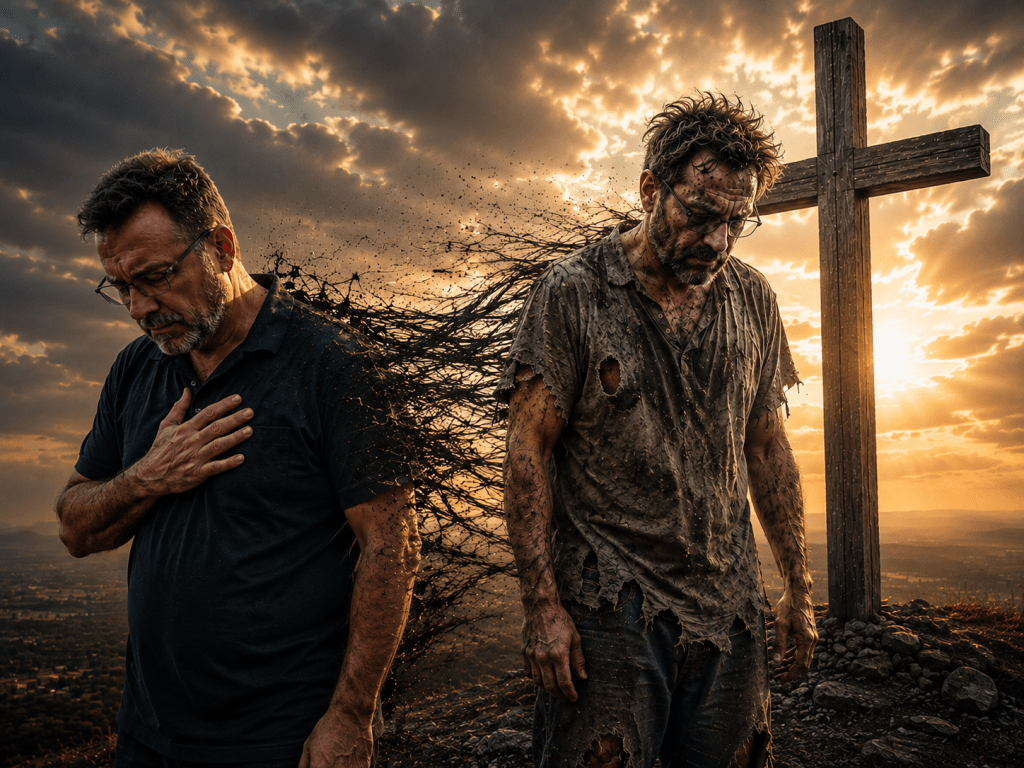
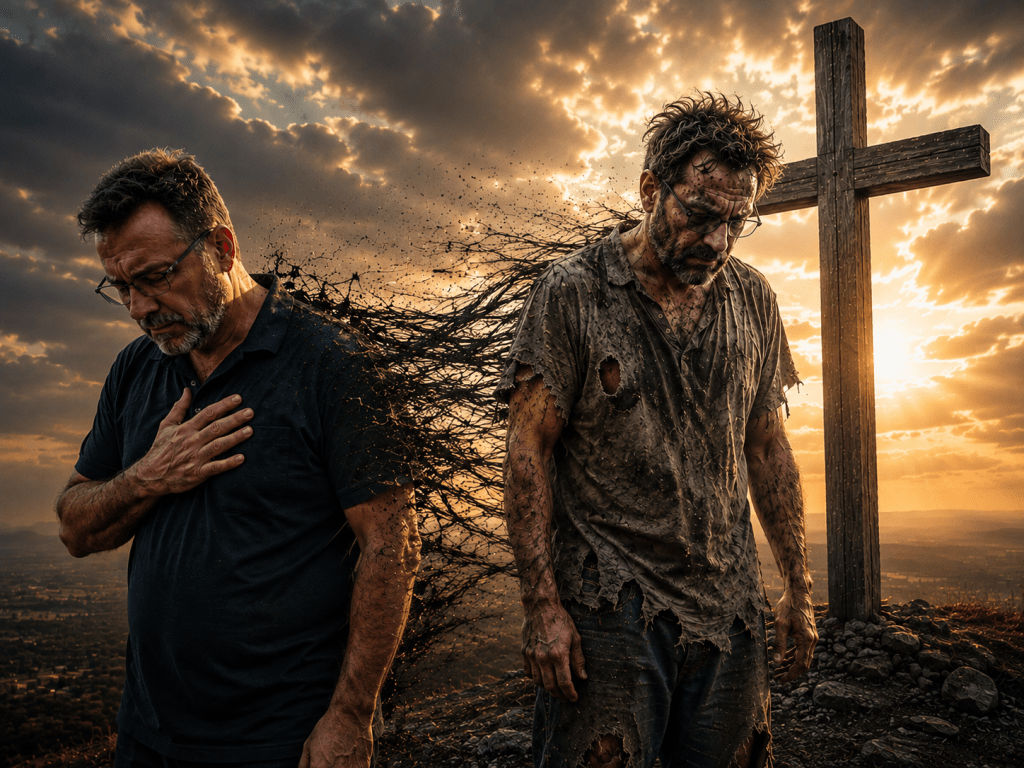
We often confuse the old man with the flesh, and they are the same thing. In teaching, this causes much confusion.
When I was born again at the age of 26, I went through a metamorphosis. I don’t mean theoretically or theologically. I mean in actuality. Before I surrendered to God, I knew exactly what that surrender would cost me. I knew that my life would no longer be mine. The man who was captain of his own soul would have to die. His captaincy, his authority over himself, his autonomy, his right to determine the direction of his own life, all of that had to be surrendered. That is precisely why I held back for so long. I had counted the cost. Then I surrendered, and that old man died. “Knowing this, that our old man was crucified with Him…” Romans 6:6.
Old Frank was gone. Crucified. Never to return. But Frank was still very much alive. My flesh didn’t disappear. My soul didn’t disappear. My memories didn’t disappear. My weaknesses, habits, appetites, emotions and all the consequences of 26 years of living under my own authority didn’t magically disappear either. What changed was who was Lord. Old Frank had been captain of his own soul. New Frank belonged to Christ.
And now new Frank had to deal with all of old Frank’s problems, but under an entirely different government: contained and directed by the Word of God, under the authority of God and by the direction and power of the Holy Spirit. That is sanctification.
This is why I see absolutely no contradiction between Romans 6, Romans 7 and Romans 8. The old man was crucified in Romans 6. The flesh and its inability are exposed in Romans 7. And Romans 8 reveals how the regenerated man now overcomes: through the power of the Holy Spirit.
Paul does not tell Christians that because the old man is dead there is therefore nothing remaining to overcome. Quite the opposite: “But if by the Spirit you put to death the deeds of the body, you will live.” Romans 8:13. And again: “For the flesh lusts against the Spirit, and the Spirit against the flesh; and these are contrary to one another…” Galatians 5:17. And therefore: “Walk in the Spirit, and you shall not fulfill the lust of the flesh.” Galatians 5:16.
Notice that Paul does not tell us the flesh no longer exists. He tells us not to fulfill its desires. He tells us how to overcome it. Paul himself says, “But I discipline my body and bring it into subjection…” 1 Corinthians 9:27. Into subjection to what? To the new authority under which Paul now lived.
This is where I think the confusion arises. The old man does not need to be progressively sanctified. He is dead. I am not spending my Christian life trying to rehabilitate old Frank. He was crucified with Christ. It is the man who now belongs to Christ who must walk in sanctification, bringing his body into subjection, renewing his mind, overcoming the flesh, exercising self-control and walking according to the Spirit.
Jesus said, “For whoever desires to save his life will lose it, but whoever loses his life for My sake will find it.” Matthew 16:25. That was very real to me at 26. I knew what I was being asked to surrender, and that knowledge was precisely why I resisted for so long. The old man was the autonomous man under his own lordship. That man died.
The flesh did not disappear with him. Now, however, the flesh had a new master to contend with: a regenerated man who no longer belonged to himself, whose authority was the Word of God, whose Lord was Jesus Christ and whose power to overcome came through the Holy Spirit. The old man is dead. The flesh must be brought into subjection. And that is why sanctification matters.
Posted in Uncategorized | 2 Comments »
The Remnant-A Pilgrim People
Posted by appolus on August 11, 2026
There is a profound difference between preservation and spiritual advance.
The established religious system inevitably acquires something to protect, buildings, denominations, reputations, theological systems, salaries, congregations, traditions, positions and influence. None of these things in and of themselves are necessarily evil. The danger comes when preserving what has been accumulated becomes the governing instinct.
Then the questions change. The pilgrim asks, “Where is God leading us?” The custodian asks, “How do we preserve what God gave us?” Those questions may sound similar, but over generations they can produce radically different kinds of Christianity.
Every genuine movement of God begins outside somebody’s established expectations. Abraham leaves Ur without knowing where he is going. Moses abandons Pharaoh’s world for the wilderness. Israel follows a cloud through a desert. The prophets stand outside the comfortable religious consensus. John the Baptist lives in the wilderness. Christ Himself continually operates beyond the boundaries established by the religious custodians of His day. The apostles leave Jerusalem and ultimately turn their world upside down.
𝗧𝗵𝗲𝘆 𝘄𝗲𝗿𝗲 𝗮 𝗽𝗶𝗹𝗴𝗿𝗶𝗺 𝗽𝗲𝗼𝗽𝗹𝗲.
Hebrews gives us a remarkable description of this pilgrim mentality:
And truly if they had called to mind that country from which they had come out, they would have had opportunity to return. But now they desire a better, that is, a heavenly country. (Hebrews 11:15–16)
They had somewhere they could return to. But they didn’t.
𝗧𝗵𝗮𝘁 𝗶𝘀 𝘁𝗵𝗲 𝗽𝗶𝗹𝗴𝗿𝗶𝗺 𝗺𝗲𝗻𝘁𝗮𝗹𝗶𝘁𝘆.
The remnant always has somewhere it could return to. There are established places where they could settle down, become comfortable, be accepted and cease from the difficulties of the journey. But they desire a better country. So they keep walking.
There is a pattern that can be seen throughout religious history. The pilgrims have almost nothing to lose. They risk reputation, acceptance, possessions and sometimes their very lives to follow the Lord into places others will not go.
Then something happens. The pilgrims build something. Others inherit it. The movement acquires buildings, institutions, theological respectability, influence, positions and traditions. And now there is something to lose.
Slowly, almost imperceptibly, the descendants of the pilgrims begin defending the results of yesterday’s faith rather than exercising that same faith themselves.
The revival becomes a denomination. The movement becomes a monument. The testimony becomes a tradition. And eventually walls appear where pilgrims once crossed rivers.
The institutional mentality eventually says, “We have arrived. Protect what we have.”The pilgrim says, “I have not attained. I press on.”Paul writes..
Not that I have already attained, or am already perfected; but I press on…(Philippians 3:12 )
And then:
Forgetting those things which are behind and reaching forward to those things which are ahead, I press toward the goal…(Philippians 3:13–14)
I press on….𝗧𝗵𝗮𝘁 𝗶𝘀 𝘁𝗵𝗲 𝗹𝗮𝗻𝗴𝘂𝗮𝗴𝗲 𝗼𝗳 𝘁𝗵𝗲 𝗽𝗶𝗹𝗴𝗿𝗶𝗺.
There is always something further. Another depth. Another height. Another surrender. Another place where self must die. Another place where Christ must increase. Another mile along the narrow road.Jesus said……
Because narrow is the gate and difficult is the way which leads to life, and there are few who find it.
(Matthew 7:14)
The narrow road is not merely a gate through which we once passed. It is a way. It is a road. And roads are meant to be traveled. Every step along that narrow road takes the pilgrim farther away from where he began.And closer to his final destination.
This is why the remnant cannot be defined merely as people who exist outside institutional Christianity. A man can leave an institution today and build another wall around himself tomorrow. Nor is the remnant defined by being unconventional. Being unusual is not spirituality. Rebellion is not pilgrimage.
The remnant is defined by following Christ regardless of where He leads, what it costs, or what must be left behind.Jesus said:……
If anyone desires to come after Me, let him deny himself, and take up his cross daily, and follow Me. (Luke 9:23)
𝗙𝗼𝗹𝗹𝗼𝘄 𝗠𝗲
Those words demand movement. You cannot follow someone while insisting upon remaining where you are. The genuine remnant is unconventional only because down through the ages it has been religious institutions that defined convention. Only the Word of God can define what convention is.
There is something of the entrepreneur in the pilgrim. Not the entrepreneur of money or business, but an entrepreneur of the spirit. They are willing to risk everything they possess for that which lies ahead.
Yet unlike Alexander or Caesar, who were entrepreneurs of war….they are not driven by ambition, conquest, glory or the desire to build earthly kingdoms. Something infinitely greater drives them.
𝗧𝗵𝗲 𝗦𝗽𝗶𝗿𝗶𝘁 𝗼𝗳 𝗚𝗼𝗱 𝗱𝘄𝗲𝗹𝗹𝘀 𝘄𝗶𝘁𝗵𝗶𝗻 𝘁𝗵𝗲𝗺.
“For as many as are led by the Spirit of God, these are sons of God.” …Romans 8:14, NKJV
They move because the Spirit leads them. They walk because Christ calls them. They press on because something within them will not permit them to settle permanently in yesterday.
This is where the picture of Rome becomes so striking. There was a time when Rome crossed rivers and pushed beyond frontiers. Eventually Rome began building walls around what it already possessed.
The wall itself was not the problem. The change of mentality was.
The question had changed from, “What lies beyond the frontier?” to, “How do we protect everything behind it?” And the same thing can happen spiritually.
There comes a point when a religious movement can become so concerned with preserving what God did yesterday that it ceases pursuing God today.
The institution builds walls around what the pilgrims discovered. It preserves the language. It preserves the buildings. It preserves the theology. It preserves the history. It preserves the stories of revival. It can even preserve the testimonies of the men and women who once crossed the rivers.
Yet preserving the memory of pilgrims is not the same thing as possessing the spirit of pilgrims.The great danger is that preservation sounds remarkably like faithfulness.
𝗦𝗼𝗺𝗲𝘁𝗶𝗺𝗲𝘀 𝗶𝘁 𝗶𝘀.
We are commanded to guard truth. We are commanded to hold fast. We are commanded to contend for the faith. But there is a world of difference between guarding eternal truth and guarding our comfortable position and traditions of men.
And in vain they worship Me, Teaching as doctrines the commandments of men. For laying aside the commandment of God, you hold the tradition of men, the washing of pitchers and cups, and many other such things you do.” He said to them, “All too well you reject the commandment of God, that you may keep your tradition. (Mark 7:7–9 )
The Spirit of God is not calling His people to abandon truth. He is calling them to walk in it.
𝗔𝗻𝗱 𝘄𝗮𝗹𝗸𝗶𝗻𝗴 𝗿𝗲𝗾𝘂𝗶𝗿𝗲𝘀 𝗺𝗼𝘃𝗲𝗺𝗲𝗻𝘁.
The pilgrim does not despise what God did yesterday. He gives thanks for it. He learns from it. He remembers those who walked before him. But he refuses to build his house at yesterday’s campsite.
The cloud has moved. And the pilgrim moves with it. There will always be those who build walls around what God did yesterday. And there will always be pilgrims who hear the voice of God calling them onward.
They may possess less. They may have fewer resources. They may have little institutional influence. They may be misunderstood. They may be rejected. They may travel a difficult and lonely road.
𝗕𝘂𝘁 𝘁𝗵𝗲𝘆 𝗮𝗿𝗲 𝗺𝗼𝘃𝗶𝗻𝗴.
They have not attained. They press on. They refuse to mistake yesterday’s stopping place for today’s destination. They are willing to leave security, reputation, acceptance and established religious boundaries behind when obedience to Christ requires it…..They are pilgrims…..They are the remnant.
The institutional church builds walls around what God did yesterday. The remnant follows the Spirit into what God is doing today. Some inherit kingdoms and spend their lives protecting them.
𝗣𝗶𝗹𝗴𝗿𝗶𝗺𝘀 𝗶𝗻𝗵𝗲𝗿𝗶𝘁 𝗮 𝗻𝗮𝗿𝗿𝗼𝘄 𝗿𝗼𝗮𝗱…….𝗮𝗻𝗱 𝘁𝗵𝗲𝘆 𝗸𝗲𝗲𝗽 𝘄𝗮𝗹𝗸𝗶𝗻𝗴.
Posted in Uncategorized | 2 Comments »
𝗗𝗢𝗠𝗜𝗡𝗜𝗢𝗡 𝗢𝗩𝗘𝗥 𝗦𝗘𝗟𝗙
Posted by appolus on August 10, 2026
Part five in our study of the separation of the soul and spirit according to Heb 4:12
The Holy Spirit does not merely command self-control; He imparts it. ἐγκράτεια (enkrateia — self-control, mastery, dominion over your “self”) is the fruit of the Spirit. It is God’s gift, not the product of human determination. Yet every gift must be possessed.
Israel was given the Promised Land long before they possessed it. God declared, “I have given you the land,” yet they still had to cross the Jordan, fight the battles, and take possession of what had already been granted. So it is with self-control. The Spirit has supplied all that is necessary, but we are called to walk in the Spirit, to exercise what He has imparted, and to possess what He has given.
The Spirit of God bears witness with our spirit. The inward man delights in the law of God. From that place of union with Christ, the Holy Spirit empowers the believer to bring the whole man under God’s government. The body is no longer permitted to reign. The mind is no longer carried about by fear and unstable passions. The spirit remains awake, watchful, and yielded to God.
This is not self-striving. It is Spirit-enabled dominion. It is Christ reigning within His people, enabling them to possess what He has already provided. That is why Paul can say, “Walk in the Spirit, and ye shall not fulfil the lust of the flesh.” Victory is not achieved independently of Christ. It is experienced through abiding in Him.
Galatians 5:22–23 (NKJV)
But the fruit of the Spirit is love, joy, peace, longsuffering, kindness, goodness, faithfulness, gentleness, self-control. Against such there is no law.
Posted in Uncategorized | 1 Comment »
𝗙𝗥𝗢𝗠 𝗚𝗢𝗗-𝗖𝗢𝗡𝗦𝗖𝗜𝗢𝗨𝗦 𝗧𝗢 𝗦𝗘𝗟𝗙-𝗖𝗢𝗡𝗦𝗖𝗜𝗢𝗨𝗦
Posted by appolus on August 5, 2026
In the beginning, there was perfect harmony. Body, soul, and spirit existed in their proper order. The spirit, alive to God, ruled over the whole man. The soul, with its mind, will, and emotions, echoed the voice of God, amplifying His truth throughout the inner life. The body followed in willing obedience. There was no conflict, no shame, no self-consciousness. 𝗠𝗮𝗻 𝘄𝗮𝘀 𝗚𝗼𝗱-𝗰𝗼𝗻𝘀𝗰𝗶𝗼𝘂𝘀.
Then sin entered.
The spirit fell from its place of rule, and a new voice arose. Instead of reflecting God, the soul began to amplify the desires of the flesh. The harmony was broken. An unholy alliance was formed between soul and body, while the spirit lay in death and separation from God.
The first evidence of this fall was self-awareness.
“𝗪𝗵𝗼 𝘁𝗼𝗹𝗱 𝘆𝗼𝘂 𝘁𝗵𝗮𝘁 𝘆𝗼𝘂 𝘄𝗲𝗿𝗲 𝗻𝗮𝗸𝗲𝗱?” God asked Adam and Eve.
For the first time, they looked upon themselves rather than upon God. Their nakedness, once clothed in innocence, became shame. Self-consciousness had replaced God-consciousness. The soul, created to reflect heaven, now echoed the fallen nature.
Yet God, in mercy, shed blood. An innocent life was sacrificed, and He clothed their nakedness with skins. The shame was covered, but only through blood. From that moment onward, every sacrifice pointed toward a greater sacrifice still to come.
𝗔𝘁 𝗖𝗮𝗹𝘃𝗮𝗿𝘆, 𝗝𝗲𝘀𝘂𝘀 𝗵𝘂𝗻𝗴 𝗻𝗮𝗸𝗲𝗱 𝘂𝗽𝗼𝗻 𝘁𝗵𝗲 𝗰𝗿𝗼𝘀𝘀. The One without shame willingly bore ours. The sin that had been covered through the blood of countless sacrifices was finally uncovered and judged in Him. He did not merely cover sin; He dealt with it once and for all.
In Christ, the spirit is made alive unto God once more. 𝗕𝘂𝘁 𝘁𝗵𝗲 𝘀𝗼𝘂𝗹 𝗿𝗲𝗺𝗮𝗶𝗻𝘀 𝘁𝗵𝗲 𝗯𝗮𝘁𝘁𝗹𝗲𝗳𝗶𝗲𝗹𝗱, 𝗽𝘂𝗹𝗹𝗲𝗱 𝗯𝗲𝘁𝘄𝗲𝗲𝗻 𝘁𝗵𝗲 𝗱𝗲𝘀𝗶𝗿𝗲𝘀 𝗼𝗳 𝘁𝗵𝗲 𝗳𝗹𝗲𝘀𝗵 𝗮𝗻𝗱 𝘁𝗵𝗲 𝗹𝗶𝗳𝗲 𝗼𝗳 𝘁𝗵𝗲 𝘀𝗽𝗶𝗿𝗶𝘁. Long held in the gravitational pull of the flesh, it must now be drawn ever more deeply into the gravitational pull of the spirit. This is the work of sanctification. As every thought is brought captive to Christ, the soul increasingly echoes the life of the spirit instead of amplifying the desires of the flesh. The body is no longer master but servant. Redemption is the restoration of God’s original order, until body, soul, and spirit stand together in perfect harmony under the lordship of Christ.
This is part four on the subject of the separation of the soul and the spirit. There will be a list of Scriptures in the comments.
𝗙𝗥𝗢𝗠 𝗚𝗢𝗗-𝗖𝗢𝗡𝗦𝗖𝗜𝗢𝗨𝗦 𝗧𝗢 𝗦𝗘𝗟𝗙-𝗖𝗢𝗡𝗦𝗖𝗜𝗢𝗨𝗦
In the beginning, there was perfect harmony. Body, soul, and spirit existed in their proper order. The spirit, alive to God, ruled over the whole man. The soul, with its mind, will, and emotions, echoed the voice of God, amplifying His truth throughout the inner life. The body followed in willing obedience. There was no conflict, no shame, no self-consciousness. 𝗠𝗮𝗻 𝘄𝗮𝘀 𝗚𝗼𝗱-𝗰𝗼𝗻𝘀𝗰𝗶𝗼𝘂𝘀.
Then sin entered.
The spirit fell from its place of rule, and a new voice arose. Instead of reflecting God, the soul began to amplify the desires of the flesh. The harmony was broken. An unholy alliance was formed between soul and body, while the spirit lay in death and separation from God.
The first evidence of this fall was self-awareness.
“𝗪𝗵𝗼 𝘁𝗼𝗹𝗱 𝘆𝗼𝘂 𝘁𝗵𝗮𝘁 𝘆𝗼𝘂 𝘄𝗲𝗿𝗲 𝗻𝗮𝗸𝗲𝗱?” God asked Adam and Eve.
For the first time, they looked upon themselves rather than upon God. Their nakedness, once clothed in innocence, became shame. Self-consciousness had replaced God-consciousness. The soul, created to reflect heaven, now echoed the fallen nature.
Yet God, in mercy, shed blood. An innocent life was sacrificed, and He clothed their nakedness with skins. The shame was covered, but only through blood. From that moment onward, every sacrifice pointed toward a greater sacrifice still to come.
𝗔𝘁 𝗖𝗮𝗹𝘃𝗮𝗿𝘆, 𝗝𝗲𝘀𝘂𝘀 𝗵𝘂𝗻𝗴 𝗻𝗮𝗸𝗲𝗱 𝘂𝗽𝗼𝗻 𝘁𝗵𝗲 𝗰𝗿𝗼𝘀𝘀. The One without shame willingly bore ours. The sin that had been covered through the blood of countless sacrifices was finally uncovered and judged in Him. He did not merely cover sin; He dealt with it once and for all.
In Christ, the spirit is made alive unto God once more. 𝗕𝘂𝘁 𝘁𝗵𝗲 𝘀𝗼𝘂𝗹 𝗿𝗲𝗺𝗮𝗶𝗻𝘀 𝘁𝗵𝗲 𝗯𝗮𝘁𝘁𝗹𝗲𝗳𝗶𝗲𝗹𝗱, 𝗽𝘂𝗹𝗹𝗲𝗱 𝗯𝗲𝘁𝘄𝗲𝗲𝗻 𝘁𝗵𝗲 𝗱𝗲𝘀𝗶𝗿𝗲𝘀 𝗼𝗳 𝘁𝗵𝗲 𝗳𝗹𝗲𝘀𝗵 𝗮𝗻𝗱 𝘁𝗵𝗲 𝗹𝗶𝗳𝗲 𝗼𝗳 𝘁𝗵𝗲 𝘀𝗽𝗶𝗿𝗶𝘁. Long held in the gravitational pull of the flesh, it must now be drawn ever more deeply into the gravitational pull of the spirit. This is the work of sanctification. As every thought is brought captive to Christ, the soul increasingly echoes the life of the spirit instead of amplifying the desires of the flesh. The body is no longer master but servant. Redemption is the restoration of God’s original order, until body, soul, and spirit stand together in perfect harmony under the lordship of Christ.
Posted in Uncategorized | Leave a Comment »
𝗧𝗛𝗘 𝗖𝗥𝗢𝗦𝗦 𝗔𝗡𝗗 𝗧𝗛𝗘 𝗦𝗪𝗢𝗥𝗗!𝗔 𝗗𝗜𝗦𝗧𝗜𝗡𝗖𝗧𝗜𝗢𝗡𝗧𝗛𝗘 𝗖𝗛𝗨𝗥𝗖𝗛 𝗠𝗨𝗦𝗧 𝗡𝗘𝗩𝗘𝗥 𝗟𝗢𝗦𝗘
Posted by appolus on July 28, 2026
Whether you admire President Trump or oppose him, whether you love America or are deeply critical of her, Christians must be careful not to fall into one of Satan’s oldest snares. The author of confusion delights in blurring the distinctions that God Himself has established. He is the father of lies, the accuser of the brethren, the sophister who twists truth just enough to make error appear righteous. He sets man against man, nation against nation, and even Christian against Christian, all while disguising confusion as spiritual discernment.
One of the greatest confusions of our day is the merging of the Gospel of Jesus Christ with the responsibilities God has given to civil government. Once those two are blended together, both become distorted.
Jesus commanded His disciples to love their enemies, bless those who curse them, turn the other cheek, and overcome evil with good. Those commands reveal the character of Christ’s followers and the nature of His Kingdom. They were never given as a blueprint for civil government.
Scripture makes this distinction plainly. In Romans 13, Paul says the governing authority “does not bear the sword in vain,” but is “the minister of God, an avenger to execute wrath upon him that does evil.” The very sword Christ forbade Peter to use in defending Him is the same sword God entrusts to civil rulers for the restraint of evil. There is no contradiction. There are simply two different callings.
Peter reached for the sword to prevent the Cross. Jesus rebuked him because redemption would not come through violence but through the sacrifice of the Lamb. That moment cannot honestly be turned into a universal prohibition against every lawful use of force by every civil authority. If it were, Romans 13 could never have been written.
Nor should we emphasize one aspect of Christ while neglecting another. Revelation presents the Lamb who was slain, but it also presents the returning King who judges the nations in righteousness. The Lion conquers because He first became the Lamb. The same Christ who died for sinners will one day judge the living and the dead. His mercy and His justice are never in conflict.
The Cross reveals God’s astonishing love toward His enemies by providing salvation through His Son. Yet the same Scriptures declare that those who reject that salvation will face His righteous judgment. Mercy and justice meet perfectly in the character of God.
History itself reminds us why God ordained civil government. Had the nations refused to oppose Hitler, the Holocaust would have continued unchecked. Had governments stood aside against ISIS, countless more innocent people would have been slaughtered or enslaved. Likewise, if a regime such as Iran’s wages aggression against its neighbors, governments do not sin by seeking to restrain that evil. Government was never commissioned to save men’s souls. It was commissioned to restrain evil in a fallen world.
War is always tragic, and Christians should never celebrate it. During the Second World War an estimated 1.8 to 3 million German civilians died through bombing, displacement, starvation, and the chaos of war. Every one of those lives mattered before God. Yet would anyone seriously argue that Winston Churchill or Franklin D. Roosevelt were guilty of genocide? Of course not. They were not seeking the extermination of the German people. They were leading nations against a regime that was itself carrying out genocide on an unprecedented scale. There is a profound moral difference between intentionally exterminating a people and the tragic loss of civilian life while defeating those who are committing such evil.
The church certainly has a prophetic responsibility to call governments to justice, righteousness, and accountability before God. But it must never confuse its ministry of reconciliation with the ministry of justice entrusted to civil rulers. Christ gave His Church the Gospel, not the sword. God gave governments the sword, not the Gospel.
The Kingdom of God is not advanced by military victories, political parties, or national greatness. It advances one redeemed heart at a time through the preaching of Christ crucified and risen. Yet that glorious truth does not require us to deny the separate sphere in which God has ordained civil authority to restrain evil and protect the innocent.
The devil delights in collapsing these distinctions. If he cannot persuade the Church to abandon the Gospel, he will entangle it in endless political confusion until believers can no longer distinguish between the mission of Christ and the responsibilities of Caesar. Some will baptize politics with Christianity. Others will condemn every exercise of civil authority by appealing to commands that were never given to governments. Both errors spring from the same deception.
The Cross reconciles sinners to God. The sword restrains evil in a fallen world. Confuse the two, and both the Gospel and God’s purpose for civil government become distorted.
Our calling is not first to defend a nation, nor first to condemn one. It is to exalt Christ, proclaim His Gospel faithfully, and refuse the subtle deceptions of the evil one, who is forever seeking to mix what God has separated. The Church must remain the Church, governments must remain governments, and Christ alone must remain Lord over both.
Posted in Uncategorized | Tagged: A call to the remnant, ancient landmark, Babylon, Christendom, Christianity, chritianity, Cultural Christianity, established church | Leave a Comment »
𝐓𝐇𝐄𝐒𝐄 𝐀𝐑𝐄 𝐓𝐇𝐄 𝐓𝐈𝐌𝐄𝐒 𝐓𝐇𝐀𝐓 𝐓𝐑𝐘 𝐌𝐄𝐍’𝐒 𝐒𝐎𝐔𝐋𝐒
Posted by appolus on July 22, 2026
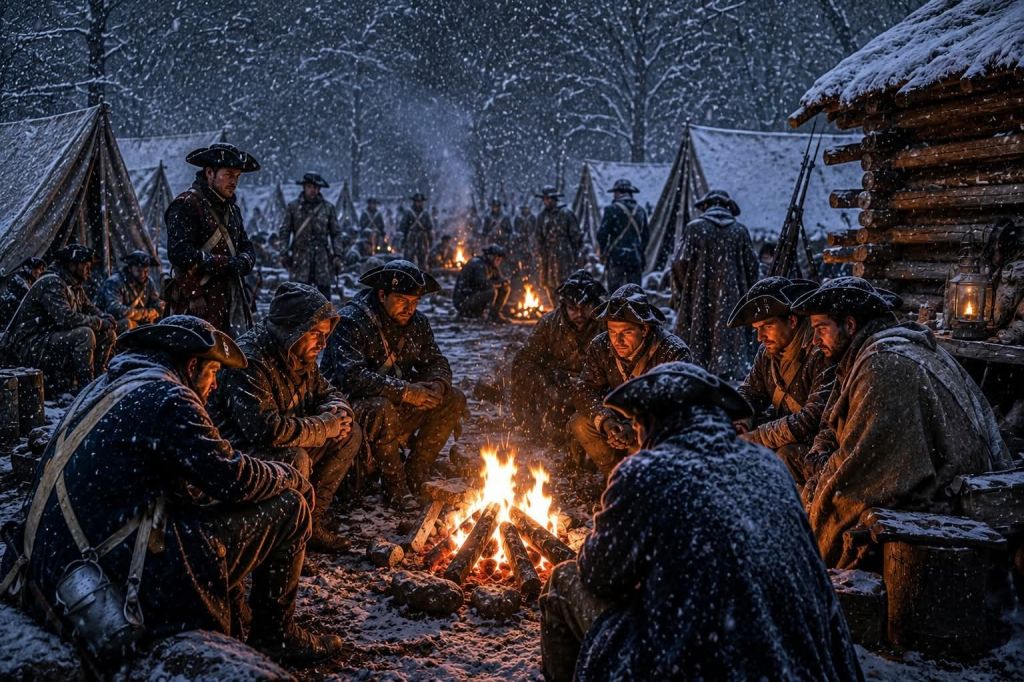
𝑻𝑯𝑬 𝑳𝑶𝑵𝑮 𝑾𝑰𝑵𝑻𝑬𝑹 𝑶𝑭 𝑫𝑰𝑺𝑪𝑶𝑵𝑻𝑬𝑵𝑻
Thomas Paine wrote the immortal words, “These are the times that try men’s souls,” in December of 1776, when the American cause appeared to be collapsing. Washington’s army was retreating through New Jersey. Enlistments were expiring, men were deserting, and the hope of independence was fading. Paine understood that there are moments in history when a man can no longer hide among the crowd. He must look deeply into his own soul and decide whether that which he professes to believe is truly worth suffering for, standing for, and, if necessary, dying for.
The winter at Valley Forge would come the following year and would embody Paine’s warning in flesh and blood. It was the long, cold winter of discontent. Men were hungry, poorly clothed, and ravaged by sickness. Disease was virulent, despair was everywhere, and death walked freely through the camp. It was there, in the cold and misery, that lofty declarations were tested. The question was no longer whether liberty sounded noble when spoken beside a warm fire. The question was whether liberty was still worth possessing when the price was hunger, disease, loneliness, and the grave.
We saints live in such a time as that.
𝐓𝐑𝐔𝐓𝐇 𝐇𝐀𝐒 𝐅𝐀𝐋𝐋𝐄𝐍 𝐈𝐍 𝐓𝐇𝐄 𝐒𝐓𝐑𝐄𝐄𝐓𝐒
Truth has fallen in the streets. The foundations are being destroyed. That which was once openly condemned is now celebrated, while that which was once regarded as holy is mocked, despised, and increasingly treated as evil. The very language of truth has been corrupted. Words no longer mean what they once meant. Men demand the right to redefine reality itself, and a fearful generation bows before the lie.
The vandals and the Visigoths, figuratively, but only just figuratively, are at the gates, and they have destruction in mind. They do not merely seek a place at the table. They seek to overturn the table, burn the house, tear down its foundations, and condemn everyone who remembers what once stood there.
Yet the greater crisis is not merely outside the Church. The greater crisis is that much of the Church has neither the spiritual strength nor the moral courage to resist it.
𝐓𝐇𝐄 𝐒𝐔𝐍𝐒𝐇𝐈𝐍𝐄 𝐒𝐀𝐈𝐍𝐓
Paine spoke of the summer soldier and the sunshine patriot, the man who loved the cause when the weather was pleasant but disappeared when the struggle became costly. The Church has her own summer Christians and sunshine saints.
They will sing of victory while victory costs them nothing. They will speak of the cross while carefully avoiding every road that leads to Calvary. They will proclaim Christ so long as Christ does not threaten their comfort, their reputation, their employment, their friendships, or their place within respectable society.
But these times will reveal every man.
The sunshine saint will shrink from the reproach of Christ. The summer Christian will compromise with the spirit of the age. The religious spectator will wait for some institution, some pastor, some movement, or some celebrated personality to tell him what to believe and how far he may safely go.
Yet the remnant cannot live by permission from men.
𝐖𝐇𝐄𝐍 𝐓𝐇𝐄 𝐅𝐎𝐔𝐍𝐃𝐀𝐓𝐈𝐎𝐍𝐒 𝐀𝐑𝐄 𝐃𝐄𝐒𝐓𝐑𝐎𝐘𝐄𝐃
“If the foundations are destroyed, what can the righteous do?”
The answer is not that the righteous can do nothing. The answer is found in the following words: “The Lord is in His holy temple, the Lord’s throne is in heaven.”
When every earthly foundation is shaking, the throne of God remains immovable. When truth is cast down in the streets, Christ remains the Truth. When men tear down ancient boundaries, the Word of God remains forever settled in heaven.
The righteous must return to that which cannot be shaken.
We must know God for ourselves. We must hear His voice for ourselves. We must draw water from the wells of salvation for ourselves. We must possess an inward life strong enough to endure when every outward support is removed.
It is no longer enough to attend. It is no longer enough to observe. It is no longer enough to borrow another man’s convictions and repeat another man’s revelation. Every saint must know in whom he has believed.
𝐓𝐇𝐄 𝐂𝐑𝐈𝐒𝐈𝐒 𝐖𝐈𝐓𝐇𝐈𝐍 𝐓𝐇𝐄 𝐂𝐇𝐔𝐑𝐂𝐇
Many Christians have been prepared for comfort, but very few have been prepared for conflict. They have been taught how to attend meetings, support ministries, follow programs, and listen to sermons, but they have not been taught how to stand alone before God.
They have been made dependent upon religious institutions at the very moment when those institutions are proving themselves incapable of meeting the crisis.
The machinery still operates. The lights still shine. The bands still play. The sermons are still delivered. The calendars remain full. Yet in many places the saints remain weak, passive, undiscerning, and utterly unprepared for the hour that has come upon us.
The veil was torn, yet men have busily sewn it back together. Christ died to create a kingdom of priests, yet the priesthood of all believers has been reduced to the ministry of the few.
This arrangement may survive in peaceful times. It will not survive the winter.
𝐈𝐒 𝐂𝐇𝐑𝐈𝐒𝐓 𝐖𝐎𝐑𝐓𝐇 𝐓𝐇𝐄 𝐂𝐎𝐒𝐓?
There comes a moment when every man must look into his own soul and ask the question that cannot be answered by his pastor, his denomination, his family, or his friends.
Is Christ worth the cost?
Is He worth the loss of reputation?
Is He worth the loss of comfort?
Is He worth the loss of employment?
Is He worth the loss of friends?
Is He worth imprisonment?
Is He worth death?
The early saints answered that question in the arenas, in prisons, in caves, beneath the sword, and upon the flames. They overcame by the blood of the Lamb and by the word of their testimony, and they did not love their lives unto death.
We have sung their hymns, read their stories, and admired their courage. Now the question comes to us.
What do we truly believe?
𝐓𝐇𝐄 𝐑𝐄𝐌𝐍𝐀𝐍𝐓 𝐌𝐔𝐒𝐓 𝐒𝐓𝐀𝐍𝐃
These are the times that reveal the remnant. These are the times when empty profession is separated from living faith. These are the times when the double-minded are swept away, the fearful retreat, and the faithful discover that Christ is sufficient.
The remnant must not retreat into silence. Neither must they place their confidence in politics, institutions, personalities, or movements. We are not called to preserve a religious culture. We are called to bear witness to the truth.
We must speak while truth is falling in the streets.
We must stand while the foundations are being torn down.
We must strengthen the weak hands and make firm the feeble knees.
We must warn those who are asleep.
We must encourage those who are standing alone.
We must become, once again, the royal priesthood Christ purchased with His own blood.
𝐓𝐇𝐄 𝐖𝐈𝐍𝐓𝐄𝐑 𝐖𝐈𝐋𝐋 𝐍𝐎𝐓 𝐋𝐀𝐒𝐓 𝐅𝐎𝐑𝐄𝐕𝐄𝐑
Valley Forge was not the end of the American struggle. The winter passed. The army that entered weak, hungry, divided, and diseased emerged disciplined and prepared for the battles ahead.
And so it shall be with the remnant.
The winter will expose us, but it will also refine us. The cold will reveal whether our faith possesses substance. The darkness will force our roots deeper into Christ. The loss of outward supports will teach us that the Lord Himself is our support.
God is preparing a people who cannot be bought by comfort, frightened by opposition, or silenced by the fear of men.
A people who know their God.
A people who love the truth.
A people who have counted the cost.
A people who have settled the question of whether Christ is worth dying for because they have already discovered that He is worth living for.
𝐀 𝐅𝐈𝐍𝐀𝐋 𝐖𝐎𝐑𝐃
These are not merely dangerous times. They are revealing times. They are separating times. They are purifying times. They are the times that try men’s souls.
The vandals are at the gates. Truth has fallen in the streets. The foundations are being destroyed. Despair and deception are virulent, and the long winter of discontent is upon us.
Yet the throne of God remains unshaken.
Christ is still building His Church.
The Spirit is still gathering the remnant.
Therefore, let every saint look deeply into his own soul and settle the question now.
Will we be summer Christians and sunshine saints, or will we stand with Christ when the cost of standing is everything?
The hour is late.
The winter is here.
The battle is at the gate.
And now we shall discover what we truly believe.
𝐓𝐇𝐄𝐒𝐄 𝐀𝐑𝐄 𝐓𝐇𝐄 𝐓𝐈𝐌𝐄𝐒 𝐓𝐇𝐀𝐓 𝐓𝐑𝐘 𝐌𝐄𝐍’𝐒 𝐒𝐎𝐔𝐋𝐒
𝑻𝑯𝑬 𝑳𝑶𝑵𝑮 𝑾𝑰𝑵𝑻𝑬𝑹 𝑶𝑭 𝑫𝑰𝑺𝑪𝑶𝑵𝑻𝑬𝑵𝑻
Thomas Paine wrote the immortal words, “These are the times that try men’s souls,” in December of 1776, when the American cause appeared to be collapsing. Washington’s army was retreating through New Jersey. Enlistments were expiring, men were deserting, and the hope of independence was fading. Paine understood that there are moments in history when a man can no longer hide among the crowd. He must look deeply into his own soul and decide whether that which he professes to believe is truly worth suffering for, standing for, and, if necessary, dying for.
The winter at Valley Forge would come the following year and would embody Paine’s warning in flesh and blood. It was the long, cold winter of discontent. Men were hungry, poorly clothed, and ravaged by sickness. Disease was virulent, despair was everywhere, and death walked freely through the camp. It was there, in the cold and misery, that lofty declarations were tested. The question was no longer whether liberty sounded noble when spoken beside a warm fire. The question was whether liberty was still worth possessing when the price was hunger, disease, loneliness, and the grave.
We saints live in such a time as that.
𝐓𝐑𝐔𝐓𝐇 𝐇𝐀𝐒 𝐅𝐀𝐋𝐋𝐄𝐍 𝐈𝐍 𝐓𝐇𝐄 𝐒𝐓𝐑𝐄𝐄𝐓𝐒
Truth has fallen in the streets. The foundations are being destroyed. That which was once openly condemned is now celebrated, while that which was once regarded as holy is mocked, despised, and increasingly treated as evil. The very language of truth has been corrupted. Words no longer mean what they once meant. Men demand the right to redefine reality itself, and a fearful generation bows before the lie.
The vandals and the Visigoths, figuratively, but only just figuratively, are at the gates, and they have destruction in mind. They do not merely seek a place at the table. They seek to overturn the table, burn the house, tear down its foundations, and condemn everyone who remembers what once stood there.
Yet the greater crisis is not merely outside the Church. The greater crisis is that much of the Church has neither the spiritual strength nor the moral courage to resist it.
𝐓𝐇𝐄 𝐒𝐔𝐍𝐒𝐇𝐈𝐍𝐄 𝐒𝐀𝐈𝐍𝐓
Paine spoke of the summer soldier and the sunshine patriot, the man who loved the cause when the weather was pleasant but disappeared when the struggle became costly. The Church has her own summer Christians and sunshine saints.
They will sing of victory while victory costs them nothing. They will speak of the cross while carefully avoiding every road that leads to Calvary. They will proclaim Christ so long as Christ does not threaten their comfort, their reputation, their employment, their friendships, or their place within respectable society.
But these times will reveal every man.
The sunshine saint will shrink from the reproach of Christ. The summer Christian will compromise with the spirit of the age. The religious spectator will wait for some institution, some pastor, some movement, or some celebrated personality to tell him what to believe and how far he may safely go.
Yet the remnant cannot live by permission from men.
𝐖𝐇𝐄𝐍 𝐓𝐇𝐄 𝐅𝐎𝐔𝐍𝐃𝐀𝐓𝐈𝐎𝐍𝐒 𝐀𝐑𝐄 𝐃𝐄𝐒𝐓𝐑𝐎𝐘𝐄𝐃
“If the foundations are destroyed, what can the righteous do?”
The answer is not that the righteous can do nothing. The answer is found in the following words: “The Lord is in His holy temple, the Lord’s throne is in heaven.”
When every earthly foundation is shaking, the throne of God remains immovable. When truth is cast down in the streets, Christ remains the Truth. When men tear down ancient boundaries, the Word of God remains forever settled in heaven.
The righteous must return to that which cannot be shaken.
We must know God for ourselves. We must hear His voice for ourselves. We must draw water from the wells of salvation for ourselves. We must possess an inward life strong enough to endure when every outward support is removed.
It is no longer enough to attend. It is no longer enough to observe. It is no longer enough to borrow another man’s convictions and repeat another man’s revelation. Every saint must know in whom he has believed.
𝐓𝐇𝐄 𝐂𝐑𝐈𝐒𝐈𝐒 𝐖𝐈𝐓𝐇𝐈𝐍 𝐓𝐇𝐄 𝐂𝐇𝐔𝐑𝐂𝐇
Many Christians have been prepared for comfort, but very few have been prepared for conflict. They have been taught how to attend meetings, support ministries, follow programs, and listen to sermons, but they have not been taught how to stand alone before God.
They have been made dependent upon religious institutions at the very moment when those institutions are proving themselves incapable of meeting the crisis.
The machinery still operates. The lights still shine. The bands still play. The sermons are still delivered. The calendars remain full. Yet in many places the saints remain weak, passive, undiscerning, and utterly unprepared for the hour that has come upon us.
The veil was torn, yet men have busily sewn it back together. Christ died to create a kingdom of priests, yet the priesthood of all believers has been reduced to the ministry of the few.
This arrangement may survive in peaceful times. It will not survive the winter.
𝐈𝐒 𝐂𝐇𝐑𝐈𝐒𝐓 𝐖𝐎𝐑𝐓𝐇 𝐓𝐇𝐄 𝐂𝐎𝐒𝐓?
There comes a moment when every man must look into his own soul and ask the question that cannot be answered by his pastor, his denomination, his family, or his friends.
Is Christ worth the cost?
Is He worth the loss of reputation?
Is He worth the loss of comfort?
Is He worth the loss of employment?
Is He worth the loss of friends?
Is He worth imprisonment?
Is He worth death?
The early saints answered that question in the arenas, in prisons, in caves, beneath the sword, and upon the flames. They overcame by the blood of the Lamb and by the word of their testimony, and they did not love their lives unto death.
We have sung their hymns, read their stories, and admired their courage. Now the question comes to us.
What do we truly believe?
𝐓𝐇𝐄 𝐑𝐄𝐌𝐍𝐀𝐍𝐓 𝐌𝐔𝐒𝐓 𝐒𝐓𝐀𝐍𝐃
These are the times that reveal the remnant. These are the times when empty profession is separated from living faith. These are the times when the double-minded are swept away, the fearful retreat, and the faithful discover that Christ is sufficient.
The remnant must not retreat into silence. Neither must they place their confidence in politics, institutions, personalities, or movements. We are not called to preserve a religious culture. We are called to bear witness to the truth.
We must speak while truth is falling in the streets.
We must stand while the foundations are being torn down.
We must strengthen the weak hands and make firm the feeble knees.
We must warn those who are asleep.
We must encourage those who are standing alone.
We must become, once again, the royal priesthood Christ purchased with His own blood.
𝐓𝐇𝐄 𝐖𝐈𝐍𝐓𝐄𝐑 𝐖𝐈𝐋𝐋 𝐍𝐎𝐓 𝐋𝐀𝐒𝐓 𝐅𝐎𝐑𝐄𝐕𝐄𝐑
Valley Forge was not the end of the American struggle. The winter passed. The army that entered weak, hungry, divided, and diseased emerged disciplined and prepared for the battles ahead.
And so it shall be with the remnant.
The winter will expose us, but it will also refine us. The cold will reveal whether our faith possesses substance. The darkness will force our roots deeper into Christ. The loss of outward supports will teach us that the Lord Himself is our support.
God is preparing a people who cannot be bought by comfort, frightened by opposition, or silenced by the fear of men.
A people who know their God.
A people who love the truth.
A people who have counted the cost.
A people who have settled the question of whether Christ is worth dying for because they have already discovered that He is worth living for.
𝐀 𝐅𝐈𝐍𝐀𝐋 𝐖𝐎𝐑𝐃
These are not merely dangerous times. They are revealing times. They are separating times. They are purifying times. They are the times that try men’s souls.
The vandals are at the gates. Truth has fallen in the streets. The foundations are being destroyed. Despair and deception are virulent, and the long winter of discontent is upon us.
Yet the throne of God remains unshaken.
Christ is still building His Church.
The Spirit is still gathering the remnant.
Therefore, let every saint look deeply into his own soul and settle the question now.
Will we be summer Christians and sunshine saints, or will we stand with Christ when the cost of standing is everything?
The hour is late.
The winter is here.
The battle is at the gate.
And now we shall discover what we truly believe.
Posted in Uncategorized | Tagged: A call to the remnant, apostate church, Apostolic leadership, bearing the cross, Body of Christ, broken down walls, Christendom, Christianity, chritianity, church institutions, coming of the lord, crying in the wilderness, daily devotions | 3 Comments »
How Then Shall We Gather
Posted by appolus on July 17, 2026
Over many years I become convinced that many of our assumptions about church life deserve to be re-examined, not in light of tradition, but in light of Scripture.
The New Testament draws a distinction between office and gift. Elders (or overseers) are appointed to oversee the flock, guard sound doctrine, and ensure the health of the church (Acts 20:17, 28; Titus 1:5–9; 1 Timothy 3:1–7; 1 Peter 5:1–3). Deacons serve in practical ways so that those entrusted with spiritual oversight are not diverted from prayer and the ministry of the Word (Acts 6:1–4).
By contrast, Ephesians 4:11–16 and 1 Corinthians 12–14 describe the ministry gifts Christ has given to His Body. The emphasis is not on one man performing nearly all the ministry, but on the whole Body functioning under the headship of Christ. “Each of you has…” (1 Corinthians 14:26) presents a gathering in which believers contribute according to the gifts Christ has distributed, with everything being done decently and in order.
One of the striking features of the New Testament is that the most detailed description of a church gathering is found in 1 Corinthians 14. Paul concludes the chapter by saying, “The things which I write to you are the commandments of the Lord” (1 Corinthians 14:37). If that is so, then the pattern deserves careful attention.
Today, the vast majority of Protestant churches follow a liturgy centred on a single speaker, often leaving little or no opportunity for the participatory ministry described in 1 Corinthians 14. Yet nowhere does the New Testament explicitly replace that pattern with a sermon-centred gathering led by a “senior pastor.” The expression “senior pastor” itself does not appear in Scripture, while elders and deacons are plainly appointed.
This raises an important question: have we gradually exchanged the apostolic pattern for one shaped more by later history than by the Scriptures themselves?
The issue is not whether preaching is biblical—it is. The issue is whether the gathered church is meant to be the ministry of one gifted man, or the orderly ministry of the whole Body under the oversight of faithful elders.
If the New Testament itself has altered the apostolic pattern, then let us gladly submit to that. But if it has not, then surely our responsibility is not to defend tradition, but to return to the Scriptures and allow them to shape the life of Christ’s church.
Posted in Uncategorized | Tagged: A call to the remnant, bearing the cross, beauty from the ashes, beauty of holiness, bible-reading, bible-study, Calvary, Christianity, chritianity, church, church goer, church institutions, corporate gatherings, Cultural Christianity, deeper life, devotional, established church | 2 Comments »
𝗙𝗜𝗩𝗘 𝗤𝗨𝗘𝗦𝗧𝗜𝗢𝗡𝗦 𝗧𝗛𝗔𝗧 𝗠𝗔𝗬 𝗖𝗛𝗔𝗟𝗟𝗘𝗡𝗚𝗘 𝗘𝗩𝗘𝗥𝗬𝗧𝗛𝗜𝗡𝗚 𝗬𝗢𝗨 𝗔𝗦𝗦𝗨𝗠𝗘 𝗔𝗕𝗢𝗨𝗧 𝗖𝗛𝗨𝗥𝗖𝗛
Posted by appolus on July 16, 2026
If our desire is to follow the pattern established by the Lord and His apostles, then these questions deserve to be answered from Scripture.
𝟭. 𝗧𝗛𝗘 𝗣𝗔𝗧𝗧𝗘𝗥𝗡 𝗢𝗙 𝗧𝗛𝗘 𝗚𝗔𝗧𝗛𝗘𝗥𝗜𝗡𝗚
If 1 Corinthians 14 is the clearest New Testament description of a gathered church meeting, and Paul concludes by saying, “the things which I write to you are the commandments of the Lord” (1 Corinthians 14:37), what New Testament passage explicitly replaces that pattern?
𝟮. 𝗖𝗛𝗨𝗥𝗖𝗛 𝗟𝗘𝗔𝗗𝗘𝗥𝗦𝗛𝗜𝗣
Where in the New Testament are churches instructed to appoint a senior pastor rather than a plurality of elders?
𝟯. 𝗧𝗛𝗘 𝗙𝗨𝗡𝗖𝗧𝗜𝗢𝗡𝗜𝗡𝗚 𝗢𝗙 𝗧𝗛𝗘 𝗕𝗢𝗗𝗬
If Christ gave apostles, prophets, evangelists, pastors, teachers, and the other gifts for the equipping of the saints (Ephesians 4:11–16; 1 Corinthians 12), how are those gifts intended to function if one person occupies almost the entire gathering each week?
𝟰. 𝗧𝗛𝗘 𝗣𝗨𝗥𝗣𝗢𝗦𝗘 𝗢𝗙 𝗧𝗛𝗘 𝗚𝗔𝗧𝗛𝗘𝗥𝗜𝗡𝗚
According to the New Testament, is the primary purpose of the church gathering to receive biblical instruction from one speaker, or to experience the ministry and manifestation of the Holy Spirit through the members of Christ’s Body for the edification, equipping, and maturing of the saints?
𝟱. 𝗧𝗛𝗘 𝗠𝗜𝗡𝗜𝗦𝗧𝗥𝗬 𝗢𝗙 𝗧𝗛𝗘 𝗛𝗢𝗟𝗬 𝗦𝗣𝗜𝗥𝗜𝗧
In 1 Corinthians 12–14, Paul teaches that the manifestation of the Spirit is given “for the profit of all,” and then describes how those gifts are to function when the church comes together. If that ministry is absent from the ordinary gathering, how are believers receiving the mutual edification and equipping that those chapters describe?
Posted in Uncategorized | Leave a Comment »
𝙃𝙊𝙒 𝙏𝙃𝙀 𝙋𝙍𝙄𝙀𝙎𝙏𝙃𝙊𝙊𝘿 𝙊𝙁 𝘼𝙇𝙇 𝘽𝙀𝙇𝙄𝙀𝙑𝙀𝙍𝙎 𝙒𝘼𝙎 𝙇𝙊𝙎𝙏
Posted by appolus on July 10, 2026
The one man system, over time, has largely shut down the functioning of the body and quenched the participation of the saints. When one man is expected to do all the preaching, all the leading, all the ministering, and all the hearing from God on behalf of everyone else, the rest of the body inevitably becomes passive. 𝗧𝗵𝗲 𝗽𝗿𝗶𝗲𝘀𝘁𝗵𝗼𝗼𝗱 𝗼𝗳 𝗮𝗹𝗹 𝗯𝗲𝗹𝗶𝗲𝘃𝗲𝗿𝘀 𝘀𝗹𝗼𝘄𝗹𝘆 𝗴𝗶𝘃𝗲𝘀 𝘄𝗮𝘆 𝘁𝗼 𝗮 𝗰𝗹𝗲𝗿𝗴𝘆 𝗮𝗻𝗱 𝗹𝗮𝗶𝘁𝘆 𝘀𝘆𝘀𝘁𝗲𝗺 𝘁𝗵𝗮𝘁 𝗶𝘀 𝗳𝗼𝗿𝗲𝗶𝗴𝗻 𝘁𝗼 𝘁𝗵𝗲 𝘀𝗽𝗶𝗿𝗶𝘁 𝗼𝗳 𝘁𝗵𝗲 𝗡𝗲𝘄 𝗧𝗲𝘀𝘁𝗮𝗺𝗲𝗻𝘁.
But the responsibility does not lie there alone.
Many among the congregation have become content with such an arrangement. They want to attend for an hour, tick the religious box, and then return to their lives until the following week.𝗟𝗶𝗸𝗲 𝗜𝘀𝗿𝗮𝗲𝗹 𝗼𝗳 𝗼𝗹𝗱, 𝘁𝗵𝗲𝘆 𝗱𝗲𝘀𝗶𝗿𝗲 𝗮 𝗽𝗲𝗿𝘀𝗼𝗻𝗮𝗹 𝗠𝗼𝘀𝗲𝘀. They would rather someone else ascend the mountain, someone else hear from God, and someone else bring back the word.
Yet this was never God’s intention.
𝗘𝘃𝗲𝗿𝘆 𝗯𝗲𝗹𝗶𝗲𝘃𝗲𝗿 𝗵𝗮𝘀 𝗮𝗰𝗰𝗲𝘀𝘀 𝘁𝗼 𝘁𝗵𝗲 𝘁𝗵𝗿𝗼𝗻𝗲 𝗼𝗳 𝗴𝗿𝗮𝗰𝗲.Every saint is called to seek the Lord for himself. Every member should be daily gathering manna, receiving some fresh word, some fresh insight, some encouragement from the Lord that could be shared for the edification of others. We are told to always be ready. But readiness implies preparation, pursuit, and personal communion with Christ.
Thus the problem is multifaceted. There are systems that have fostered passivity, and there are people who have willingly embraced it because it demands less of them.
And then there are the few.
There are always the few.
There are those who sit quietly among the congregation, year after year, with an increasing sense that something is missing. They cannot fully articulate it at first, but deep within they know that the biblical pattern has been lost. They know there must be more than this. They know that the body of Christ was never meant to be a gathering of spectators watching a few perform.
Eventually, many of these saints can bear it no longer. 𝗧𝗵𝗲𝘆 𝗹𝗲𝗮𝘃𝗲, 𝗻𝗼𝘁 𝗯𝗲𝗰𝗮𝘂𝘀𝗲 𝘁𝗵𝗲𝘆 𝗱𝗲𝘀𝗽𝗶𝘀𝗲 𝘁𝗵𝗲 𝗖𝗵𝘂𝗿𝗰𝗵, 𝗯𝘂𝘁 𝗯𝗲𝗰𝗮𝘂𝘀𝗲 𝘁𝗵𝗲𝘆 𝗹𝗼𝘃𝗲 𝗵𝗲𝗿 𝘁𝗼𝗼 𝗺𝘂𝗰𝗵 𝘁𝗼 𝘀𝗲𝘁𝘁𝗹𝗲 𝗳𝗼𝗿 𝗮 𝘀𝘂𝗯𝘀𝘁𝗶𝘁𝘂𝘁𝗲.They go searching for that which they know in their hearts to be true, a gathering where Christ is central, where every member can function, where spiritual gifts are exercised, where fellowship is genuine, and where the Lord Himself is free to lead His people.
For deep calls unto deep, and 𝗼𝗻𝗰𝗲 𝗮 𝗯𝗲𝗹𝗶𝗲𝘃𝗲𝗿 𝗵𝗮𝘀 𝘁𝗮𝘀𝘁𝗲𝗱 𝘀𝗼𝗺𝗲𝘁𝗵𝗶𝗻𝗴 𝗼𝗳 𝘁𝗵𝗲 𝗱𝗲𝗽𝘁𝗵𝘀 𝗼𝗳 𝗖𝗵𝗿𝗶𝘀𝘁, 𝗺𝗲𝗿𝗲 𝗿𝗲𝗹𝗶𝗴𝗶𝗼𝘂𝘀 𝗿𝗼𝘂𝘁𝗶𝗻𝗲 𝗰𝗮𝗻 𝗻𝗼 𝗹𝗼𝗻𝗴𝗲𝗿 𝘀𝗮𝘁𝗶𝘀𝗳𝘆 𝘁𝗵𝗲 𝘀𝗼𝘂𝗹.
Posted in Uncategorized | Tagged: A call to the remnant, absolute surrender, bearing the cross, captivity captive, Christianity, chritian living, church, church goer, church institutions, corporate gatherings, Cultural Christianity | 3 Comments »
The Dividing of Soul and Spirit ( part 2)
Posted by appolus on July 6, 2026
“The heart is deceitful above all things, and desperately wicked: who can know it?” (Jeremiah 17:9)
At first glance, this verse appears to stand in tension with God’s promise:
“A new heart also will I give you, and a new spirit will I put within you.” (Ezekiel 36:26)
Yet the two passages are not contradictory. It is my conviction that, while the believer has indeed received a new heart and a regenerated spirit through the new birth, he must still contend with the lingering influence of the old self-life operating through the soul and the flesh. The possession of a regenerated spirit does not remove the necessity of daily taking up the Cross, nor does the gift of a new heart eliminate the believer’s need for ongoing sanctification.
The deceitfulness spoken of by Jeremiah reminds us that the heart, as Scripture frequently employs the term, often refers to the comprehensive inner life of man and, at times, to the whole man himself. It is my conviction that Jeremiah is speaking of fallen man in his totality. The entire man,body, soul, and spirit,was corrupted through Adam’s fall and therefore stands in need of God’s redeeming and renewing work.
Yet, within fallen humanity, the soul, intimately allied to the flesh and the self-life, remains particularly susceptible to deception. The mind, will, and emotions, when operating independently of the regenerated spirit and the Holy Spirit, naturally gravitate toward self-rule, self-preservation, and independence from God. Consequently, the believer must learn not to trust the impulses of the natural man, but to walk according to the regenerated spirit under the government of the Holy Spirit.
This understanding sheds light on David’s prayer:
“Search me, O God, and know my heart: try me, and know my thoughts: And see if there be any wicked way in me, and lead me in the way everlasting.” (Psalm 139:23-24)
David’s prayer acknowledges that the believer cannot fully discern the hidden workings of the self-life. Only God, through His Word and Spirit, can expose those areas where self still seeks dominion.
This is precisely why the ministry of the Word of God is indispensable in the life of the believer:
“For the word of God is quick, and powerful, and sharper than any two-edged sword, piercing even to the dividing asunder of soul and spirit, and of the joints and marrow, and is a discerner of the thoughts and intents of the heart.” (Hebrews 4:12)
The expression “dividing asunder” is translated from the Greek word merismos, derived from the verb merizō, meaning to divide, separate, distribute, apportion, or distinguish one thing from another. The emphasis is not merely upon dividing something in half, but upon making an exact distinction between things so intimately united that man cannot separate them by himself.
The idea conveyed is one of precise discernment and exposure. The Word of God penetrates so deeply into the inner life of man that it exposes what is truly soulish and what is truly spiritual. The imagery is surgical rather than destructive. It is the work of a Divine Physician, laying bare those hidden motivations and impulses that remain concealed even from the believer himself.
It is particularly significant that the writer (I believe it to be Paul) speaks not of the division of body and spirit, which would be self-evident, but of “soul and spirit.” These two aspects of man’s inner life have become so deeply intertwined through the Fall that only the searching ministry of the Word of God, illuminated by the Holy Spirit, can accurately distinguish between them.
The progression within the verse itself is striking. The Word pierces to the dividing asunder of soul and spirit, then of joints and marrow, and finally discerns the thoughts and intents of the heart. Thus, the Word reaches the deepest and most hidden realities of man’s being.
The soul and the spirit, though closely intertwined, must therefore be separated. What has become deeply entangled through the Fall can only be distinguished and divided by the searching ministry of the Word of God illuminated by the Holy Spirit. The believer may sincerely believe that he is acting spiritually, when in reality he is merely acting from the self-life operating through the soul.
Thus, Hebrews 4:12 teaches that only the Word of God can accurately distinguish between that which proceeds from the soulish self-life and that which proceeds from the regenerated spirit. Such discernment is indispensable if the believer is to walk under the government of the Holy Spirit rather than under the subtle dominion of self.
An important aspect of this conflict concerns the relationship between the will and the emotions. It is my conviction that men are principally governed either by their will or by their emotions. The emotions, though God-given, belong largely to the realm of the soul and, when left unchecked, are often strongly influenced by the self-life and the flesh. Consequently, emotions frequently seek to lead man away from the will of God.
True obedience to God ultimately requires an act of the will. The believer must choose to submit himself to God, even when his emotions pull him in another direction. Spiritual maturity is therefore not measured by the intensity of one’s feelings, but by the steadfastness of one’s obedience.
The Garden of Gethsemane provides the supreme example. There, the Lord Jesus experienced the full weight of human emotion as He contemplated the Cross, even to the point that His anguish was expressed as great drops of blood:
“And he said, Abba, Father, all things are possible unto thee; take away this cup from me: nevertheless not what I will, but what thou wilt.” (Mark 14:36)
The emotions of our Lord recoiled from the unspeakable sufferings that lay before Him. Yet even more profoundly, His human will shrank from drinking the cup that was set before Him. When Jesus prayed, “not what I will, but what thou wilt,” He revealed the reality of a human will that had to be consciously and deliberately surrendered to the will of His Father. It was only through this act of perfect submission that His will came into complete alignment with the Father’s will. Gethsemane therefore stands as the supreme example of obedience, demonstrating that true holiness consists not in the absence of conflicting desires or emotions, but in the surrender of the human will to the will of God.
This is not to suggest that all emotion is soulish or fleshly. The regenerated spirit itself possesses holy affections, produced and governed by the Holy Spirit. Indeed, the Scriptures call us to “rejoice with them that do rejoice, and weep with them that weep” (Romans 12:15). We are also exhorted to “comfort them which are in any trouble, by the comfort wherewith we ourselves are comforted of God” (2 Corinthians 1:4). Such responses are not the product of the self-life, but rather the outflow of a regenerated spirit indwelt by the Holy Spirit.
The believer is therefore not called to emotional detachment, but to sanctified emotion. To love deeply, to grieve with those who grieve, to rejoice with exceeding joy, and to express compassion and tenderness are all part of the life of Christ manifested within the believer. God has not given His people “the spirit of fear; but of power, and of love, and of a sound mind” (2 Timothy 1:7). These holy affections arise not from the fallen self-life, but from the regenerated spirit operating under the government of the Holy Spirit.
The question, therefore, is not whether emotion is present, but whether those emotions proceed from the self-life or from the life of Christ within. Emotions governed by the self-life often lead man away from God, whereas emotions governed by the Holy Spirit become powerful instruments for the expression of the love, compassion, and joy of Christ.
Empowered by God, the believer learns to overcome emotional reactions to any given situation and is led into the safe harbor of the will of God. Outside of His will there is a storm of indecision and anxiety, as the Scripture declares that the double-minded man is unstable in all his ways.
“A double minded man is unstable in all his ways.” (James 1:8)
The description of the “double minded man” in James 1:8 may be understood as illustrating the profound conflict that exists within the believer. The Greek word dipsychos literally means “two-souled,” suggesting a divided inner life. Such a man is unstable because competing principles are at work within him. The mind of Christ, operating within the regenerated spirit, draws him toward obedience, surrender, and faith. At the same time, the mind of the flesh, operating through the soul and the self-life, seeks independence, self-preservation, and unbelief. Until the soul is increasingly brought under the government of the regenerated spirit, where Christ rules supreme, instability and inward conflict will inevitably result.
The conflict described throughout this discussion finds perhaps its clearest expression in Romans 7, where the Apostle Paul speaks of the inward struggle experienced by the believer:
“For I delight in the law of God after the inward man: But I see another law in my members, warring against the law of my mind…” (Romans 7:22-23)
Romans 7 encapsulates the very conflict we have been considering, the struggle between the regenerated inner man and the principle of sin still operating within the flesh and the self-life. Yet Romans 8 immediately presents the Divine solution to the Romans 7 dilemma.
“There is therefore now no condemnation to them which are in Christ Jesus, who walk not after the flesh, but after the Spirit.” (Romans 8:1)
The first seventeen verses of Romans 8 repeatedly call the believer to walk according to the Spirit and not according to the flesh. The answer to the conflict is not found in self-effort, nor in attempting to reform the old self-life, but in living under the government of the Holy Spirit.
“For they that are after the flesh do mind the things of the flesh; but they that are after the Spirit the things of the Spirit.” (Romans 8:5)
The believer is continually confronted with two realms, two minds, and two governing principles. The mind of the flesh remains hostile toward God:
“Because the carnal mind is enmity against God: for it is not subject to the law of God, neither indeed can be.” (Romans 8:7)
Yet the believer is not left powerless, for “the law of the Spirit of life in Christ Jesus hath made me free from the law of sin and death” (Romans 8:2). The Holy Spirit empowers the regenerated spirit, enabling the believer to progressively bring the soul and body under the government of Christ.
Paul therefore exhorts:
“For if ye live after the flesh, ye shall die: but if ye through the Spirit do mortify the deeds of the body, ye shall live.” (Romans 8:13)
The Christian life is thus not lived by the power of the soul, nor by the determination of the flesh, but by walking in continual dependence upon the indwelling Holy Spirit. As the believer walks according to the Spirit, the self-life increasingly loses its dominion, and the life of Christ gains ever greater expression through the whole man.
“For as many as are led by the Spirit of God, they are the sons of God.” (Romans 8:14)
The distinction between the soulish self-life and the regenerated spirit also sheds significant light upon our Lord’s solemn warning in Matthew 7:21-23:
“Not every one that saith unto me, Lord, Lord, shall enter into the kingdom of heaven; but he that doeth the will of my Father which is in heaven.” (Matthew 7:21)
It is deeply instructive that, when these men stand before Christ, they present not a life of obedience, submission, and conformity to the Father’s will, but rather a catalogue of impressive works:
“Lord, Lord, have we not prophesied in thy name? and in thy name have cast out devils? and in thy name done many wonderful works?” (Matthew 7:22)
The issue was not necessarily the outward nature of the works themselves, for prophecy, deliverance, and mighty works may all, in certain circumstances, be genuine ministries. Rather, the question concerns the source and motive from which these works proceeded. The emphasis of Matthew 7:21 falls not upon performing works, but upon doing “the will of my Father.” Gethsemane stands as the supreme illustration of this principle. There, our Lord set aside every other consideration and surrendered Himself wholly to the Father’s will, praying, “Nevertheless not what I will, but what thou wilt” (Mark 14:36).
True spirituality is therefore not measured by the abundance of one’s activity, nor by outward manifestations of power, but by obedience born out of union with God and submission to His will. The will of God is discerned and embraced within the regenerated spirit under the government of the Holy Spirit. By contrast, religious activity may proceed from the soul, from the self-life, or even from fleshly ambition while still appearing outwardly impressive.
The tragedy of Matthew 7 is that these individuals apparently never experienced the searching ministry described in Hebrews 4:12. They desperately needed the Word of God to pierce to the dividing asunder of soul and spirit, exposing the true motives and hidden intentions of their hearts before they stood before Christ. Had such Divine discernment been received and embraced during their earthly lives, they might have been brought to repentance, self-renunciation, and genuine submission to the will of God.
Matthew 7 therefore stands as a solemn warning to every believer. The great question at the judgment will not simply be, “What did I do?” but rather, “why did I do it,” and “was I doing the will of the Father, and from what source did my life and ministry proceed?” Only the searching Word of God, illuminated by the Holy Spirit, can answer that question rightly.
Posted in Uncategorized | Tagged: A call to the remnant, absolute surrender, bearing the cross, beauty of holiness, Christianity | Leave a Comment »
The Dividing of Soul and Spirit (part 1)
Posted by appolus on July 2, 2026
The Soul, the Spirit, and the Self-Life- This subject sounds overly theological, but it’s not, its of vital importance to sanctification.
It is my conviction that there exists a definite distinction between the soul and the spirit of man. While these terms are often used interchangeably by many Christians, I believe the Scriptures reveal a clear distinction between the two. This is not merely an academic matter, for it touches the very heart of sanctification and the Christian walk.
Scripture reveals that God created man as a threefold being:
“And the very God of peace sanctify you wholly; and I pray God your whole spirit and soul and body be preserved blameless unto the coming of our Lord Jesus Christ.” (1 Thessalonians 5:23)
All that God created was originally good, including man’s body, soul, and spirit. Yet through Adam’s fall, every facet of man’s being was corrupted by sin. The spirit of man died toward God and became incapable of true communion with Him. The soul became enslaved to the self-life, seeking its own rule and preservation apart from God. The body likewise became subject to corruption, decay, and death. Thus, the whole man—spirit, soul, and body—came under the dominion of the old Adamic nature and stood in desperate need of redemption.
It is my conviction that the spirit of man is that faculty by which man communes with God. Prior to conversion, the spirit is dead toward God:
“And you hath he quickened, who were dead in trespasses and sins.” (Ephesians 2:1)
At regeneration, God imparts new life to the spirit:
“That which is born of the Spirit is spirit.” (John 3:6)
The regenerated spirit, indwelt and empowered by the Holy Spirit, is intended to govern the whole man.
I believe that soul and spirit, though closely intertwined, are nevertheless distinct. The Scriptures indicate this distinction:
“For the word of God is quick, and powerful, and sharper than any twoedged sword, piercing even to the dividing asunder of soul and spirit.” (Hebrews 4:12)
The soul of man, though originally created by God, became deeply joined to the fallen life of Adam through the Fall. The mind, will, and emotions, once intended to serve God through the spirit, now naturally align themselves with the self-life and the flesh. Thus, the soul left to itself does not submit to the things of God, but seeks its own rule, satisfaction, and preservation. The Cross therefore deals not merely with outward sins, but with the entire self-life, bringing the soul under the government of the regenerated spirit indwelt by the Holy Spirit.
“For to be carnally minded is death; but to be spiritually minded is life and peace.” (Romans 8:6)
“Because the carnal mind is enmity against God: for it is not subject to the law of God, neither indeed can be.” (Romans 8:7)
The believer immediately discovers another principle at work:
“For the flesh lusteth against the spirit, and the spirit against the flesh: and these are contrary the one to the other.” (Galatians 5:17)
I have intentionally rendered “spirit” with a lower-case “s.” The original Greek manuscripts did not distinguish between upper and lower case letters in the manner of modern translations. Consequently, capitalization is an interpretive decision made by translators and is determined by context. It is my conviction that Paul is describing the conflict within the believer between the flesh and the regenerated human spirit, which has been redeemed and empowered by the indwelling Holy Spirit.
Thus, this conflict is experienced within the believer as the flesh seeks to regain dominion over the regenerated spirit, while the regenerated spirit, under the government of the Holy Spirit, wars against the self-life and the flesh.
Expressions such as “soulish worship” are often used to describe religious activity that originates from natural enthusiasm, emotionalism, or human effort rather than from the Holy Spirit. Such worship may stir the emotions while leaving the spirit untouched.
However, it is important not to conclude that all emotion is soulish or fleshly. The regenerated spirit itself possesses holy affections. The woman who was forgiven much loved much, and her tears upon the feet of Jesus were not fleshly sentiment but the outflow of a spirit transformed by grace:
“Her sins, which are many, are forgiven; for she loved much.” (Luke 7:47)
Likewise, Paul writes:
“For God hath not given us the spirit of fear; but of power, and of love, and of a sound mind.” (2 Timothy 1:7)
The spirit God has given His people is characterized by power, love, and a sound mind. Through the indwelling Holy Spirit, the believer possesses the very mind of Christ:
“For who hath known the mind of the Lord, that he may instruct him? But we have the mind of Christ.” (1 Corinthians 2:16)
The Christian life, therefore, is not emotionless. Rather, the Holy Spirit produces holy affections that are centered upon Christ rather than self. The regenerated spirit possesses love, power, and a sound mind, while the mind operating within the soulish realm continually seeks independence and self-rule.
The flesh itself remains incurably corrupt:
“For I know that in me (that is, in my flesh,) dwelleth no good thing.” (Romans 7:18)
Ultimately, the believer awaits not the perfection of the flesh, but its replacement, for corruption cannot inherit incorruption:
“It is sown in corruption; it is raised in incorruption.” (1 Corinthians 15:42)
“Now this I say, brethren, that flesh and blood cannot inherit the kingdom of God; neither doth corruption inherit incorruption.” (1 Corinthians 15:50)
Thus the great battle of sanctification is the battle between the old self-life and the life of Christ within. The Cross deals not merely with acts of sin, but with the very principle of self-rule:
“Knowing this, that our old man is crucified with him.” (Romans 6:6)
“I am crucified with Christ: nevertheless I live; yet not I, but Christ liveth in me.” (Galatians 2:20)
The Christian life is therefore not the improvement of the old man, but the progressive triumph of the life of Christ within the regenerated spirit. The mind of the flesh, operating through the soul, continually wars against the mind of Christ present within the spirit through the indwelling Holy Spirit. The Cross daily brings the self-life into death, that the life of Christ might be manifested through the believer.
This conflict constitutes the great battle of sanctification. The believer learns increasingly to walk not according to the flesh, nor according to the impulses of the soulish life, but according to the Spirit. As the self-life is brought to the Cross, the life of Christ gains greater expression through the believer.
Ultimately, the corruptible body will not be perfected but replaced, for flesh and blood cannot inherit the kingdom of God. Then the redeemed spirit, fully liberated from the presence of sin and clothed with an incorruptible body, shall forever manifest the life and glory of Christ.
Posted in Uncategorized | Tagged: A call to the remnant, absolute surrender, beauty from the ashes, beauty of holiness, Christendom, christian living, Christianity, chritian living, chritianity, Cultural Christianity | Leave a Comment »
The Great Lie
Posted by appolus on June 22, 2026
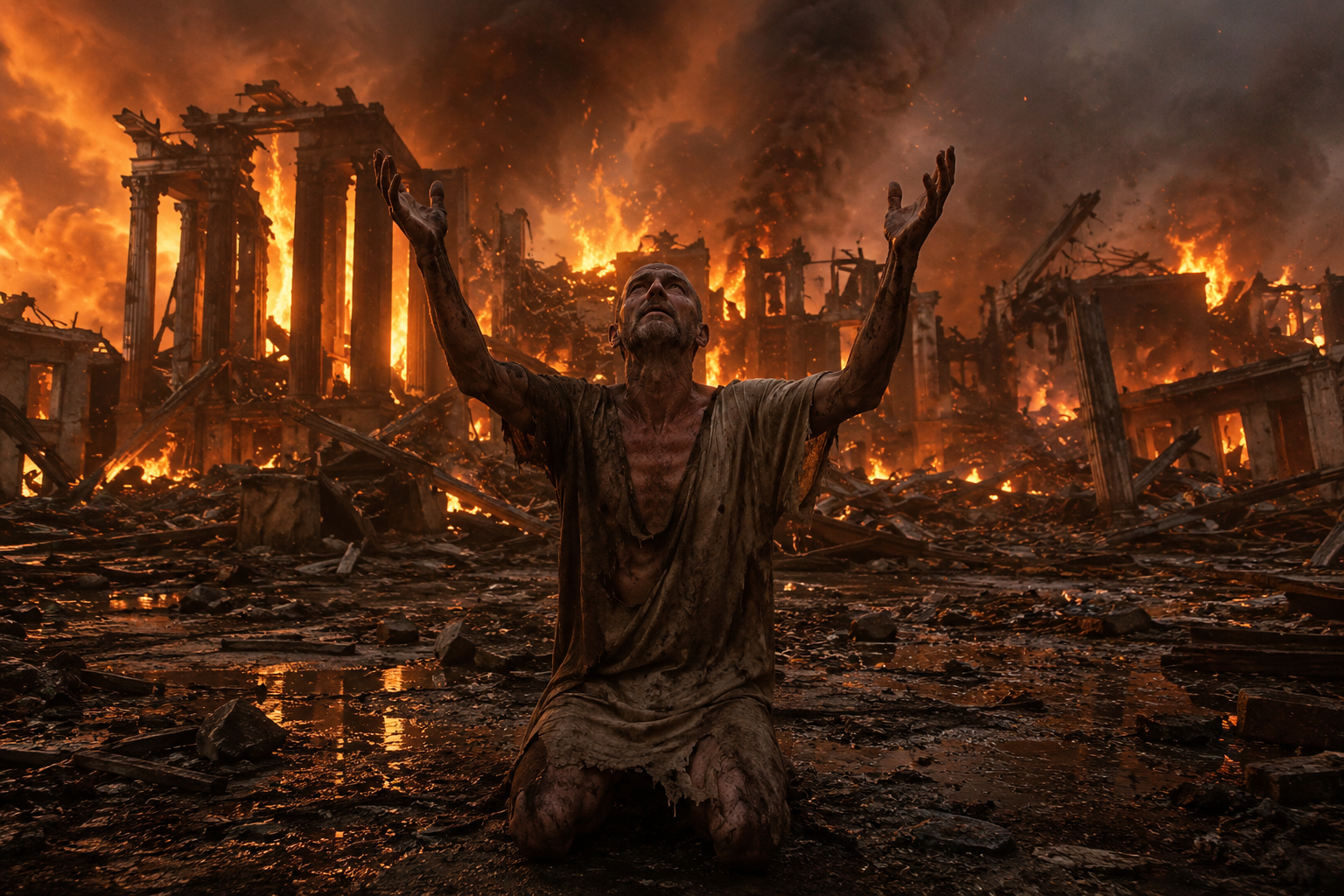
In the book of Job, Satan appears before the throne and challenges the very notion that men love God freely. His accusation is simple: “They do not love You for who You are. They love You because of what You give them.”
In other words, Satan presents a completely transactional view of faith. Remove the hedge. Take away the blessings. Strip away the gifts. Let suffering come upon them, and they will curse You to Your face.
That becomes the great issue. Is there such a thing as genuine love for God? Is God worthy of worship apart from His gifts? Or is every act of devotion merely a transaction?
The life of Job answers the question. Though confused, wounded, and broken, he does not abandon God. Though he struggles to understand, he continues to trust. The accusation is exposed as a lie.
From that moment on, the lives of God’s people stand as a living testimony against that ancient charge. Every saint who continues to love, trust, and worship God in suffering bears witness that Satan was wrong.
God is not worthy because He blesses us.
He is worthy whether He blesses us or not.
He is not worthy because He heals us.
He is worthy whether He heals us or not.
He is not worthy because He grants our desires.
He is worthy because of who He is.
This is why the book of Job presents such a challenge to determinism. The entire drama assumes that genuine love, trust, and obedience are real responses, not merely programmed outcomes. The question being tested is whether a man will continue to love God when every earthly reason to do so has been stripped away.
Job’s testimony is that there are men and women who will.
Not because they are bribed by blessings.
Not because they are compelled by circumstances.
Not because the relationship is transactional.
But because God is worthy to be praised.
The testimony of Job stands as a rebuke to both Calvinism and much of modern charismatic theology, though for very different reasons. It shatters the Calvinistic notion that man is merely acting out a predetermined script, for Job was not a puppet moving according to an eternal decree, but a man responding to God with real love, real trust, and real obedience in the midst of unimaginable suffering. At the same time, it exposes the weakness of every charismatic doctrine that makes blessings, prosperity, healing, or answered prayer the measure of God’s favor.
Satan’s accusation itself was transactional: that men serve God only because it pays. Job’s life proved otherwise. The proving ground of faith is not abundance but loss, not comfort but affliction. It is in the stripping away, in the fire and the flood, in tribulation and trial, that the reality of both God’s love for man and man’s love for God is revealed. There is no broad road around this furnace. The path of Christ leads through the narrow passage where every lesser thing is burned away until only this remains: “Though He slay me, yet will I trust Him.”
Posted in Uncategorized | Tagged: bible, Christianity, faith, God, Jesus | 4 Comments »
Riots in Belfast-Nation against Nation
Posted by appolus on June 10, 2026

Riots in Belfast
The Lord Jesus warned in Matthew 24:7, “For nation shall rise against nation, and kingdom against kingdom.” The word translated “nation” is the Greek word ethnos, from which we derive our word ethnicity. It speaks not merely of political states and national borders, but of peoples, tribes, and ethnic groups.
The word translated “kingdom” is the Greek word basileia, meaning a kingdom, realm, dominion, or political power. Thus the Lord foretold both ethnos against ethnos and basileia against basileia—people group against people group and kingdom against kingdom. The twentieth century witnessed the fulfillment of basileia against basileia on a scale never before seen. The great powers of the earth hurled themselves against one another in two world wars, leaving tens of millions dead and entire continents devastated.
Yet in our own day we see another aspect of the Lord’s warning becoming increasingly visible. Ethnos against ethnos. People group against people group.
Through unprecedented movements of populations, mass migration, cultures that for centuries existed separately now find themselves living side by side. Peoples who otherwise would rarely have come into contact with one another are suddenly thrust together in vast numbers. The result is often tension, division, tribalism, and growing hostility. Ancient grievances are imported across borders. Cultural conflicts are transplanted from one continent to another. Communities become fragmented, and social cohesion weakens.
This should not surprise the student of Scripture. The Lord did not merely warn of wars between governments. He warned of upheaval among peoples. Ethnos against ethnos.
The tragedy is that men imagine they can solve spiritual problems by political means. Yet whenever Christ is removed from the center of a people, divisions inevitably multiply. Men retreat to tribe, race, language, culture, and identity because they have lost the greater identity found in God.
As the age hastens toward its conclusion, we should expect increasing turmoil among both kingdoms and peoples. The words of Christ were not given to frighten His saints but to prepare them. When we see these things, we are reminded that the Lord knew the end from the beginning, and that the kingdoms of this world are passing away. Only the Kingdom of our God shall endure forever.
Posted in Uncategorized | 2 Comments »
Face To Face-The Story of Calvary-pre-save the album-release date May 21st
Posted by appolus on May 18, 2026
Click on link below for notification from Spotify. There are ten songs on this album, glorifying God and the Lord Jesus. I believe they will richly bless you. I wrote these songs over a period of more than 20 years. You will be able to purchase these songs on the various streaming services, but Spotify is free therefore they can be listened to for free and many can be found, for free, on my youtube channel……..bro Frank
Posted in Uncategorized, worship, Worship in Spirit and in Truth, worship music | Tagged: Calvary, worship, worship music | Leave a Comment »
Love Is The Wound That Bleeds
Posted by appolus on May 11, 2026
” Love is The Wound that Bleeds,” is a song from my upcoming album called “Face to Face With The Cross-The Story of Calvary.”
“The Wound that Bleeds” is a meditation on the love of Christ revealed through suffering, sacrifice, death, and resurrection.
From the crown of thorns… to the cry of abandonment… to the empty tomb… this song follows the path of redeeming love all the way to victory over death itself.
“Love is the blow taken in my stead…” He took it all for you and for me.
Posted in Uncategorized | Leave a Comment »
A Christian Overview Of The Present Conflict With Iran.
Posted by appolus on March 2, 2026

𝐓𝐡𝐢𝐬 𝐢𝐬 𝐨𝐧𝐞 𝐂𝐡𝐫𝐢𝐬𝐭𝐢𝐚𝐧’𝐬 𝐨𝐯𝐞𝐫𝐯𝐢𝐞𝐰 𝐨𝐟 𝐭𝐡𝐞 𝐩𝐫𝐞𝐬𝐞𝐧𝐭 𝐜𝐨𝐧𝐟𝐥𝐢𝐜𝐭 𝐰𝐢𝐭𝐡 𝐈𝐫𝐚𝐧 𝐚𝐧𝐝 𝐨𝐟 𝐡𝐨𝐰 𝐛𝐞𝐥𝐢𝐞𝐯𝐞𝐫𝐬 𝐬𝐡𝐨𝐮𝐥𝐝 𝐭𝐡𝐢𝐧𝐤 𝐰𝐡𝐞𝐧 𝐜𝐨𝐧𝐟𝐫𝐨𝐧𝐭𝐞𝐝 𝐰𝐢𝐭𝐡 𝐬𝐮𝐜𝐡 𝐞𝐯𝐞𝐧𝐭𝐬. 𝐓𝐡𝐞 𝐪𝐮𝐞𝐬𝐭𝐢𝐨𝐧 𝐛𝐞𝐟𝐨𝐫𝐞 𝐮𝐬 𝐢𝐬 𝐧𝐨𝐭 𝐦𝐞𝐫𝐞𝐥𝐲 𝐩𝐨𝐥𝐢𝐭𝐢𝐜𝐚𝐥 𝐛𝐮𝐭 𝐬𝐩𝐢𝐫𝐢𝐭𝐮𝐚𝐥. 𝐇𝐨𝐰 𝐬𝐡𝐨𝐮𝐥𝐝 𝐂𝐡𝐫𝐢𝐬𝐭𝐢𝐚𝐧𝐬 𝐮𝐧𝐝𝐞𝐫𝐬𝐭𝐚𝐧𝐝 𝐰𝐚𝐫𝐬 𝐚𝐦𝐨𝐧𝐠 𝐧𝐚𝐭𝐢𝐨𝐧𝐬, 𝐚𝐧𝐝 𝐰𝐡𝐞𝐫𝐞 𝐬𝐡𝐨𝐮𝐥𝐝 𝐨𝐮𝐫 𝐭𝐡𝐨𝐮𝐠𝐡𝐭𝐬 𝐫𝐞𝐬𝐭 𝐰𝐡𝐞𝐧 𝐬𝐮𝐜𝐡 𝐭𝐡𝐢𝐧𝐠𝐬 𝐮𝐧𝐟𝐨𝐥𝐝 𝐛𝐞𝐟𝐨𝐫𝐞 𝐮𝐬?
War is not an interruption of history but one of its permanent features. Scripture teaches that we live in a fallen world, and history confirms the testimony. Nations rise and nations fall. Borders shift. Peoples displace peoples. From the ancient empires of the East to the kingdoms of Europe, from Rome’s conquest of Britain to the Angles and Saxons, the Viking invasions, and the Norman conquest, the same pattern appears again and again. History is written in the language of struggle.
The American continent bears the same mark. The Cheyenne yielded the Black Hills to the Lakota through conflict, and the Lakota in turn lost that same territory to the expanding United States. This is not an exception but an illustration. War and power have always been instruments by which the political order of the world is formed. The world, as it exists, is not a garden but a wilderness, and it has been so since the fall of man.
Christians must begin here if they are to think clearly. This present order is not our home in any moral sense. We belong to another kingdom. Yet we are required to live in this one, and we are commanded to see it as it truly is. Sentimentality is no substitute for truth.
When tyrannies collapse and iron curtains fall, there is reason to rejoice for those who are freed from oppression. Such rejoicing does not sanctify the instruments by which that freedom comes, nor does it purify the motives of those who wield power. It simply acknowledges that relief has come to those who suffered under despotism. Imperfect instruments may still bring real deliverance.
Christians are called neither to blind nationalism nor to naïve idealism. The Scriptures command us to seek peace, yet they also acknowledge that rulers exist to restrain evil in a violent world. Power vacuums do not remain empty. If one nation withdraws, another will advance. The question is never whether power will shape the world, but whose power it will be.
Would the world be safer under the dominance of Russia? Or China? Or India? Or North Korea? Perhaps even Iran? Power will rule in this fallen world; the only question is which power, and to what end.
Many speak as though the exercise of power were itself the great evil, yet history teaches that the absence of ordered power often produces something darker still. Idealistic visions detached from reality offer little comfort to those who must live under tyranny. The world will not be governed by dreams but by forces strong enough to impose their will.
The Christian perspective is neither naïve nor despairing. Believers understand that they are in the world but not of it. They are called to see clearly and to judge soberly. Scripture does not promise that the present age will culminate in peace among nations. Rather, it teaches that the world will continue in conflict until the final kingdom of God is revealed.
Consider one final example. George S. Patton was by many accounts a flawed man can , proud, ambitious, and often harsh. Yet when his Third Army broke through German lines during the Battle of the Bulge and relieved the surrounded soldiers at Bastogne, the men who had endured the siege did not pause to examine his character or analyze his motives. They cared that relief had come.
So it is in the affairs of nations. Men act from mixed motives , ambition, necessity, calculation, and sometimes principle.
The purposes behind intervention in places such as Iran may be complex and imperfect. Yet if the day comes when ordinary people find themselves delivered from the rule of harsh clerical tyranny, it is unlikely that they will trouble themselves greatly with the philosophical purity of those who brought about that change.
Christians therefore must learn to think with steady minds. This world will never be redeemed by political power, yet neither will it be preserved from evil by wishful thinking. We are called to live as strangers and pilgrims, seeing clearly the broken order around us while fixing our hope on a kingdom not made by human hands.
𝐒𝐮𝐜𝐡 𝐢𝐬 𝐭𝐡𝐞 𝐭𝐫𝐚𝐠𝐢𝐜 𝐚𝐧𝐝 𝐢𝐦𝐩𝐞𝐫𝐟𝐞𝐜𝐭 𝐨𝐫𝐝𝐞𝐫 𝐨𝐟 𝐭𝐡𝐞 𝐩𝐫𝐞𝐬𝐞𝐧𝐭 𝐰𝐨𝐫𝐥𝐝, 𝐟𝐚𝐥𝐥𝐞𝐧, 𝐫𝐞𝐬𝐭𝐥𝐞𝐬𝐬, 𝐚𝐧𝐝 𝐚𝐰𝐚𝐢𝐭𝐢𝐧𝐠 𝐢𝐭𝐬 𝐟𝐢𝐧𝐚𝐥 𝐊𝐢𝐧𝐠.
Posted in Babylon, Charisma Magazine, christian blog, christian living, Christianity, Church history, Daily devotional, Devotions, end times, End Times Eschatology, Faith and culture, Jesus, revival, testimony, the crucified life, the deeper life, the gospel, the persectuted church, The presence of God, the remnant, the state of the church, Uncategorized | Tagged: A call to the remnant, ancient landmarks, Christendom, Christianity, endtimes, history of Christianity, War with Iran | 2 Comments »
A Word of Encouragement to the Remnant.
Posted by appolus on February 22, 2026
Posted in Uncategorized | 4 Comments »
A Serious Word To the Remnant-A Paradigm Shift
Posted by appolus on February 17, 2026
Posted in Uncategorized | 10 Comments »

