The Prodigal’s Lament is a journey from ruin to return. This is my story. I am 61 and have been saved for 35 years, yet I gave my heart to the Lord as a small boy. As a teenager I walked away from my precious Lord and wandered far, far away and would find myself in pigsty of life, the very bottom of the bottomless pit! I gloriously returned to my Father’s house at the age of 26, and He threw His arms around me and His almighty love and forgiveness ruined me for this life. I wrote this a number of years after my return to the Lord.
It begins in darkness , a soul laid bare, surrounded by loss, silence, and the consequences of wandering far from my Father. But in that place of breaking, a cry arose in my spirit… and everything turns.
Because the story does not end with the prodigal’s return……
It ends with The Father running.
Not rejection, but mercy. Not distance, but restoration. The robe, the ring, the feast — all waiting.
If you know a prodigal, share this with them. And if you are one… the way back is still open.
“When He had stopped speaking, He said to Simon, ‘Launch out into the deep and let down your nets for a catch.’”
When Jesus had finished speaking, He said, “Launch out into the deep.”
But no vessel can move into the deep while it is still tied to the dock. The mooring lines must be cast off. The lines that hold it fast, the lines that keep it safe, the lines that bind it to what is known must be thrown.
And so it is with us. We hear the Word of God, clear, piercing, unmistakable, and yet we remain tethered, held by what is familiar, held by what feels secure, held by the shorelines of this world.
But the call of Christ is not to remain. It is to release, to cast off every line, to throw off every restraint, to abandon every false security and trust the voice that speaks, “Launch out into the deep.”
There is a moment when obedience demands movement, a moment when hearing is no longer enough. The lines must be thrown, and often caution itself must be thrown to the wind, and in this case the wind is the Holy Spirit, carrying us beyond what we can see and into what only He can accomplish.
And when they are thrown, there is no turning back. The shore begins to fade, the depths begin to open.
And there, in the deep, we meet the limits of ourselves. All our effort, all our striving, all our experience comes to nothing. “We have toiled all night and caught nothing.” This is the place where human strength fails.
But then comes the turning word, “Nevertheless.”
Nevertheless at Your word.
Nevertheless beyond my understanding.
Nevertheless against my experience.
Nevertheless in full surrender, I will obey.
And it is there, in that place of yielded obedience, after the lines are cast off, after the shore is left behind, after failure has stripped us bare, that the power of God is revealed.
The deep is not entered casually. It is entered by surrender, by casting off what holds us, by trusting what calls us, and by following Him beyond the safety of the shore into the depths where only His word can sustain us and only His power can fill the nets.
And so brothers and sisters, are you ready to cast off your lines? Are you ready to throw them to the wind, to cut the ties that bind you to this world?
For this is the call of the Lord. Not to drift, not to remain near the shore, but to launch out into the deep. You may not want the deep. That is your choice, we saints all face tgis choice. The shore is familiar, it is safe, it asks little. Maybe the four walls of your church is the line that tethers you?
Maybe it is some loyalty to something other than Jesus? Perhaps our ties to this world and the things it has to offer is the line that tethers, the cares of this world? Only you can know this. Search your heart.
But to those who hear something deeper, to those who feel the pull of His voice, its time to cut any remaining lines
Look carefully at what holds you, what tethers you, what restrains you, what keeps you bound to the docks of this world.
And then you must decide how you will cut them.
Because no man drifts into the deep, no vessel wanders there by accident. The lines must be cast off, the ties must be broken, the call must be obeyed.
And only then will you know what it is to truly launch out into the deep.
Our small house church is reading a book by George Watson entitled “Soul Food.” I highly recommend it. It is really about the battle against self, and taking up the cross. I actually wrote this a number of years ago, but the issues of the heart never really change.
2Co 10:5 Casting down imaginations, and every high thing that exalteth itself against the knowledge of God, and bringing into captivity every thought to the obedience of Christ;
It’s a terrible thing to be held captive by our own thoughts. How exhausting it can be when we allow them to consume and overwhelm us? Its the voice of self. Self always has a victim, typically itself, and a perpetrator. It lifts itself up, and tears others down while burning every bridge.
The thoughts of self begin to eat away at us. They rob us of sleep and leave us tired and weary and walking the floor at night. Self, our own self, is our deadliest enemy, and typically it morphs into self-righteousness. Look at me Lord, I am not as wicked as these others. They should be more like me. There is no justification in this.
I thank the Lord that He freed us and gave us the ability to take every thought into captivity and focus on Him. You can always tell when a saint is focused on the Lord, they elevate Jesus, they lift up, they do not tear down.
If a specific situation or trial has taken hold of your mind today, know that there is a way of escape. You are no longer slaves to the flesh, no longer slaves to your own thoughts. Our own thoughts and “imaginations,” elevate us and sit us on the throne of our own hearts.
If you have been set free by the Lord then you are free indeed. You now have the power to take those thoughts captive; they must bow to the Spirit of God in you. You will know this man because he is humbled in his own sight and his cry will be “be merciful to me.” The other man will loudly tell you what he has and is doing.
“Come to Me all you who labor and are heavy laden, and I will give you rest. Take My yoke on you and learn of Me, for I am meek and lowly in heart, and you shall find rest to your souls. For My yoke is easy, and My burden is light.” (Matt. 11:28-30)
In 1 Corinthians 14:23, the wording really matters, and we need to read it exactly as it is written:
“Therefore if the whole church comes together in one place, and all speak with tongues, and there come in those who are uninformed or unbelievers, will they not say that you are out of your mind?”
The weight of this verse rests on two words, “if” and “whole.”
The word “if” comes from the Greek “ean.” It is a conditional word. It is not describing what normally happens. Paul is not saying when the church comes together. He is saying if a certain situation takes place. That is very important. He is presenting a scenario, not defining the regular pattern of church life.
Then he says, “the whole church.” That comes from the Greek “holē hē ekklēsia,” which means the entire assembly, the complete body, nothing missing.
That raises an obvious question. Why say “whole church” unless, for the most part, the whole church is not together?
This confirms what we already know from other scriptures, that the early church met in multiple house gatherings. They were not all meeting together all the time. So when Paul says “the whole church,” he is talking about something different from those normal, smaller gatherings.
So now read it again slowly.
“If the whole church comes together in one place…”
This is not a house meeting. This is the entire body, all those smaller gatherings, coming together as one in a single location.
And that explains what follows.
“…and there come in those who are uninformed or unbelievers…”
That only really makes sense in a setting that is accessible, visible, and large enough for others to enter and observe. This is not a closed, private setting. This is something that can be witnessed and would be open to the public.
And to strengthen this point even further, we know historically that the early believers met behind closed doors in homes. These gatherings were not openly accessible to the general public. Because of that, it gave rise to rumors and misunderstanding among outsiders.
There were accusations of things like cannibalism and the drinking of blood, clearly a distortion of the Lord’s Supper, but it shows how little was understood by those on the outside looking in.
So when Paul speaks about unbelievers and the uninformed coming in, he is describing a different kind of setting, one where access is possible, where what is happening can be seen and heard.
So what we are seeing here is very clear.
The early church met in houses, in smaller gatherings.But there were also occasions when the whole church came together in one place.
And when that happened, what took place in that gathering mattered, because it was being seen by those outside, the uninformed and the unbelieving.
And so this leads to an important conclusion.
The regular gatherings of the early church were not public in the way gatherings are today. They were not open meetings in the modern sense. They were primarily within homes, more contained, and not freely accessible to the general public.
Public visibility appears in this passage as something connected to a specific condition, when the whole church comes together.
So the argument from this passage is not just about order in a meeting. It also points to a pattern.
The normal life of the church was in smaller, more private gatherings. The larger, more public setting was the exception, not the rule.
And that raises a question for us now.
Have we reversed what was normal and what was occasional?
Because Paul’s words suggest that when the whole church comes together, something distinct is happening. And if that is the case, then not every gathering was meant to function in that same open, public way.
Knowing how the world ends fills the saint with deep, unshakable comfort. We are not utopian dreamers, endlessly disappointed by the condition of this fallen world. To live that way would reveal something far more serious, a practical atheism, as though we did not truly believe what the Word of God declares about the end of all things.
But we do believe.
And that belief produces something altogether different within us. Not dread. Not despair. But a profound and even holy fascination, as we watch the very Word of God unfold before our eyes. Every shaking, every upheaval, every turning of the age only confirms what He has already spoken.
And in it all, we know this, He is with us.
While the world is consumed with the temporary, the shifting, unstable state of things, we are captivated by something far greater. We are taken up with the eternal Kingdom of God, a Kingdom not merely coming, but already alive, already advancing, already unfolding within us.
And this causes us to walk in a peace that surpasses understanding, a peace that, when the world sees it, marvels at it. A witness of peace to a world in turmoil.
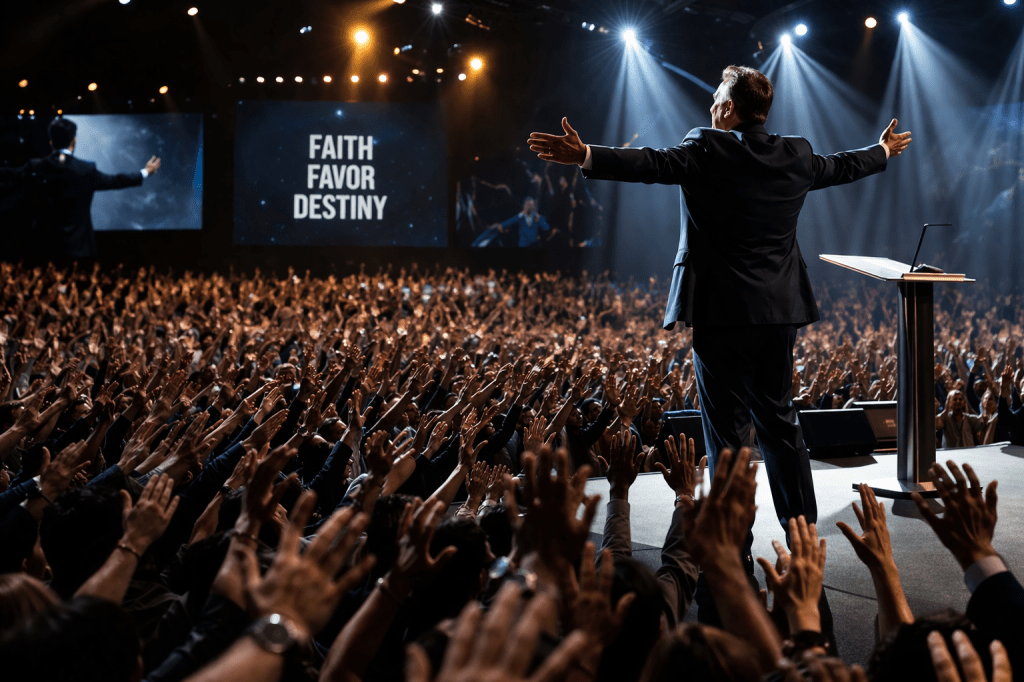
When Paul spoke of the “most eminent apostles,” he was not honoring them. He was exposing them. His words were edged with holy sarcasm. He was tearing down men who had exalted themselves, men who drew disciples after their own name, men who clothed pride in the language of Christ.
So ask yourself plainly:Who would Paul call “super apostles” today? (hyperlian apostolon) 2 Cor 11:5
Who, in our own time, has taken to themselves titles of authority, power, and spiritual supremacy? Who has stood before multitudes and presented themselves not merely as servants of Christ, but as the voice to be obeyed, the authority not to be questioned?
These are not outsiders. Not pagans. Not those who openly reject Christ.
These are men who speak His name. Men who preach in His name. Men who build vast followings under His banner.
And yet, like those in Corinth, they exalt themselves.
They boast in power. They boast in revelation. They boast in influence, in miracles, in numbers. They draw attention to themselves, and in doing so, they rob Jesus of His preeminence and take that preeminence for themselves. You will never hear them boasting of their infirmities. They wouldn’t do it and their audience dont want to hear that.
Paul would not be impressed.
For he said, “Though we walk in the flesh, we do not war according to the flesh.” His weapons were not carnal. They were not built on personality, persuasion, or platform. They were mighty in God, for pulling down strongholds.
And what were those strongholds?
Arguments. Prideful reasonings. Every high thing that exalts itself against the knowledge of God.
These men, then and now, construct systems of thought and authority that rise up, not against religion in general, but against the true knowledge of Christ. They speak of Him, yet elevate themselves. His name is invoked only so their own name can be elevated.
This is why Paul says: “Bringing every thought into captivity to the obedience of Christ.”
Not to a man. Not to a movement. Not to a personality.
To Christ.
These leaders exercise enormous influence. Hundreds of thousands, even millions, sit under them. Their words shape thinking, their authority directs lives.
But we are without excuse.
We have the Spirit of God. We have the Word of God.
And we are commanded to take every thought captive.
Every sermon. Every claim. Every display of power. Every declaration of authority.
All must be brought under Christ.
Paul refused to compete with these men on their terms. He would not boast in greatness.
Instead, he says, “I will boast in the things which concern my infirmities.”
Weakness. Suffering. Dependence on God.
That is the mark of a true servant.
So the question is not merely who these men are.
The question is this:
Will we recognize the difference?
Will we discern between those who exalt Christ, and those who exalt themselves in His name?