Our small house church is reading a book by George Watson entitled “Soul Food.” I highly recommend it. It is really about the battle against self, and taking up the cross. I actually wrote this a number of years ago, but the issues of the heart never really change.
2Co 10:5 Casting down imaginations, and every high thing that exalteth itself against the knowledge of God, and bringing into captivity every thought to the obedience of Christ;
It’s a terrible thing to be held captive by our own thoughts. How exhausting it can be when we allow them to consume and overwhelm us? Its the voice of self. Self always has a victim, typically itself, and a perpetrator. It lifts itself up, and tears others down while burning every bridge.
The thoughts of self begin to eat away at us. They rob us of sleep and leave us tired and weary and walking the floor at night. Self, our own self, is our deadliest enemy, and typically it morphs into self-righteousness. Look at me Lord, I am not as wicked as these others. They should be more like me. There is no justification in this.
I thank the Lord that He freed us and gave us the ability to take every thought into captivity and focus on Him. You can always tell when a saint is focused on the Lord, they elevate Jesus, they lift up, they do not tear down.
If a specific situation or trial has taken hold of your mind today, know that there is a way of escape. You are no longer slaves to the flesh, no longer slaves to your own thoughts. Our own thoughts and “imaginations,” elevate us and sit us on the throne of our own hearts.
If you have been set free by the Lord then you are free indeed. You now have the power to take those thoughts captive; they must bow to the Spirit of God in you. You will know this man because he is humbled in his own sight and his cry will be “be merciful to me.” The other man will loudly tell you what he has and is doing.
“Come to Me all you who labor and are heavy laden, and I will give you rest. Take My yoke on you and learn of Me, for I am meek and lowly in heart, and you shall find rest to your souls. For My yoke is easy, and My burden is light.” (Matt. 11:28-30)
When Paul spoke of the “most eminent apostles,” he was not honoring them. He was exposing them. His words were edged with holy sarcasm. He was tearing down men who had exalted themselves, men who drew disciples after their own name, men who clothed pride in the language of Christ.
So ask yourself plainly:Who would Paul call “super apostles” today? (hyperlian apostolon) 2 Cor 11:5
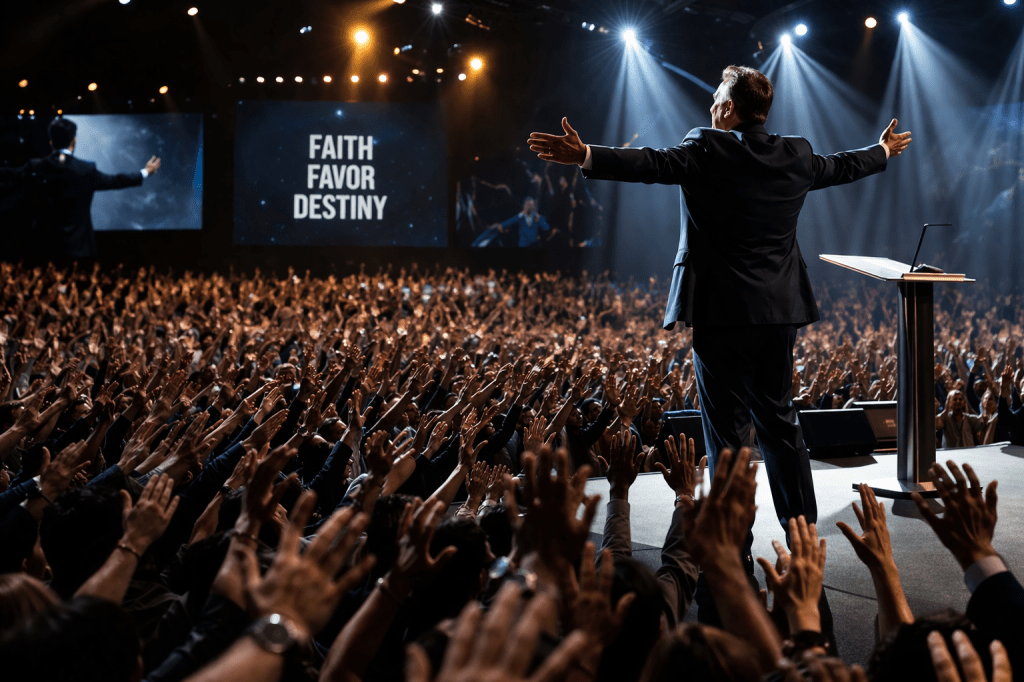
Who, in our own time, has taken to themselves titles of authority, power, and spiritual supremacy? Who has stood before multitudes and presented themselves not merely as servants of Christ, but as the voice to be obeyed, the authority not to be questioned?
These are not outsiders. Not pagans. Not those who openly reject Christ.
These are men who speak His name. Men who preach in His name. Men who build vast followings under His banner.
And yet, like those in Corinth, they exalt themselves.
They boast in power. They boast in revelation. They boast in influence, in miracles, in numbers. They draw attention to themselves, and in doing so, they rob Jesus of His preeminence and take that preeminence for themselves. You will never hear them boasting of their infirmities. They wouldn’t do it and their audience dont want to hear that.
Paul would not be impressed.
For he said, “Though we walk in the flesh, we do not war according to the flesh.” His weapons were not carnal. They were not built on personality, persuasion, or platform. They were mighty in God, for pulling down strongholds.
And what were those strongholds?
Arguments. Prideful reasonings. Every high thing that exalts itself against the knowledge of God.
These men, then and now, construct systems of thought and authority that rise up, not against religion in general, but against the true knowledge of Christ. They speak of Him, yet elevate themselves. His name is invoked only so their own name can be elevated.
This is why Paul says: “Bringing every thought into captivity to the obedience of Christ.”
Not to a man. Not to a movement. Not to a personality.
To Christ.
These leaders exercise enormous influence. Hundreds of thousands, even millions, sit under them. Their words shape thinking, their authority directs lives.
But we are without excuse.
We have the Spirit of God. We have the Word of God.
And we are commanded to take every thought captive.
Every sermon. Every claim. Every display of power. Every declaration of authority.
All must be brought under Christ.
Paul refused to compete with these men on their terms. He would not boast in greatness.
Instead, he says, “I will boast in the things which concern my infirmities.”
Weakness. Suffering. Dependence on God.
That is the mark of a true servant.
So the question is not merely who these men are.
The question is this:
Will we recognize the difference?
Will we discern between those who exalt Christ, and those who exalt themselves in His name?
We stand in a time when the Lord’s description of the harvest is no longer theoretical, but increasingly observable, to the point that what once lay hidden within the field can now be discerned as the age moves toward its consummation.
The Lord did not frame the close of the age as a single moment, but as a harvest season, as He Himself declared when opening the parable of the field [Matthew 13:24].
A closing span in which what has long grown together can no longer conceal its nature, for the harvest, He said, is the end of the age [Matthew 13:39].
When the grain reaches fullness, weight comes upon the head of the true wheat. It bows, heavy with formed life, while the tare, light and fruitless, remains upright, exposed by its own barrenness.
This is why there must be a period of unveiling. The distinction, once hidden in the green blade, becomes undeniable in the ripened field, just as He taught that both must grow together until the harvest [Matthew 13:30].
What could not safely be touched in the early growth can now be handled without harm to the wheat, because maturity has made separation just, visible, and irreversible. So within the synteleia tou aiōnos (Matthew 13:39), the consummation of the age, there unfolds a measured work of exposure and removal.
It is not haste, but precision. Not impulse, but ripeness that governs the reaping. The tares are taken from among the wheat because their habitation was never separate, reflecting His own words that the enemy sowed them among the wheat while men slept [Matthew 13:25].
They shared the same soil, the same rain, the same sun, yet bore no grain. And when the reapers move, they do so in a window of divine timing, for He said the reapers are the angels sent forth at the close of the age [Matthew 13:39–41].
In that solemn interval, the uprightness of the tare becomes its own testimony, and the harvest, long foretold, proceeds without injury to the wheat, fulfilling His declaration that all things that offend would be gathered out of His kingdom [Matthew 13:41].
And in an actual field, as the season turns and the wind moves across the ripened grain, another distinction appears.
The wheat does not only bow from weight, it moves differently.
When the gusts come, the true wheat sways in unified rhythm, heavy heads yielding, bending without breaking, the whole field rolling like waves of gold.
But the tares, stiffer and lighter, resist the movement. They jut upward, visually discordant, unable to flow with the humbled harvest around them, a living contrast between fruitfulness and barrenness. Farmers have long known that near reaping time, the mixed field reveals itself not merely by fruit, but by motion, posture, and response to pressure.
And so too in the closing span of this age, when the winds of testing, exposure, and judgment begin to blow across the house of God, ministries once indistinguishable from the surrounding wheat find themselves revealed by how they stand, echoing the apostolic warning that judgment must begin at the house of God [1 Peter 4:17].
The recent unravelings surrounding International House of Prayer Kansas City and controversies touching streams connected to Bethel Church have, for many, felt like that late season wind moving across the field.
Not creating what was hidden, but revealing what maturity and pressure made visible. For the first labor of the harvest is not the gentle gathering of the wheat, but the careful and deliberate removal of the tares from among it.
Separation is the primary work. For they did not grow in distant fields, but intertwined in the same soil, their roots wrapped together beneath the surface, their blades indistinguishable in the early season. And so when the harvest begins, the more exacting task comes first, just as the Lord instructed, gather the tares first and bind them [Matthew 13:30].
The tares must be identified, drawn out, and gathered away with precision, lest the wheat be harmed in the process. It is a judicial work before it is a restorative one, a clearing of the field before the securing of the grain.
Only when that difficult labor has been sufficiently accomplished does the harvest of the wheat proceed with swiftness and clarity. For once the choking growth has been removed, the bowed heads stand unobstructed, ready for the reaper’s hand.
Then the work becomes one of gathering rather than separating, of bringing in rather than casting out, fulfilling His promise that the righteous would be gathered into His barn [Matthew 13:30].
The barn awaits what the field has produced, and the weight of the wheat, once hidden among the tares, is now brought safely home. The paradigm shift has taken place in the world.
Thus the parable and the apostolic warning converge, revealing that the exposure of the tares is not reserved for a distant day, but is taking place even now.
What was planted in secrecy is being uncovered in the present hour. The likeness that once concealed is breaking down, and the field itself is bearing witness to the difference.
For the harvest is advancing, the separation is underway, and the righteous stand on the threshold of that moment when they will shine forth as the sun in the kingdom of their Father [Matthew 13:43].
This is the primary role of God’s remnant here on earth, to be His witness. In every age His remnant have suffered. They were and are a living witness to the underlying truth that suffering is a major part of our walk with Christ. Scripture does not say if we pass through the waters, but when. The passage assumes the trial. It establishes it as certain.
Job, of course, stands as the perfect example of a mere man. It is no surprise that his account is widely regarded as the earliest book of the Bible, written before Genesis itself. God was laying down markers from the very beginning. He was clearly showing that there is no vital connection between worldly blessing and relationship to Him. Job’s friends, like most modern day Christians, and certainly almost all within Charismatic circles, trying to “live their best lives now” could not and would not understand this mystery.
Yet when Job shaved his head and tore his robe over the loss of everything, and then fell to his knees in worship and blessed the name of God, we are given the model. There it is unveiled in raw humanity and holy reverence.
Suffering, and our reaction to it, becomes the great separator. It separates the legitimate from the illegitimate. The many from the few. And it has been this way down through the ages, right up to and including this present day.
When the great tribulation comes, when trials grow fierce beyond anything previously known, God will already have trained a remnant over the many decades of their lives in the ways of suffering, enduring, and overcoming. They will not be novices in the furnace. They will have fought many battles long before the great battle arrives.
They will know the Scripture well from Revelation 13 where the great enemy of our souls wages war against the saints and, in human terms, prevails. And yet the question stands. How do we overcome when that time comes? The same way we overcome now.
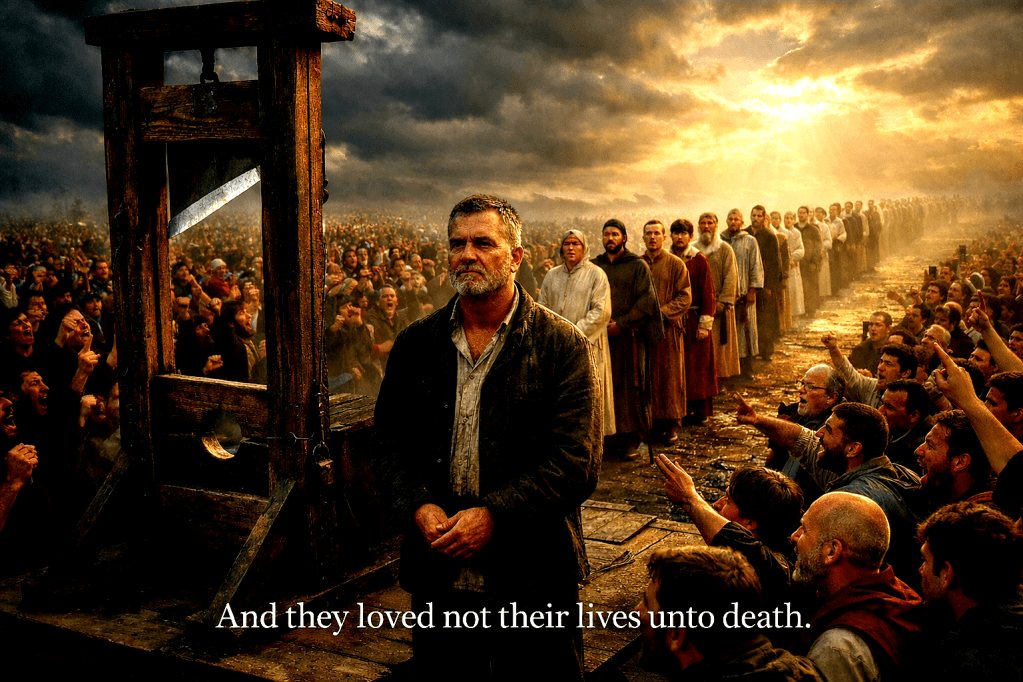
By the Blood of the Lamb. By the word of our testimony. And by the fact that we do not cling to our lives on this earth, even unto death.
This power to wage war agsinst us, along with authority over all nations, is must be remembered has been “granted,” by God for a specific and limited time. It represents a divine allowance for testing, not an independent victory of the beast. As it was with Job. Its reach is measured. Its duration is bound. And even in its fiercest hour, it remains subject to the sovereign limits set by the throne of Heaven.
This is the one thing I do know. As long as He is with us, those of us who remain will pass through the waters and the fires. He knows us. He has redeemed us for this appointed time. He has called us by name. And He declares over us, You are Mine.
We fight not with carnal strength, but with proximity to Jesus. To bask in the glow of His presence is to walk in the beauty of holiness, to move in the overflow of His majesty and His glory. His grace will be sufficient, no matter how fierce the battle becomes.
I was saying to a brother only the other day, as long as I am granted breath enough to make a final speech to the baying crowd, to proclaim to them the glory of the God they have rejected, then I will be satisfied to say, let the blade fall.
And if not even that, then I shall declare that very same thing to the principalities and powers. For their blade does not end my story. It only propels me home.
I was speaking with a brother the other day, a man seasoned by many years. He has been a pastor for more than three decades and also served for many years as a police officer. Before all of that, he once drove a concrete truck.
He told me about a day in Texas when the truck broke down while carrying ten yards of concrete. The drum stopped turning. Time passed, and before the load could be poured, the concrete had set solid inside the bowl. It took him nearly a week with a jackhammer to break it free. Concrete must keep moving until it is ready to be laid, otherwise it hardens without mercy and becomes unusable.
So it is with our hearts. When the Spirit’s work is resisted, delayed, or neglected, what was meant to be formed and poured out becomes hardened instead. What should have been usable for God’s purpose becomes difficult to break and costly to restore.
He spoke about the slump. Concrete must meet a precise measure. If it does not rise to the required standard, the entire load is rejected and discarded. There is no partial acceptance. If it does not meet the specification, it cannot be used.
So it is with the work God is doing in us. God does not measure by appearance or intention, but by what meets His standard. What does not rise to the measure of obedience and faith cannot be blended in or excused, it must be dealt with before the work can continue.
I shared with him what I had learned in construction. Samples are taken from the pour, allowed to harden, and weeks later crushed beneath great pressure. Only then is its strength revealed. Only then is it known whether it can bear the load for which it was made.
So it is with our faith. What God has formed in us is not proven in comfort, but under pressure. The crushing does not create the strength, it reveals whether the strength is truly there to bear the weight God has assigned.
There is also the matter of composition. Water, sand, aggregate, and cement must all be present, and each must be measured carefully. Too much or too little of any one part weakens the whole. The mixture determines the endurance.
So it is with the life God forms in us. Truth, obedience, suffering, grace, and patience each have their place, and none can be removed without consequence. When we favor one at the expense of the others, the strength of the whole is compromised, and what remains cannot endure the load it was meant to bear.
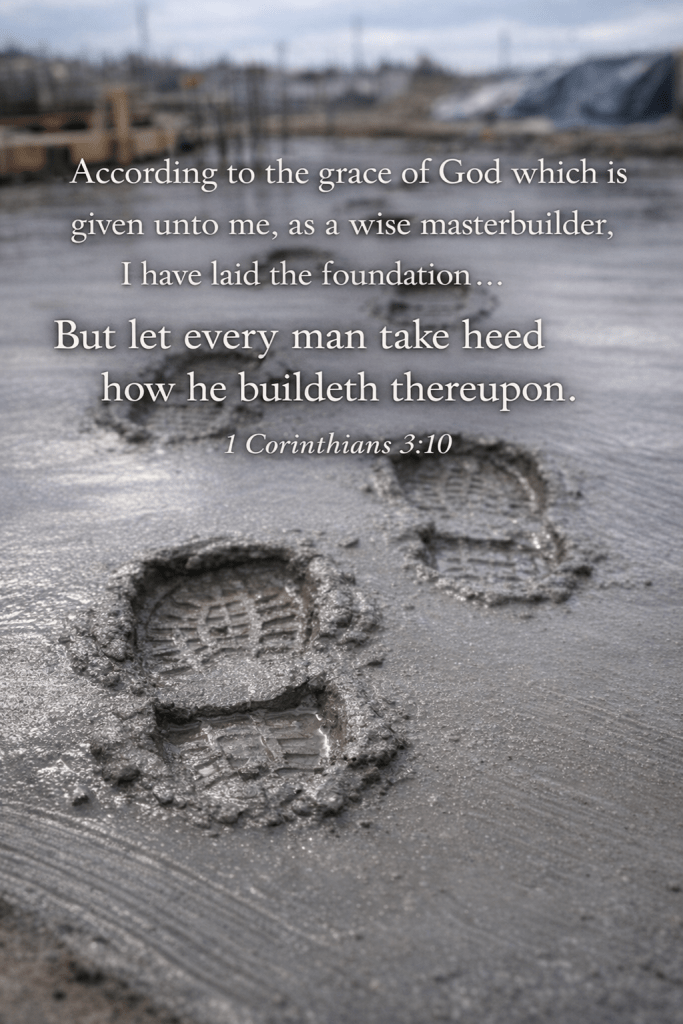
He then spoke of the freshly poured surface, smooth and carefully troweled. Sometimes someone comes walking toward it. You can see it happening and men shout warnings, but at times the person keeps going and walks straight through the concrete.
When that happens, the work is ruined. Either it must be torn up and done again, or the footprints remain forever, a permanent mark where none was meant to be.
Here the lesson becomes clear. When the Lord is doing a work, it is holy ground. When He is forming, shaping, and strengthening something, it is not to be trampled by careless feet.
God determines the mixture of our lives. He measures joy and sorrow, strength and weakness. He allows the testing and the crushing, not to destroy us, but to reveal whether we can bear the load appointed to us.
The strength that grows in us is not accidental, and the endurance is not self-made. It is the result of a careful and deliberate work of God. And even then, He does not leave us to carry the load alone. He bears it with us.
This article was originally written as a ‘Special Introduction’ to a reprint of Frank Bartleman’s ‘What Really Happened At Azusa Street?’ renamed ‘Another Wave Rolls In’ published by Voice Publications (USA) in 1962. It is included here as one of the earliest documents we have found that shows the seminal vision of a ‘restored church’ enjoying both recovered truth and the power of the Holy Spirit before Jesus returns.
Arthur Wallis, of Exeter, England, is a son of the late Captain Reginald Wallis and author of the well-known books, In the Day of Thy Power and God’s Chosen Fast. This article is taken from a booklet entitled, “Revival and Reformation of the Church” which in cooperation with the author we have adapted and expanded.
I deem the principles set forth in this article and Kokichi Kurosaki’s book, One Body in Christ, the most important and strategic message we have published. It is one thing to be right with God and enjoy a real measure of personal communion with Him. It is quite another to understand His greater purposes and let our personal experience be properly related to that all-inclusive end.
John Myers, President Voice Publications
The story of the Church by Arthur Wallis………….
“Remember not the former things nor consider the things of old. Behold, I am doing a new thing. Now it springs forth, do you not perceive it?” Isaiah 43:18,19 RSV
In relation to this theme of revival and spiritual recovery, let us first survey the past, then view some of the significant trends of the present, and finally say a word about the prospects of the future.
THE PAST
If we are to understand what God is doing in these days—if we are to perceive His “new thing” for our day—we need to study the past. Not merely from history books, with their limited human viewpoint, but we must study history as we have light cast upon it by the Spirit through God’s Holy Word.
Let us take a brief panoramic survey of the work of God’s Spirit in the years that are past. As we scan the centuries let us try to discover the principles on which God has been operating. What has He really been after during the years of the Church’s history? This is important, for what God is doing today can only be rightly understood as we grasp the pattern of what He has been doing down through the centuries.
Obviously this is a large subject which could occupy volumes, but here we wish simply to point out what has been the master-strategy behind the successive quickenings of the Spirit that have blessed the Church in the past. In a word, we want to show that every wave of spiritual blessing has not only had in view the immediate renewal of spiritual life in that generation, but also the recovery of spiritual truth. That is, that in all the great spiritual movements through the years, the Lord has been seeking to recover lost truth and bring His people back to original Apostolic Christianity.
This reformation, or “recovery,” aspect of God’s moving through the centuries is unmistakable—and usually has been a balancing thrust in one or the other of two directions. Since truth and experience are inseparable and must be in balance if either is to reach its divine objective, we see the Lord moving either to emphasize doctrine and principle, or and fullness of life and power.
But whatever may be the emphasis or particular truth or phase of experience involved, in the mind and purpose of God there has always been but one final objective in view. That objective is a Church—washed by the water of the Word of God—which shall fully experience and fully express Christ, not only in the earth but in the whole universe.
But let us go back and trace through history this principle in action.




 A Call To The Remnant