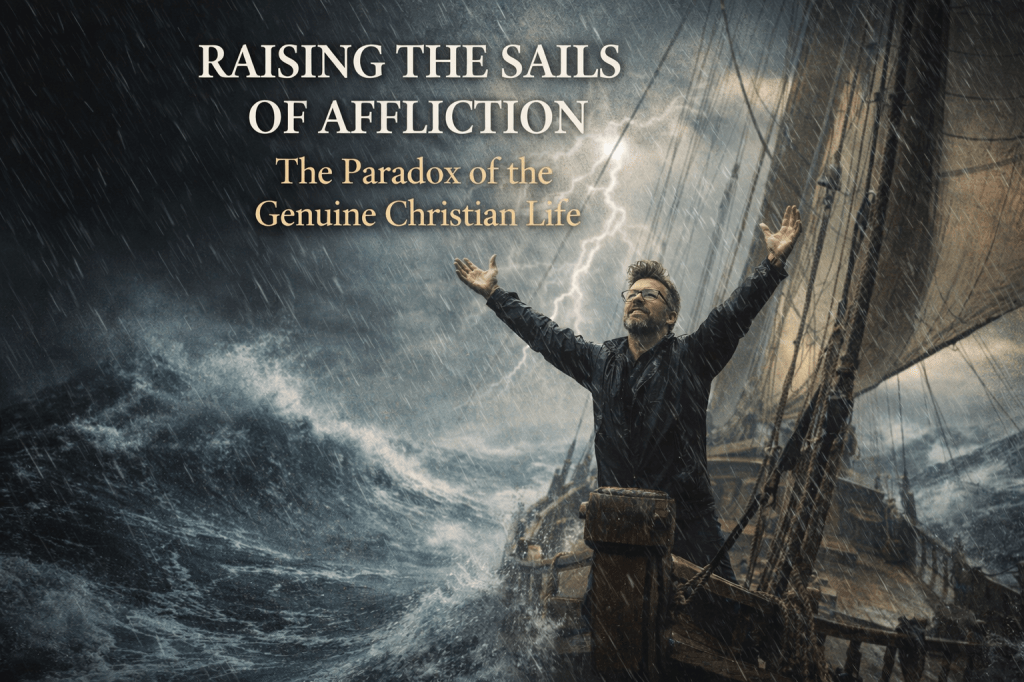
Raising the sails of affliction. The paradox of the genuine Christian life. Men and women who become entangled in the affairs of this world, who allow the headlines of the day or their present circumstances to draw their eyes away from the Lord, are those who lower their sails rather than power them when the winds of affliction begin to blow.
The storm is not the problem. The issue is where the eyes are fixed. When the eyes are fixed on the storm, fear rises. When fear rises, faith recedes. And when faith recedes, the sails come down. Look at the storm and you will sink. Look to Jesus and you will rise, carried by the wind above the waves. The same wind that terrifies one man will carry another. The difference is not the storm. It is the direction of the gaze and whether the sails are raised.
𝗧𝗛𝗘 𝗗𝗢𝗟𝗗𝗥𝗨𝗠𝗦 𝗢𝗙 𝗧𝗛𝗘 𝗦𝗢𝗨𝗟
Racing across the sea with the wind in your face, hurtling toward home, or finding yourself stalled and drifting in the spiritual doldrums of life. Brothers and sisters, the doldrums is a real place. It lies between five degrees north and five degrees south of the equator, shifting slightly throughout the year.
It stretches across the great oceans of the world, the Atlantic, the Pacific, and the Indian. Sailors of old, when sails were king, dreaded being trapped there. It was a place of weak or absent wind, of oppressive heat and heavy air, of sudden and violent storms that rose without warning. To be caught there was to make no forward progress. Supplies would dwindle. Water would run dry. The danger was real, not to perish in a raging storm, but to languish in a place where you are stuck, where you cannot move forward, and where the unseen currents of this world begin to drag you backward, and you do not even notice.
𝗦𝗧𝗨𝗖𝗞 𝗕𝗘𝗧𝗪𝗘𝗘𝗡 𝗦𝗧𝗢𝗥𝗠 𝗔𝗡𝗗 𝗦𝗧𝗜𝗟𝗟𝗡𝗘𝗦𝗦
Brothers and sisters, do you find yourself caught in the headlines of today. Do the circumstances of your life dominate your horizon. Either way, whether overwhelmed by storm or suffocated by inertia, the result is the same. The soul begins to sink into the morass of this world. Progress slows. Vision fades. Growth stalls. A life once moving toward the Lord becomes weighed down by what is seen, rather than lifted by what is unseen.
𝗟𝗜𝗙𝗧 𝗬𝗢𝗨𝗥 𝗘𝗬𝗘𝗦
Lift your eyes. For it is in Him, and Him alone, that we live and move and have our being. He alone is the answer to the storm. He alone is the answer to being stuck. There is no circumstance, no headline, no moment that exists outside of His authority. When the eyes are lifted, the soul is steadied. When the gaze returns to Him, direction returns, strength returns, life returns. The alternative is that headlines or the circumstances which you find yourself in dominate your life. Rather than taking your thoughts captive you are taken captive by them.
𝗧𝗛𝗘 𝗣𝗔𝗥𝗔𝗗𝗢𝗫 𝗢𝗙 𝗧𝗛𝗘 𝗦𝗧𝗢𝗥𝗠
Here is the paradox. We are called to raise our sails in the very teeth of the storm. Not to fight it, not to resist it in our own strength, but to yield to the wind of the Spirit. The storm that appears to threaten destruction becomes the very means by which we are carried forward. What seems contrary becomes the pathway. What appears dangerous becomes the vehicle of progress.
𝗥𝗜𝗗𝗘 𝗧𝗛𝗘 𝗪𝗜𝗡𝗗
Fight the storm and you will perish. Ride upon it, carried by His power, and you will not only live, you will live abundantly. The winds of affliction, when met with faith, do not destroy. They drive us forward. They press us onward. They hasten our journey. And so with the wind in your face and your sails lifted high, you are not drifting, you are not stalled, you are not overcome. You are being carried, steadily and powerfully, ever closer toward home.
War is not an interruption of history but one of its permanent features. Scripture teaches that we live in a fallen world, and history confirms the testimony. Nations rise and nations fall. Borders shift. Peoples displace peoples. From the ancient empires of the East to the kingdoms of Europe, from Rome’s conquest of Britain to the Angles and Saxons, the Viking invasions, and the Norman conquest, the same pattern appears again and again. History is written in the language of struggle.
The American continent bears the same mark. The Cheyenne yielded the Black Hills to the Lakota through conflict, and the Lakota in turn lost that same territory to the expanding United States. This is not an exception but an illustration. War and power have always been instruments by which the political order of the world is formed. The world, as it exists, is not a garden but a wilderness, and it has been so since the fall of man.
Christians must begin here if they are to think clearly. This present order is not our home in any moral sense. We belong to another kingdom. Yet we are required to live in this one, and we are commanded to see it as it truly is. Sentimentality is no substitute for truth.
When tyrannies collapse and iron curtains fall, there is reason to rejoice for those who are freed from oppression. Such rejoicing does not sanctify the instruments by which that freedom comes, nor does it purify the motives of those who wield power. It simply acknowledges that relief has come to those who suffered under despotism. Imperfect instruments may still bring real deliverance.
Christians are called neither to blind nationalism nor to naïve idealism. The Scriptures command us to seek peace, yet they also acknowledge that rulers exist to restrain evil in a violent world. Power vacuums do not remain empty. If one nation withdraws, another will advance. The question is never whether power will shape the world, but whose power it will be.
Would the world be safer under the dominance of Russia? Or China? Or India? Or North Korea? Perhaps even Iran? Power will rule in this fallen world; the only question is which power, and to what end.
Many speak as though the exercise of power were itself the great evil, yet history teaches that the absence of ordered power often produces something darker still. Idealistic visions detached from reality offer little comfort to those who must live under tyranny. The world will not be governed by dreams but by forces strong enough to impose their will.
The Christian perspective is neither naïve nor despairing. Believers understand that they are in the world but not of it. They are called to see clearly and to judge soberly. Scripture does not promise that the present age will culminate in peace among nations. Rather, it teaches that the world will continue in conflict until the final kingdom of God is revealed.
Consider one final example. George S. Patton was by many accounts a flawed man can , proud, ambitious, and often harsh. Yet when his Third Army broke through German lines during the Battle of the Bulge and relieved the surrounded soldiers at Bastogne, the men who had endured the siege did not pause to examine his character or analyze his motives. They cared that relief had come. So it is in the affairs of nations. Men act from mixed motives , ambition, necessity, calculation, and sometimes principle.
The purposes behind intervention in places such as Iran may be complex and imperfect. Yet if the day comes when ordinary people find themselves delivered from the rule of harsh clerical tyranny, it is unlikely that they will trouble themselves greatly with the philosophical purity of those who brought about that change.
Christians therefore must learn to think with steady minds. This world will never be redeemed by political power, yet neither will it be preserved from evil by wishful thinking. We are called to live as strangers and pilgrims, seeing clearly the broken order around us while fixing our hope on a kingdom not made by human hands.
There’s a phrase we use in the world: “The devil is in the details.”
It’s usually applied to negotiations or contracts, a warning to examine how things will actually work out. But there is another application to that phrase.
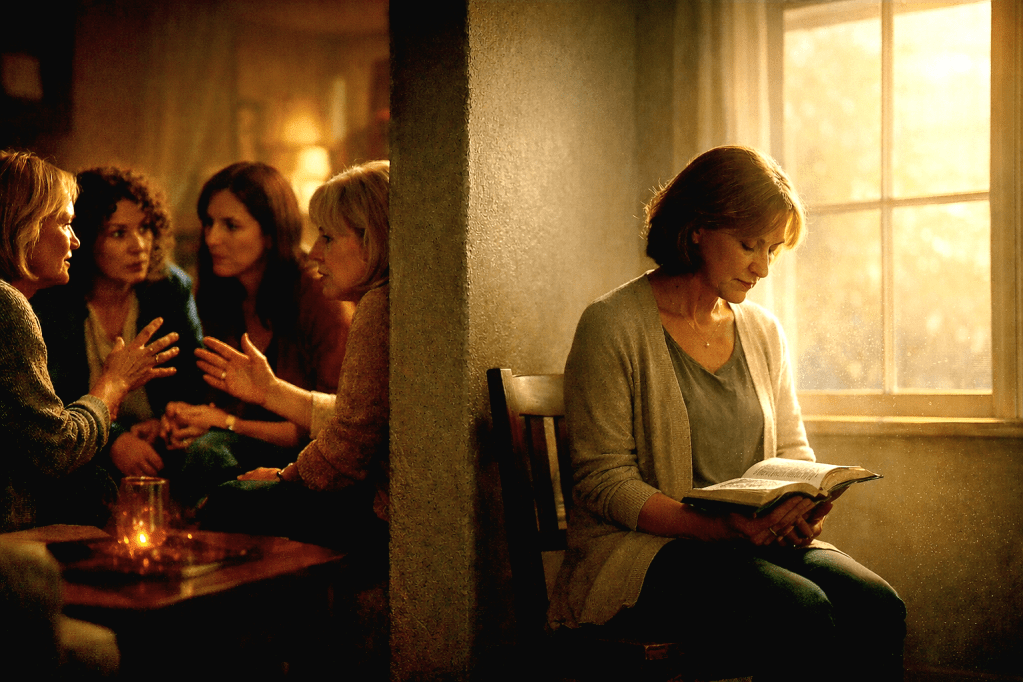
When you are in a trial, in a tribulation, and you allow your mind to go over and over and over every aspect of the circumstance, something begins to happen. You surrender control of your mind. We are told to take every thought captive to the obedience of Christ (2 Corinthians 10:5).
Yet when we rake over every detail of what has happened, rehearsing it, replaying it, analyzing it, and then telling one person, and then another, and another, adding to it each time, we are not walking in that obedience. We are multiplying our sorrows.
The Scripture says, “You will keep him in perfect peace, whose mind is stayed on You, because he trusts in You” (Isaiah 26:3).
Notice, peace is connected to where the mind stays.
Think about this.
How does a bird feed its young? It regurgitates food from its stomach back into the mouths of its chicks. That is how nature works.
But when we regurgitate, and let’s use the plain word, vomit, our circumstances to five other people, and then they begin to add their own details to our story, we are not seeking peace. We are reliving it. We are feeding on it again.
The apostle Paul instructs us clearly: “Be anxious for nothing, but in everything by prayer and supplication, with thanksgiving, let your requests be made known to God; and the peace of God, which surpasses all understanding, will guard your hearts and minds through Christ Jesus” (Philippians 4:6–7).
The guarding of the heart and mind comes after we bring it to God, not after we rehearse it before men.
Instead, when we continually retell and relive the circumstance, we rake over the ashes and coals of what has happened. We fan embers back into flame. We reset the fire of the circumstance rather than bringing it to the Lord and finding peace in Him.
We forget that the Lord was not in the wind, nor in the earthquake, nor in the fire, but in the still small voice (1 Kings 19:11–12).
And that stillness cannot be heard in a mind that is constantly agitated.
So remember this, brothers and sisters: Unless you are in a place of peace, unless you have quieted your mind enough to hear the still, small voice of God, do not regurgitate the story. Do not relive it again and again.
“For where your treasure is, there your heart will be also” (Matthew 6:21).
If the treasure becomes the injury, the offense, the trial, then the heart will remain there.But if the treasure is Christ, then the mind will return to Him. You are not glorifying the Lord by rehearsing the wound.You are not edifying your brothers and sisters by spreading the ashes.
And you are not strengthening yourself by reliving the fire.
We stand in a time when the Lord’s description of the harvest is no longer theoretical, but increasingly observable, to the point that what once lay hidden within the field can now be discerned as the age moves toward its consummation.
The Lord did not frame the close of the age as a single moment, but as a harvest season, as He Himself declared when opening the parable of the field [Matthew 13:24].
A closing span in which what has long grown together can no longer conceal its nature, for the harvest, He said, is the end of the age [Matthew 13:39].
When the grain reaches fullness, weight comes upon the head of the true wheat. It bows, heavy with formed life, while the tare, light and fruitless, remains upright, exposed by its own barrenness.
This is why there must be a period of unveiling. The distinction, once hidden in the green blade, becomes undeniable in the ripened field, just as He taught that both must grow together until the harvest [Matthew 13:30].
What could not safely be touched in the early growth can now be handled without harm to the wheat, because maturity has made separation just, visible, and irreversible. So within the synteleia tou aiōnos (Matthew 13:39), the consummation of the age, there unfolds a measured work of exposure and removal.
It is not haste, but precision. Not impulse, but ripeness that governs the reaping. The tares are taken from among the wheat because their habitation was never separate, reflecting His own words that the enemy sowed them among the wheat while men slept [Matthew 13:25].
They shared the same soil, the same rain, the same sun, yet bore no grain. And when the reapers move, they do so in a window of divine timing, for He said the reapers are the angels sent forth at the close of the age [Matthew 13:39–41].
In that solemn interval, the uprightness of the tare becomes its own testimony, and the harvest, long foretold, proceeds without injury to the wheat, fulfilling His declaration that all things that offend would be gathered out of His kingdom [Matthew 13:41].
And in an actual field, as the season turns and the wind moves across the ripened grain, another distinction appears.
The wheat does not only bow from weight, it moves differently.
When the gusts come, the true wheat sways in unified rhythm, heavy heads yielding, bending without breaking, the whole field rolling like waves of gold.
But the tares, stiffer and lighter, resist the movement. They jut upward, visually discordant, unable to flow with the humbled harvest around them, a living contrast between fruitfulness and barrenness. Farmers have long known that near reaping time, the mixed field reveals itself not merely by fruit, but by motion, posture, and response to pressure.
And so too in the closing span of this age, when the winds of testing, exposure, and judgment begin to blow across the house of God, ministries once indistinguishable from the surrounding wheat find themselves revealed by how they stand, echoing the apostolic warning that judgment must begin at the house of God [1 Peter 4:17].
The recent unravelings surrounding International House of Prayer Kansas City and controversies touching streams connected to Bethel Church have, for many, felt like that late season wind moving across the field.
Not creating what was hidden, but revealing what maturity and pressure made visible. For the first labor of the harvest is not the gentle gathering of the wheat, but the careful and deliberate removal of the tares from among it.
Separation is the primary work. For they did not grow in distant fields, but intertwined in the same soil, their roots wrapped together beneath the surface, their blades indistinguishable in the early season. And so when the harvest begins, the more exacting task comes first, just as the Lord instructed, gather the tares first and bind them [Matthew 13:30].
The tares must be identified, drawn out, and gathered away with precision, lest the wheat be harmed in the process. It is a judicial work before it is a restorative one, a clearing of the field before the securing of the grain.
Only when that difficult labor has been sufficiently accomplished does the harvest of the wheat proceed with swiftness and clarity. For once the choking growth has been removed, the bowed heads stand unobstructed, ready for the reaper’s hand.
Then the work becomes one of gathering rather than separating, of bringing in rather than casting out, fulfilling His promise that the righteous would be gathered into His barn [Matthew 13:30].
The barn awaits what the field has produced, and the weight of the wheat, once hidden among the tares, is now brought safely home. The paradigm shift has taken place in the world.
Thus the parable and the apostolic warning converge, revealing that the exposure of the tares is not reserved for a distant day, but is taking place even now.
What was planted in secrecy is being uncovered in the present hour. The likeness that once concealed is breaking down, and the field itself is bearing witness to the difference.
For the harvest is advancing, the separation is underway, and the righteous stand on the threshold of that moment when they will shine forth as the sun in the kingdom of their Father [Matthew 13:43].
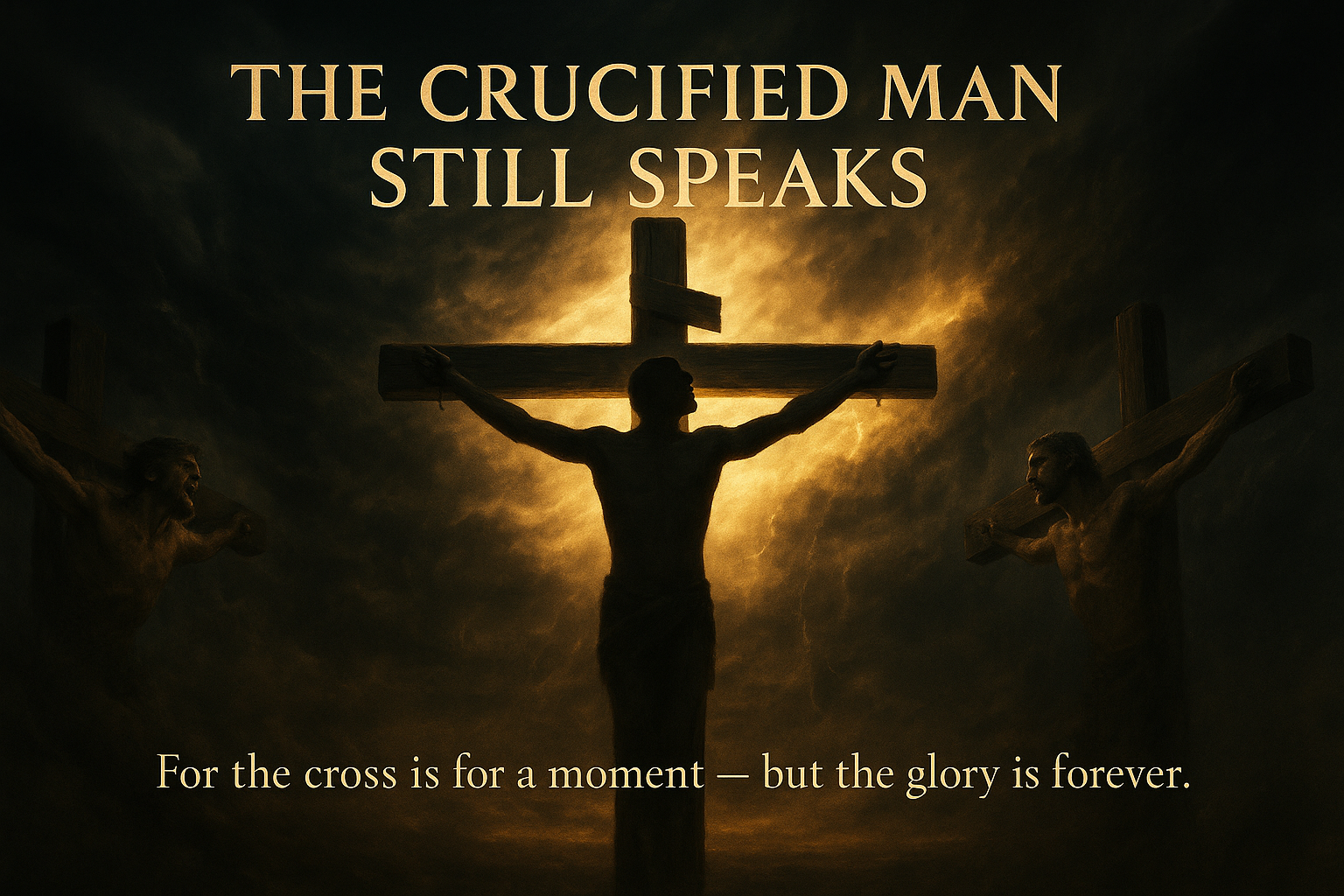
Then “He delivered Him to them to be crucified. So they took Jesus and led Him away. And He, bearing His cross, went out to a place called the Place of a Skull… where they crucified Him” (John 19:16–18). And as He hung between two criminals—with Jesus in the center—the crucified Lord spoke: “When Jesus therefore saw His mother, and the disciple whom He loved standing by, He said…” (John 19:26–27).
The crucified man speaks.
This is not merely a historical moment—it is a spiritual revelation. When I say “the crucified man,” I am not referring only to men, but to all mankind—male and female. In Scripture, “man” refers to the old nature we inherited from Adam, the fleshly soul-life within us. This old man was judicially crucified with Christ at the moment of salvation. Yet crucifixion is not instant death. It is a lingering, agonizing process. The flesh is on the cross, but it still speaks.
The apostle Paul declared: “Knowing this, that our old man was crucified with Him…” (Romans 6:6). “Those who are Christ’s have crucified the flesh with its passions and desires” (Galatians 5:24). “I have been crucified with Christ…” (Galatians 2:20). “I die daily” (1 Corinthians 15:31).
All of these verses reveal a spiritual truth: our flesh has been crucified. Yet our experience testifies that it still cries out. It still resists death. It still seeks to exert control. This is why Jesus commands us to take up our cross daily. If the flesh were silent, there would be no need to deny it daily.
Many can “take up” the cross for a moment. They can lift it onto their shoulder in a burst of zeal. But to bear the cross—to carry it through deep valleys, across raging rivers, and up steep mountains—is another matter. To bear is to endure when every natural instinct cries out for relief. To bear is to persevere when the flesh screams, “Lay this burden down!” To bear is not to escape the cross, but to remain upon it until the flesh is silenced.
The day will come when we lay our burdens down—but that day is not today. It is not tomorrow. It is the day when we take our final breath, and like our Lord, we shall say, “It is finished” (John 19:30).
Consider the two thieves crucified beside Jesus. Both were nailed to their crosses. Both were dying. Both were suffering. Yet one railed against Christ, while the other surrendered and was saved. This is a prophetic picture for every believer: the crucified flesh still speaks, but only the surrendered soul will see Paradise.
The voice of the flesh cries, “Save yourself! Come down from the cross!” But the voice of the spirit says, “Not my will, but Yours be done.”
So I appeal to you, saints of the Living God: Surrender quickly. Obey immediately. Glorify Christ even in your pain. Do not give the flesh any place. Deny its arguments. Silence its cries. Let your spirit ascend with Christ, fixing your gaze on the glory that awaits you.
For what awaits is beyond imagination. “For I consider that the sufferings of this present time are not worthy to be compared with the glory which shall be revealed in us” (Romans 8:18).
There is a day coming when you will be redeemed from this corruptible body, delivered from this sin-sick world, and welcomed into a heaven where there is no more striving, no more sorrow, no more temptation, and no more voice of the flesh. There, the crucifixion gives way to resurrection, and every tear is wiped away by the hand of God Himself.
Our cross is but for a moment—but the glory is forever.
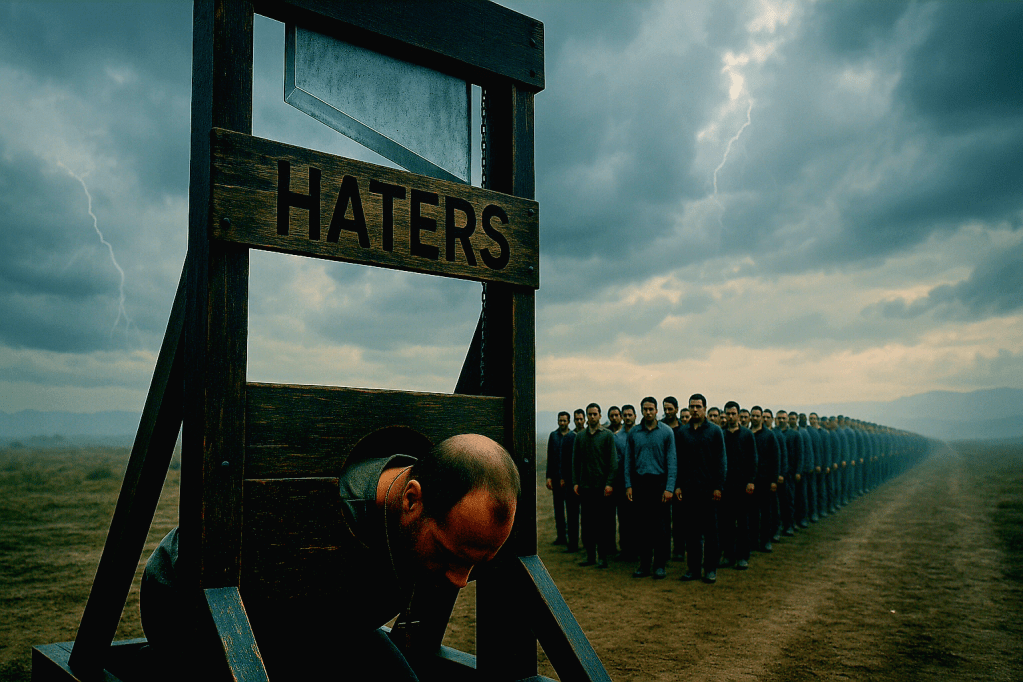
The final reproach of the saints, when truth itself is branded as hate.
From the earliest days of the church, the saints of God have endured the reproach of being called what they are not. To stand for truth has always been to invite slander, and to speak the Word of God faithfully has never been received without hostility. As Jesus Himself said, “Blessed are you when they revile and persecute you, and say all kinds of evil against you falsely for My sake” (Matthew 5:11). History testifies that the righteous have consistently been accused of hatred, malice, and cruelty when, in reality, they were bearing witness to the love and holiness of God.
In our present age, particularly since the cultural shifts of the early twenty-first century, a new distortion has arisen. It is no longer permissible in much of society to disagree with the prevailing moral fashions without being branded a hater. A deliberate conflation has been made between disagreement and hatred, as if to question the legitimacy of homosexual practice or transgender ideology were to harbor malice against those who embrace it. But disagreement is not hatred. To call sin what Scripture calls sin is not to despise the sinner, but to speak truth in love (Ephesians 4:15), the truth that alone can set men free (John 8:32).
This inversion of meaning is no accident. It is the inevitable fruit of a culture that prefers sentimentality over truth, appearance over substance, and human approval over divine authority. The saints of God must see it for what it is: an attempt by the spirit of the age to silence the proclamation of the gospel by weaponizing false accusation. For if every Christian who holds to biblical teaching is deemed a “hater,” then every genuine believer is, by that definition, worthy of scorn and—according to some—even worthy of destruction.
And make no mistake, saint: the false accusers of the brethren have almost always come from within the ranks of what calls itself Christendom. Nearly all the martyrs of the last two thousand years were condemned at the insistence of religious institutions, who sought to preserve their own influence and protect their own power. Secular authorities and atheists may join in, but the fiercest opposition is often religious. Those who speak the truth boldly are always a danger to the religious establishment, because they expose its corruption, its hypocrisy, and its lifeless form. And so the institutions respond either by silencing themselves in cowardice or by attacking the voices of truth with fury—denouncing, separating, and historically, even putting to death those who dared to stand in the light of God’s Word.
This is the way of religion versus relationship. It has always been so, and it will always be so until the end of the age. Jesus reserved His harshest words not for pagans or atheists, but for the Pharisees, the Sadducees, and the scribes—the religious authorities of His day (Matthew 23). Though divided among themselves, Pharisees and Sadducees, Herodians and Zealots, even Rome itself, found common cause in their hatred of Christ. In an unholy alliance, they conspired to destroy Him because His very presence threatened every institution and every system of control. And kill Him they did.
That same religious spirit has not died. It has persisted through the centuries, raising its hand against prophets, apostles, reformers, and martyrs. And it remains strong today. As the end draws nearer, that spirit will only intensify, aligning with worldly powers to silence, discredit, and ultimately destroy those who walk in genuine relationship with the Lord Jesus Christ. For “the time is coming when whoever kills you will think he offers God service” (John 16:2).
Therefore, the genuine saint must not shrink back. He or she must understand that as the darkness increases, so too will the accusations, the betrayals, and the persecutions. Yet none of this is strange, for our Lord told us beforehand: “If the world hates you, you know that it hated Me before it hated you” (John 15:18). The darkness hates the light and will always seek to extinguish it (John 3:19–20).
But take heart. The slanders of men are but passing shadows. The record of heaven is clear, and the Judge of all the earth will vindicate His people. To be falsely accused is grievous, yes, but it is also glorious—it means we are walking in the footsteps of prophets, apostles, martyrs, and of Christ Himself, who “was despised and rejected by men, a Man of sorrows and acquainted with grief” (Isaiah 53:3).
So let the saints stand firm. Let them embrace the reproach of Christ as greater riches than the treasures of Egypt (Hebrews 11:26). For though the world brands them as haters, heaven knows them as beloved, faithful witnesses of the Light. And as the night grows darker, their testimony will shine all the more brightly until the Day dawns and the Morning Star arises in their hearts (2 Peter 1:19).
This was the prayer that came to my spirit as I walked and prayed this morning.
If a celestial staircase opened before me Lord, I would climb it, step by step, all the way to heaven. If I could lay my burdens down, I would lay them all down now, at Your feet oh Lord.
If the noise of this world could be silenced forever, O what a glorious moment that would be. For nothing surpasses the peace of Your presence, The stillness, the holy rest of our God.
There is no clamoring when we draw near to You, Lord, Only rest, and peace, and stillness. You make me lie down in pastures green, You lead me beside the still waters of life.
Amid the tumult and noise of this age, Fix my mind on the eternal, unseen kingdom. Open my eyes to behold Your way, The kingdom that cannot be shaken.
Open the staircase of heaven before me, Lord, That I might climb into Your presence, Leaving the clamor and the noise behind, And dwelling forever in Your light.
The Pentecostal and Charismatic world has been shaped by movements such as “name it and claim it” and the so-called “word of faith” message. Add to that the prosperity gospel, and what remains is a witches brew, a kind of spiritual confusion brewed in our own theological cauldron. These movements have often shifted the focus of faith from trusting in God to demanding from God, turning faith into a formula for material gain rather than a pathway to spiritual depth. What was once a holy dependence on the sovereignty of God has, in many circles, become a technique for manipulating outcomes.
Yet Scripture offers a deeper, more sobering view. Depending on the translation, the word “faith,” appears around 270 times in the Bible. The vast majority of these references are not about miracles or breakthrough, but about trust, trust in God’s character, His promises, and His sovereign will.
Hebrews 11:6 says, “But without faith it is impossible to please Him, for he who comes to God must believe that He is, and that He is a rewarder of those who diligently seek Him.”
The kind of faith that pleases God is not transactional, but relational. It is the quiet, unwavering confidence in who God is, even when heaven is silent and the way is dark.
Romans 8:8 reinforces this truth: “So then, those who are in the flesh cannot please God.” Faith and flesh are incompatible. One walks by sight, the other by belief. To walk in the flesh is, functionally, to walk without faith.
Romans 8:5 explains, “For those who live according to the flesh set their minds on the things of the flesh.” The word mind here, phroneó, speaks of setting one’s affections, fixing one’s thoughts and desires. To “mind” the things of the flesh is to be consumed with the visible, temporal world. The Greek word for flesh, sarx, in this context means “the symbol of what is external.”
What does that look like in practical terms? It means being consumed with our careers, our possessions, our reputations, our politics, our social standing, our image, gaining our miracles, our health, rather than being absorbed in the things of God. A mind dominated by these mostly earthly concerns is incompatible with the Spirit-led life. Such a person is not walking in the Spirit, and therefore cannot please God. Being obsessed with miracles often flows, not from the heart of God, rather , it flows from the depths of our flesh.
“For to be carnally minded is death, but to be spiritually minded is life and peace.” (Romans 8:6)
The spiritual mind is one that seeks first the Kingdom of God and His righteousness (Matthew 6:33). It is a life oriented toward the eternal, not the temporary.
Hebrews 11, that great chapter of faith, gives us a dual picture. We rejoice in the stories of deliverance:
“By faith the walls of Jericho fell” (v.30), “Through faith they subdued kingdoms, worked righteousness, obtained promises, stopped the mouths of lions” (v.33). These are victories worth celebrating.
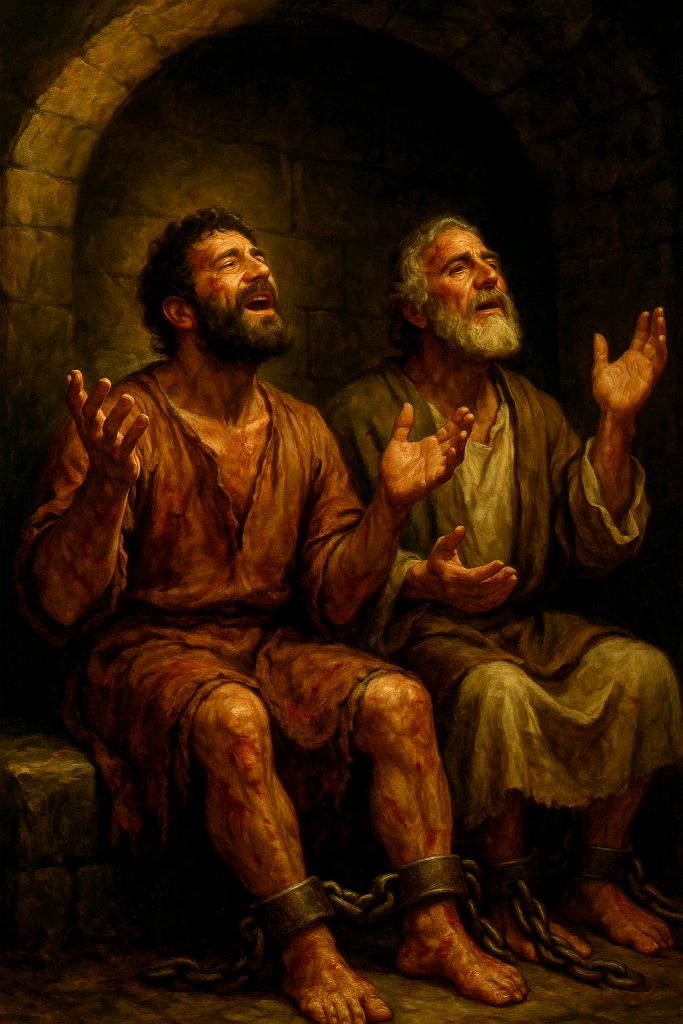
Yet the chapter shifts abruptly. “Others were tortured, not accepting deliverance, that they might obtain a better resurrection. Still others had trial of mockings and scourgings, yes, and of chains and imprisonment. They were stoned, they were sawn in two… being destitute, afflicted, tormented, of whom the world was not worthy.” (vv.35–38)
The common thread?
“And all these, having obtained a good testimony through faith, did not receive the promise.” (v.39)
Their faith was not measured by immediate reward, but by enduring trust in the unseen. Job expressed it best:
“Though He slay me, yet will I trust Him.” (Job 13:15)
Habakkuk echoes the same heart: “Though the fig tree may not blossom… yet I will rejoice in the Lord.” (Habakkuk 3:17–18)
This kind of faith is not swayed by trials or silence. It is rooted in relationship, not reward. Psalm 23 reminds us that God does not remove the enemies, but prepares a table in their midst.
“You anoint my head with oil, my cup runs over.” (Psalm 23:5) The oil flows not in times of ease, but in times of pressure. The true reward of faith is not what we receive, but who we receive—His presence.
“In Your presence is fullness of joy.” (Psalm 16:11)
The last 2,000 years of Church history bear witness to this truth. Millions have suffered for Christ, not because their faith failed, but because their faith endured. They possessed a spiritual mind and a heart anchored in another world. Their lives pleased God. Their testimonies still speak.
So the question is this: will you walk in the Spirit today? Will you cast aside the fleeting things of this world and set your affections on things above (Colossians 3:2)? Will you walk by faith and not by sight (2 Corinthians 5:7)? Will you trust God even when there is no sign of deliverance?
This is the faith that pleases God. And without it, we cannot.
The apostolic revelation given to Paul, as recorded in Colossians 1:26, presents one of the most profound disclosures in redemptive history—a mystery once concealed from ages and generations, now gloriously revealed to the saints. This mystery, long hidden in the counsels of God, was not perceived by the prophets nor comprehended by the wise of this world. It is the astounding truth that in Christ Jesus, Jew and Gentile are no longer divided, but made one—a new humanity, a single body in the Messiah. This is the long-anticipated fulfillment of the promise to Abraham, that in his seed all the nations of the earth would be blessed. No merely ethnic boundary remains, for in Christ there is neither Jew nor Greek. This is a revelation of cosmic consequence and divine ingenuity, wholly unforeseen in its breadth and intimacy.
Yet, astonishingly, the mystery deepens. As Paul continues in Colossians 2:2–3, he reveals that the purpose of this unity is not an end in itself, but a divine conduit by which the saints are brought into the very heart of God. He prays that their hearts might be encouraged, being knit together in love, and that they may attain to all the riches of the full assurance of understanding—to the knowledge of the mystery of God, both of the Father and of Christ.
Herein lies the surpassing dimension of the mystery: not merely reconciliation between former enemies, but an invitation into divine communion. In Christ are hidden all the treasures of wisdom and knowledge. Through union with Him, the veil is lifted and the Father—once unknowable and inscrutable—is made known. The mystery begins with the joining of the divided, but it climaxes in the revelation of the Divine. It is not only that Jew and Gentile are made one in Christ, but that in being made one, they are ushered into the very life of God.
This is the formation of the true Israel of God—a people sanctified, a royal priesthood, whose minds are being renewed and whose hearts are being enlarged by the Spirit. The saints are not left with mere doctrine, but are drawn into the riches of divine intimacy, discovering the boundless wisdom and knowledge hidden in Christ. This is the full arc of the mystery: reconciliation leading to revelation, unity giving way to glory, and the Church—Christ’s body—growing in grace as it beholds the face of God in the person of Jesus Christ.
In every great move there is a tearing down. Gideon, long before he does mighty exploits, is called to tear down the altars of his father and in its place build an altar to Lord His God so that it becomes a sanctuary, a meeting place. “His father’s altar to Baal stood as a symbol of dead religion, an affront to the living God. Despitie Gideon’s initial apprehension, he obeyed and his actions signaled a shift towards a new spiritual stirring.” (J.D.King)
The reformation is probably the largest example of a tearing down yet there are many more. In the 19th century in Scotland there was “the great disruption,” where almost 500 ministers abandoned the Church of Scotland and their Anglican roots to form the free church, gave us some great preachers like Bonar and his brothers.
Of course you had the confessing church with Bonhoeffer, rejecting the corruptions of the Lutheran church. The Jesus movement of the late 60s and 70s was led by anti- establishment “Jesus freaks.” I long to see this generation, the ones that are younger than me have their own Gideon moment/movement. A new wine skin for new wine.
Of course, the old guard will be, for the most part, against it, because second and third generations almost always morph into religion and establishment. Every field that seeks to continue to produce, must go through crop rotation. It’s time, I believe, for the present “church,” to be rotated. We’ve sucked all the nutrients out of the ground and our crops have suffered greatly for it, smaller, less fruitful and the yield almost down to nothing. Time for a new crop, new wine, therefore, time for a new wine skin.
There is a remnant people who have/will tear down the idols of their fathers, dead religion. It may have had life at one point( it may not have) but certainly God is calling this generation back to their first love. Yet just as when the Israelites were released from Babylon to go back to their beginnings, only about a third did, two thirds staying behind in the comforts and ease of Babylon.
The modern established church is a very comfortable place to be. It has a program for everything. It has a “senior pastor,” who will do all your thinking for you. Coming out of that is a horrifying thought for those who have worshiped there for generations. Yet, in the end, who will search for “the old paths?” Who will desire to return to their first love? The remnant.
In the solemn days of our times who will search His word, who will search their hearts? Shall we ignore God? Shall we desperately try to keep going and keep doing what we were doing before? If the locusts descended upon you and the whole earth shook should you not look to the heavens and cry out to God to know the error of your ways? The Lord tells us in His word that we should let our tears run down like a river day and night, that we should give ourselves no relief and no rest. We should rise up from our slumbers and cry out in the night. Do we observe any of this brothers and sisters? The Lord also told us in His word that the He has caused the appointed feasts and the Sabbaths to be forgotten, In His burning indignation He has spurned the king and the priest.The Lord has spurned His alter and abandoned His sanctuary.
Lam 2:7 The Lord hath cast off his altar, he hath abhorred his sanctuary, he hath given up into the hand of the enemy the walls of her palaces; they have made a noise in the house of the LORD, as in the day of a solemn feast.
One of our favorite portions of Scripture says “Through the Lord’s mercies we are not consumed because His compassion fails not. They are new every morning, great is His faithfulness. The Lord is my portion says my soul therefore I hope in Him” These words were penned in the midst of great affliction. They were the hearts cry of a man drowning in darkness, crying out to the living God. In the midst of those cries he discovers mercy and faithfulness and hope. Another favorite portion of Scripture is “If my people, which are called by my name, shall humble themselves, and pray, and seek my face, and turn from their wicked ways; then will I hear from heaven, and will forgive their sin, and will heal their land (2Ch 7:14) Do you ever wonder why we never quote verse 13, the verse that comes before ” if I shut up heaven that there be no rain, or if I command the locusts to devour the land, or if I send pestilence among my people.”
You see, we don’t like that part. We like all the benefits of Calvary but we do not like the cost. What cost you say, Jesus did it all. Yes He did but He directly commands us to take up our own crosses, every day. We are told that we must lift up the Lord Jesus Christ and He alone must be preeminent in the midst of our lives and in the midst of our gathering. We are the Ekklesia, we are the called out ones. And in the midst of those called out ones who gather together, Jesus and He alone is to be lifted up. He directs His people and He does it through the power of the Holy Spirit. And when we do indeed lift up Jesus and magnify Him, then the power of God comes down and rests upon us.
What is the Lord saying in the midst of a world consumed by darkness ? Is He saying “hold on, eventually you can go back to business as usual?” Really? You really think He is saying that? If He is not saying that then what is He saying to us in the days that we find ourselves in? Literally, everything in the world that can be shaken is being shaken. If we will not ask ourselves hard questions and search our hearts then the darkness of our hearts prevail and the storms shall continue to come and batter us only with every year the intensity increases, and I am talking about the spiritual state of our world, not the climate, although the judgment that rains down upon us is total. Like a building storm in a vast ocean the waves get higher and higher.
There is mercy to be found for the broken and the contrite. We have trampled His name in the street. Shall He cut of the rain, shall He send the locust? Or shall we return to our roots, our Biblical roots, all the way back to the beginning, the old paths? We have gotten terribly off track. We have so many centuries of tradition and error upon error that we bear little or no resemblance to what we read in 1 Cor 14. The simple organic worship of the called out ones. Ones who desire to be led, wholly led, not by men, not by traditions not by liturgy or by program and deadly routine. God is speaking to us loudly and clearly. The question is, are we listening? If we would indeed humble ourselves and turn from what? Our wicked ways! Who is He talking about here? The people who call themselves by His name. You, and me. Our wicked ways brothers and sisters. We have denied and defied the Word of God in favor of our wicked ways. You cry out “how are we wicked?” Then I will tell you We hold the covenants of God in our mouths and we declare His statutes. Yes indeed, it is part of our indictment.
And call upon me in the day of trouble: I will deliver you, and you shalt glorify me. But to the wicked God says, What business do you have declaring my statutes, or speaking my covenants ? Seeing that you hate instructions and put my words behind you (Psa 50:15-17) You see brothers and sisters He is not speaking to an unbelieving wicked world, He is speaking to those who call themselves by His name (If my people who are called by my name) It is theirs/our wicked ways He is speaking to.
The Lord tells us to call upon Him in the day of trouble. Call upon Him in repentance and contriteness and brokenness. If we do this and pray and seek His face, then He will hear from heaven and forgive our sin. What sin? All of our sin but especially the sin of having demoted Jesus to some kind of mascot or figurehead and raising up the idol of the pulpit in favor of actually hearing from God. We have a million little Moses who willingly ascend that pulpit every Sunday, elevating themselves and taking the place and the role and the authority of Jesus. These men should tremble and repent and we should too for allowing such a travesty to unfold. And in that trembling and in that repentance we shall find a merciful God whose mercies are new every morning.
I am convinced that 1 Cor 12-14 just cannot exist within the traditions of our fathers. One of the reasons the hippies, the “Jesus freaks,” of the late 60s and early 70s were so refreshing is that the Lord took their rebellion against organized religion and used it in a very simple but highly effective way.
It was like taking a complex arrangement of a song and breaking it down into one man and a guitar where the words and the simple melody could shine through. And then, tragically, that generation became what they had initially rejected. Mostly, I believe, because men wanted positions and titles just like” their fathers,” before them. The simplicity of the original movement got swallowed whole by the religious system it sought to replace.
The Church, I believe, is called to be a counter culture, called out and set apart, to be a beacon in the darkness. Yet, we always seem to underestimate the huge power of the religious mindset. And here we are again, the non denominational system almost entirely consumed by “rot and rut and routine,” as Tozer would put it.
It is not that men are inherently weak, it’s that’s God is inherently all powerful. The strongest man that ever lived, whether in body or mind or spirit, finds his proper state before and all powerful God. He falls on his face as one who is dead. He would cry out with the prophet “I am undone. He would not have the capacity to stand in His presence. He would only see his unworthy state. It takes fire from the altar, to alter his state, to enable him to stand, to have the audacity to say “here I am, send me.”
In Isa 40:28-31 God speaks. He announces Himself as . The everlasting God. 2. Lord. 3. Creator of the ends of the earth. He never faints. He is never weary. His understanding is unsearchable. He is not powerful, He is power itself and the very source of it.It is His to give and He gives it to the weak. He is not mighty, He is might itself and from the abundance of His eternal strength, He gives to those who have no strength. Who are these recipients? Who are these weak people? They are the ones who have come to understand that apart from the Spirit of God, they can do nothing, therefore they wait.
Our understanding of our own weakness kicks down the door of our ego’s and allows the light of God to penetrate the very depths of our beings. Death to “self,” is an emptying process. We must decrease so that there can be an increase. An increase of what? The Lord Himself, in us. By dying to ourselves and emptying our “self,” we are creating capacity. And into that capacity flows the fullness of God. ….That Christ may dwell in your hearts through faith, that you, being rooted and grounded in love, may be able to comprehend with the saints, what is the width and the length and the depth and height -to know the love of Christ which passes knowledge, that you may be filled with the fullness of God (Eph 3:14-21)
For those who are filled with the fullness of God, having waited upon Him in our weakness and low opinion of our “self,” shall renew their strength. They shall mount up with wings as eagles. They shall run and not grow weary, they shall walk and not faint. And so the “weak,’ and those who have no “might,” shall fly, shall run and shall walk. In the dying to their “self,” they have increased their capacity and are therefore filled from inexhaustible fountains.
This is the making of the mighty men and women of valor. Warriors for Christ in the battle of the ages. Those who have humbled themselves. The broken and the contrite. The weak and the meek. They all fellowship with God in high and lofty places. To get there they need the wings of eagles. To run the race we need the strength of God. And to walk this narrow walk of faith we must have the power of God
Eph 5:22 Wives, submit yourselves unto your own husbands, as unto the Lord.
This might be one of the most controversial scriptures in the NT in our day. We are at least three generations into feminism and that very feminism has permeated its way through all of society. This is usually where we flip over to “yes but the men.” Lets not do that today, it has been preached ad nauseam. So Godly wife, do you submit and honor and reverence your husband? Could they put that on your gravestone? How are are to submit to the Lord? In everything, as they old song goes “I surrender all.” Now I hear the multiple arguments rising “but my husband doesnt …….” fill in the blank. If your husband does not love you as he aught (oftentimes subjective, not talking about abuse here) does that mean you can abdicate your role as a wife? If we flip the argument around and the wife is not Godly in the husbands opinion, does that mean a husband has no responsibility to love his wife even as Christ loves the Church?
Eph 5 goes on to state categorically, and all the many abusive husbands and wives in the past cannot change this truth, that within a genuine Christian marriage the husband is the head. This is what the world calls Patriarchy. This is what the world has rejected and has assaulted from every conceivable angle. This is the plan of God, and man, or woman cannot change it. Now that this has been stated, how do husbands or wives walk out their walk within less than perfect marriages? ( which I am assuming is most) What is always the final say, to either the man or the woman? The Word of God. That is our high measuring bar. How do we live up to that? Looking unto Jesus the author and the finisher of our faith. What is His will for us? What does the Holy Spirit prompt us to do and say, and by the same token what not to do and what not to say? Shall He not lead and guide us in all things even though they be less than perfect?
Now this is not an academic issue for me. I was saved 10 years after I was married and my wife is not saved. So, for over 30 years I have lived with a woman who certainly does not go for “thus sayeth the Lord.” Can I now abdicate my role as a husband and father because my wife is not saved? The standard remains the exact same for me. I have been called to love my wife as the Lord loves the Church and I have also been called to be the head of the house, I have not abdicated either role nor would I. Now, as an unsaved wife she could have chosen not to stay with me.
1Co 7:15 But if the unbelieving depart, let him depart. A brother or a sister is not under bondage in such cases: but God hath called us to peace.
We have been called to peace. I have peace in my house but if my wife had been a constant undermining influence, if she rejected my position within the household, is she tore me down at every turn and hated my Christianity and began to ruin our children (a house divided) then she would not have been a wife who was choosing to stay.
1Co 7:13 And the woman which has an husband that does not believe, and if he be pleased to dwell with her, let her not leave him.
Brothers and sisters we are called to peace. My situation is actually less complicated than many I have encountered where the spouse confesses to be a Christian but is clearly not. Now that is complicated and God bless every saint who finds themselves in that situation. Yet here is the standard. We are called to peace. Does your house have peace? Or is it in constant turmoil and Christ is being perpetually undermined day after day? We have not been called to this. I am not saying we cannot be specifically called to this, God knows. He does the calling and sometimes spouses are called to stay in situations where all others would say get out. Only God can make this call. I grew up in a household just like this and in the end my earthly father was saved. God must be our guide and the Word must be a lamp unto our feet. Let peace reign in your house.
By whom also we have access by faith into this grace wherein we stand, and rejoice in hope of the glory of God. And not only so, but we glory in tribulations also: knowing that tribulation works patience; And patience, experience; and experience, hope: And hope makes us not ashamed; because the love of God is shed abroad in our hearts by the Holy Ghost which is given unto us.(Rom 5:2-5)
The opening verse to this chapter reads “Therefore being justified by faith, we have peace with God through our Lord Jesus Christ.” We have peace through our Lord Jesus Christ. And through Him we can rejoice in hope and the glory of God. Yet we are told that we do not just glory in God, we glory in our tribulations. Imagine that, glorying in our trials and our tribulations, in our sufferings. You will not hear that preached in Charismatic circles. Like Job’s friends they would accuse a suffering saint of sin, or lack of faith. They have tried to turn faith into a weapon that destroys and nullifies suffering and trials and tribulations. Yet faith is what gives us access to grace. By trusting in God we glory in His unmerited favor. By trusting in His Son, the Lord Jesus and His work on Calvary we enter into the glory.
In order to flesh out this blessed hope, we have to learn from suffering and tribulations. We learn patience and trust which leads to hope. Therefore tribulations is the birthplace of hope. By patiently enduring our cross, we begin to see how much the flesh dominates us. As we stand there in the fire, the flesh begins to burn away. And yes, if one were to peer into your trials and tribulations they would see the Son of man standing there with you. And this hope that is forged in the fires of trial and tribulation causes us to be strong in the Lord and the power of His might. We are not ashamed of the Gospel of Jesus Christ for we know it is the power of God unto salvation.
Those who patiently endure and overcome shall stand in that day, unashamed of our Lord, for He has walked with us, every step of the way, through the high mountain passes and in the depths of the valleys. The love of God is shed abroad in our hearts for our Lord for He has been our companion through it all. He has stuck closer than a brother. He has been so faithful to us and therefore we could never deny Him. This is our strength. This is our glory, the glory of the God that dwells within us by the power of the Holy Spirit. Our closest companion, the lover of our souls and the one who has never left us not forsaken us. This knowledge, lived out in our lives, is the hope and the glory.
The sands of time are running low
Yet the river still continues to flow
It flows for you and it flows for me
And it still flows from Calvary

His Blood cries out and still it saves
It pulls men out from stormy waves
His Blood shall never ever fail
In the shadow of the Almighty we shall prevail

Who shall stand in the final hour
Who is held by His great power
Who shall rise above the flood
Those who are covered by His precious Blood

His Blood is still a mystery
It echos down through history
Those who are dying they fail to see
That victory was nailed to a Bloody tree

And from that tree it flows still yet
For you and for me and for our debt
We surely owed what we could not pay
Yet our sins were surely washed away

Washed and delivered I know not why
Yet the Son of God He came to die
And on that cross He took our place
Our sins were forgiven, were surely erased

And now I stand high above the flood
Washed and redeemed and covered by His Blood
Who shall take me out of His hand
There is none there is none for In Him I stand.

Thank you Jesus, for you died for me
Thank you Jesus for you set me free
Thank God in heaven that He sent His only Son
Thank you Father in heaven for victory won.
Luk 6:32 For if you love them which love you, what credit is that to you? For sinners also love those that love them.
It is said about free speech that it only really counts when you tolerate speech that is extremely offensive to you. That is actual free speech. If you only tolerated speech that you like, then you are actually devoid of toleration and you are a totalitarian. You are headed down the road of dictatorship, the same road that Mussolini went down, the same road that Hitler and Stalin went down, the same road that every tyrant went down and all of them ended in pure hatred and destruction of whole groups of people. When I first came to America, it was liberals who defended neo-nazi groups and the argument went something like this “I hate what they are saying, but I will die defending their rights to say it.” It was liberals who had the saying “live and let live,” meaning let everyone do their own thing, lets not compel anyone to be something they are not. You do not have to major in political science to know just how much that has turned around in 30 years, the former guardians of free speech have now traded places with those who would have suppressed it. So, only tolerating speech you like is no toleration at all but rather it is the opposite, it is fascism.
For if you love them which love you, what credit is that to you? For sinners also love those that love them(Luk 6:32) Jesus is saying, in effect, “so you love those who love you, big deal, everybody does that.” True love, Jesus love, is measured by how much we love those who do not love us. How do we react to those who do not like us? To those who hate us? To those who reject us. To those who cheat us and harm us? Are we just like the world or do we have something supernatural inside of us, Jesus, that has changed our very disposition? Too often brothers and sisters we are just like the world, it should not be so. The world only tolerates those who agree with them, they do not have love they have hate. How about us? Do we love even when we are not tolerated? Do we render evil for evil? Imagine if God the Father had rendered evil for evil? We would all be dead and rotting in an eternity separated from our Creator.
If we can recognize the truth of what free speech means, then surely we must recognize the truth of what true love is? It blossoms not on decadent beds of roses that we ourselves made, no, it blossoms in the fire and the dungeon and the heat of hatred. True love finds its expression when it is reviled. True love finds its expression in the arms of forgiveness. It is cradled in a cot of mercy. When it is attacked it has the opportunity to render its attacker of their true power, the power they have over you. True love stands alone atop the highest mountain for all to see. It is unsullied by the rage of human emotions and is grounded in the will of man surrendered to the heart of God by the power of the Holy Spirit. As the days darken, true love, the love of God, will be assaulted on every side and if we respond correctly then God shall be filled glorified around the world “for the earth will be filled with the knowledge of the glory of God as the waters cover the sea.” Let us glorify God in this manner.
Many evangelical churches and most pentecostal or charismatic churches you go into today, raise their hands in worship. Like everything else in Christendom, there can be the mechanical act of doing something because it is supposed to be done, or there can be the true living dynamic response to the very presence of the Living God. Every single aspect of the natural worship of Christianity can be reduced to some dusty empty ritual that has long since replaced the living reality of God’s manifest presence. It is interesting when you watch secular concerts that you see arms aloft all over the stadium or concert hall, swaying to the rhythm of the song. Good music entertains us and can move us, Gods manifest presence invades every part of who we are and never leaves us the same. It creates in us a thirst that can never be quenched by anything other than His presence. It tears down and builds up, it raises us up from the dark valley floor to the lofty heights of His glory.
There is the presence of God to be found in glorious, enthusiastic and energetic worship, the kind of worship that lifts your spirit. It can lift up the head and invigorate the heart and fill you full of joy and you leave strengthened. This is good worship. Yet there is another kind of presence of God in worship, the kind of presence that there seems to be such a famine of throughout the land. The first kind of presence we spoke of lifts your heart, the second kind of presence invades every part of who you are. It falls from heaven like a heavy dew, heads are lowered and hands are raised. All becomes quiet, one barely breathes as the Spirit of God slowly penetrates our very being and the ground upon which we stand becomes Holy ground. It saturates our very DNA.
The first kind of presence uplifts us, the second changes us fundamentally. As living waters pour into us then it rises up like a great river that is so full that it overflows its banks. The banks themselves begin to crumble and fall into this river of pure life as it swells up and floods every part of who we are. The landscape is being changed by this flood, the very topography of our lives is being altered by its powers and everything that is not securely rooted to Godly foundations are simply swept away. Changed forever. And when the flood recedes we are left with a glorious afterglow. As the deer pants for the water-brooks, I wonder, do our hearts pant after this kind of encounter.
The Lord Himself does not need professional worship teams. He does not need people to encourage us to stand up, jump up and down and raise our hands. In the Welsh revival two young women singing either acapella or simply backed by a piano typically sang “Here is love, vast as the ocean.” And there was love, in the very midst of them, vast as the ocean, flooding the hearts and minds of all who attended. Brothers and sisters, in all our modernity, what have we lost? In the program of churches and the professional class of worshiper leaders and pastors we have lost the simplicity of it all. And in the losing of it we now have to entertain the people. Spirit led worship is exactly that, it is Spirit led.
In work we have a routine. In life we have a routine. Prisoners in prison have a routine. Oftentimes we are slaves to the routine, it is what gets us through life. Yet, there is nothing routine about the Holy Spirit of the Living God. He is dynamic and you can never know what way the wind will blow next. Have we sold our souls for a routine? Routine in the home, routine at work, routine at church. Routine people do not change the world. Routine people do not do wage war on the battle-fields of life. The Spirit of God is dynamic and those filled with His “dynamis,” change the environment around them because the environment inside them has been filled to capacity and is overflowing its banks. Lord fill us again to overflowing with the kind of presence that invades every part of who we are.
1Pe 1:16 Because it is written, Be ye holy; for I am holy.
The Lord’s Holiness is seen in men and woman who have encountered the Living God. This radical conversion is seen in their walk. They are a living testimony of the power of God to change lives. The man who has never encountered God cannot be Holy. He can be self-righteous, he can be religious, he can be sanctimonious and legalistic, but he can never be holy.
The man who has genuinely encountered God always keeps his eyes upon Jesus. Others may flatter him but he never takes those words to heart because he has stood in the shadow of majesty. He has had the impenetrable light of Christ penetrate every part of who he is. He knows that outside of God he is undone. The foundation of his life will be love, for he himself has been swallowed up by love. The religious man can reproduce many things in this world for a time but he cannot replicate genuine love. He can seem to many to be upstanding, as were the Pharisees, yet God has considered the inside of the cup. This outward appearance is everything to the religious man because ultimately he fears man more than he fears God. His greatest fears are what others think of him, its what motivates him in all that he does. He is an actor and full of guile, yet, God has considered the inside of the cup because he looks upon the heart.
The child of God is not conformed by the thoughts nor the expectations of men. He is not moved by the tyranny of expectations no matter how good those expectations are. He is conformed to the image of God which is the Lord Jesus. He loves because he himself has been and is loved. He is merciful because he was and is the recipient of mercy. He forgives because he himself has been forgiven. He has joy because he has been ushered into the very presence of God. This joy is his strength. This love is his strength, this mercy is his strength, the forgiveness he finds is his strength. His greatest strength is his love for His Lord. And he knows that even this he only has because he himself was first loved. And this love is the singular motivation for all that he does. Out of genuine love flows obedience. It is the motivation of the child of God. He has called us to holiness and the path to holiness is paved by a loving obedience and a desire to be like the object of our grand obsession, Jesus.





 have their own Gideon moment/movement. A new wine skin for new wine.





 A Call To The Remnant