


The Pentecostal and Charismatic world has been shaped by movements such as “name it and claim it” and the so-called “word of faith” message. Add to that the prosperity gospel, and what remains is a witches brew, a kind of spiritual confusion brewed in our own theological cauldron. These movements have often shifted the focus of faith from trusting in God to demanding from God, turning faith into a formula for material gain rather than a pathway to spiritual depth. What was once a holy dependence on the sovereignty of God has, in many circles, become a technique for manipulating outcomes.
Yet Scripture offers a deeper, more sobering view. Depending on the translation, the word “faith,” appears around 270 times in the Bible. The vast majority of these references are not about miracles or breakthrough, but about trust, trust in God’s character, His promises, and His sovereign will.
Hebrews 11:6 says,
“But without faith it is impossible to please Him, for he who comes to God must believe that He is, and that He is a rewarder of those who diligently seek Him.”
The kind of faith that pleases God is not transactional, but relational. It is the quiet, unwavering confidence in who God is, even when heaven is silent and the way is dark.
Romans 8:8 reinforces this truth:
“So then, those who are in the flesh cannot please God.”
Faith and flesh are incompatible. One walks by sight, the other by belief. To walk in the flesh is, functionally, to walk without faith.
Romans 8:5 explains,
“For those who live according to the flesh set their minds on the things of the flesh.”
The word mind here, phroneó, speaks of setting one’s affections, fixing one’s thoughts and desires. To “mind” the things of the flesh is to be consumed with the visible, temporal world. The Greek word for flesh, sarx, in this context means “the symbol of what is external.”
What does that look like in practical terms? It means being consumed with our careers, our possessions, our reputations, our politics, our social standing, our image, gaining our miracles, our health, rather than being absorbed in the things of God. A mind dominated by these mostly earthly concerns is incompatible with the Spirit-led life. Such a person is not walking in the Spirit, and therefore cannot please God. Being obsessed with miracles often flows, not from the heart of God, rather , it flows from the depths of our flesh.
“For to be carnally minded is death, but to be spiritually minded is life and peace.” (Romans 8:6)
The spiritual mind is one that seeks first the Kingdom of God and His righteousness (Matthew 6:33). It is a life oriented toward the eternal, not the temporary.
Hebrews 11, that great chapter of faith, gives us a dual picture. We rejoice in the stories of deliverance:
“By faith the walls of Jericho fell” (v.30),
“Through faith they subdued kingdoms, worked righteousness, obtained promises, stopped the mouths of lions” (v.33).
These are victories worth celebrating.
Yet the chapter shifts abruptly.
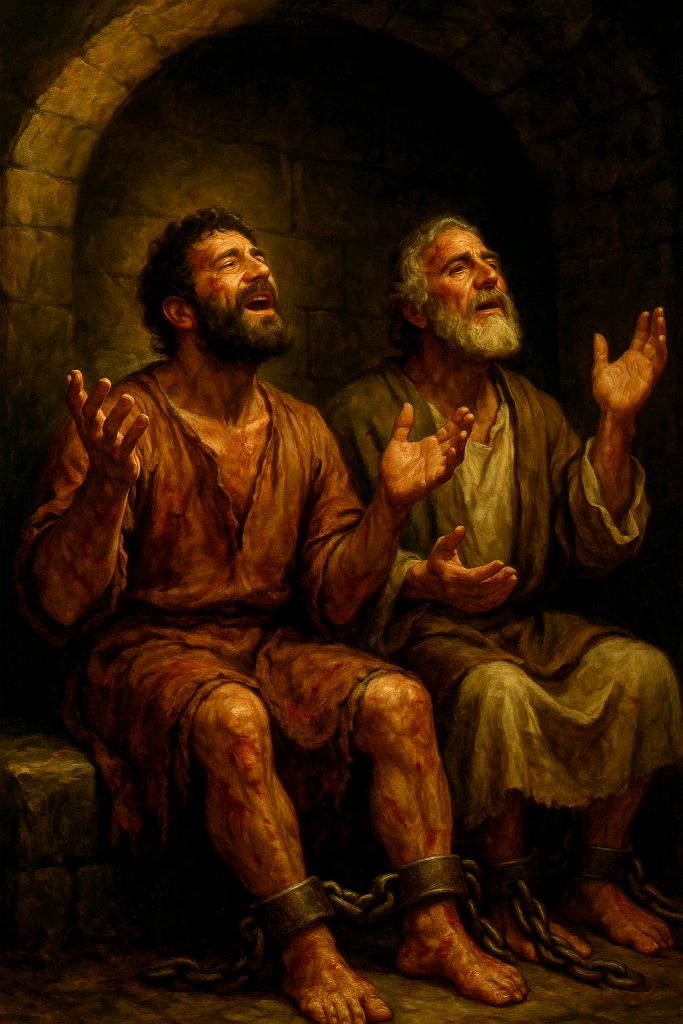
“Others were tortured, not accepting deliverance, that they might obtain a better resurrection. Still others had trial of mockings and scourgings, yes, and of chains and imprisonment. They were stoned, they were sawn in two… being destitute, afflicted, tormented, of whom the world was not worthy.” (vv.35–38)
The common thread?
“And all these, having obtained a good testimony through faith, did not receive the promise.” (v.39)
Their faith was not measured by immediate reward, but by enduring trust in the unseen. Job expressed it best:
“Though He slay me, yet will I trust Him.” (Job 13:15)
Habakkuk echoes the same heart:
“Though the fig tree may not blossom… yet I will rejoice in the Lord.” (Habakkuk 3:17–18)
This kind of faith is not swayed by trials or silence. It is rooted in relationship, not reward. Psalm 23 reminds us that God does not remove the enemies, but prepares a table in their midst.
“You anoint my head with oil, my cup runs over.” (Psalm 23:5)
The oil flows not in times of ease, but in times of pressure. The true reward of faith is not what we receive, but who we receive—His presence.
“In Your presence is fullness of joy.” (Psalm 16:11)
The last 2,000 years of Church history bear witness to this truth. Millions have suffered for Christ, not because their faith failed, but because their faith endured. They possessed a spiritual mind and a heart anchored in another world. Their lives pleased God. Their testimonies still speak.
So the question is this: will you walk in the Spirit today? Will you cast aside the fleeting things of this world and set your affections on things above (Colossians 3:2)? Will you walk by faith and not by sight (2 Corinthians 5:7)? Will you trust God even when there is no sign of deliverance?
This is the faith that pleases God. And without it, we cannot.


