We stand in a time when the Lord’s description of the harvest is no longer theoretical, but increasingly observable, to the point that what once lay hidden within the field can now be discerned as the age moves toward its consummation.
The Lord did not frame the close of the age as a single moment, but as a harvest season, as He Himself declared when opening the parable of the field [Matthew 13:24].
A closing span in which what has long grown together can no longer conceal its nature, for the harvest, He said, is the end of the age [Matthew 13:39].
When the grain reaches fullness, weight comes upon the head of the true wheat. It bows, heavy with formed life, while the tare, light and fruitless, remains upright, exposed by its own barrenness.
This is why there must be a period of unveiling. The distinction, once hidden in the green blade, becomes undeniable in the ripened field, just as He taught that both must grow together until the harvest [Matthew 13:30].
What could not safely be touched in the early growth can now be handled without harm to the wheat, because maturity has made separation just, visible, and irreversible. So within the synteleia tou aiōnos (Matthew 13:39), the consummation of the age, there unfolds a measured work of exposure and removal.
It is not haste, but precision. Not impulse, but ripeness that governs the reaping. The tares are taken from among the wheat because their habitation was never separate, reflecting His own words that the enemy sowed them among the wheat while men slept [Matthew 13:25].
They shared the same soil, the same rain, the same sun, yet bore no grain. And when the reapers move, they do so in a window of divine timing, for He said the reapers are the angels sent forth at the close of the age [Matthew 13:39–41].
In that solemn interval, the uprightness of the tare becomes its own testimony, and the harvest, long foretold, proceeds without injury to the wheat, fulfilling His declaration that all things that offend would be gathered out of His kingdom [Matthew 13:41].
And in an actual field, as the season turns and the wind moves across the ripened grain, another distinction appears.
The wheat does not only bow from weight, it moves differently.
When the gusts come, the true wheat sways in unified rhythm, heavy heads yielding, bending without breaking, the whole field rolling like waves of gold.
But the tares, stiffer and lighter, resist the movement. They jut upward, visually discordant, unable to flow with the humbled harvest around them, a living contrast between fruitfulness and barrenness. Farmers have long known that near reaping time, the mixed field reveals itself not merely by fruit, but by motion, posture, and response to pressure.
And so too in the closing span of this age, when the winds of testing, exposure, and judgment begin to blow across the house of God, ministries once indistinguishable from the surrounding wheat find themselves revealed by how they stand, echoing the apostolic warning that judgment must begin at the house of God [1 Peter 4:17].
The recent unravelings surrounding International House of Prayer Kansas City and controversies touching streams connected to Bethel Church have, for many, felt like that late season wind moving across the field.
Not creating what was hidden, but revealing what maturity and pressure made visible. For the first labor of the harvest is not the gentle gathering of the wheat, but the careful and deliberate removal of the tares from among it.
Separation is the primary work. For they did not grow in distant fields, but intertwined in the same soil, their roots wrapped together beneath the surface, their blades indistinguishable in the early season. And so when the harvest begins, the more exacting task comes first, just as the Lord instructed, gather the tares first and bind them [Matthew 13:30].
The tares must be identified, drawn out, and gathered away with precision, lest the wheat be harmed in the process. It is a judicial work before it is a restorative one, a clearing of the field before the securing of the grain.
Only when that difficult labor has been sufficiently accomplished does the harvest of the wheat proceed with swiftness and clarity. For once the choking growth has been removed, the bowed heads stand unobstructed, ready for the reaper’s hand.
Then the work becomes one of gathering rather than separating, of bringing in rather than casting out, fulfilling His promise that the righteous would be gathered into His barn [Matthew 13:30].
The barn awaits what the field has produced, and the weight of the wheat, once hidden among the tares, is now brought safely home. The paradigm shift has taken place in the world.
Thus the parable and the apostolic warning converge, revealing that the exposure of the tares is not reserved for a distant day, but is taking place even now.
What was planted in secrecy is being uncovered in the present hour. The likeness that once concealed is breaking down, and the field itself is bearing witness to the difference.
For the harvest is advancing, the separation is underway, and the righteous stand on the threshold of that moment when they will shine forth as the sun in the kingdom of their Father [Matthew 13:43].
What does it mean to have faith? What does it mean to exercise faith? And what does it truly mean to trust in the Lord? The words faith and trust are often used interchangeably, yet Scripture distinguishes their shades of meaning. The Greek word for faith, πίστις (pistis), carries the sense of conviction, fidelity, and steadfast belief , a firm persuasion of the truth and character of God. It is not vague optimism but anchored certainty rooted in who He is. The Greek term for trust, πεποίθησις (pepoithēsis), flows from pistis and means confident reliance, settled assurance, and inward persuasion. It is faith extended through endurance, faith that has matured under testing. Thus, pistis believes what God has spoken, and pepoithēsis continues to rest in that promise when sight fails and the storm gathers. Both are born of the same root: confidence in the unchanging nature of God. This is the foundation upon which all true preparedness stands, the faith that acts and the trust that endures.
Faith, then, is the spiritual substance of what is unseen, the invisible made certain in the heart of the believer. “Now faith is the substance of things hoped for, the evidence of things not seen” (Hebrews 11:1). It is not mere belief that God exists, but confidence in His goodness, His promises, and His Word. Faith does not rest upon sight or circumstance; it rests upon the immutable character of God. It looks into the unseen and says, “Thou art faithful.” It is the anchor of the soul, both sure and steadfast, which enters within the veil where Christ Himself has gone before (Hebrews 6:19–20). Pistis is not a feeling to be maintained but a conviction to be lived by, it sees the eternal in the midst of the temporal and moves the heart to obedience.
To exercise faith is to act upon that conviction. Faith untested remains theory; exercised faith becomes testimony. The one who believes that winter is near cuts his firewood before the frost. His pistis (faith) moves his hands; his belief produces action. But the frail widow, who has no strength to lift the axe, exercises faith in another form. She cannot labor, but she trusts , her pepoithēsis (trust) clings to God’s faithfulness, believing He will make provision where she cannot. In both, faith lives and breathes. The strong man acts upon what he believes; the widow rests upon what she cannot see. Faith is not idleness. It is obedience moving in harmony with the will of God , for “faith without works is dead” (James 2:17). Yet these works are not self-reliant striving; they are the fruit of divine persuasion , the evidence that pistis (faith) is alive within the heart.
To trust in the Lord , to walk in pepoithēsis (trust) , is to place one’s full confidence in His sovereign care when reason falters and outcomes remain hidden. “Trust in the Lord with all thine heart; and lean not unto thine own understanding. In all thy ways acknowledge Him, and He shall direct thy paths” (Proverbs 3:5–6). Trust is faith stretched through time; it is the steady endurance of the soul that refuses to doubt the character of God though all outward things collapse. Job, sitting among the ashes, spoke this divine paradox: “Though He slay me, yet will I trust in Him” (Job 13:15). That is trust refined in the fire , pepoithēsis (trust) at its highest expression. Faith says, “God can.” Trust declares, “God will.” Love adds, “Even if He does not, He is still my God.”
What, then, is our part in this divine partnership? Scripture tells us to “put on the whole armor of God” (Ephesians 6:11), to take up the shield of faith, to gird our loins with truth, and to shod our feet with the preparation of the gospel of peace. These are commands of readiness. The armor is given by grace, but it must be worn by choice. The believer must take up what God has provided. Preparation is not unbelief — it is the living demonstration of faith’s reality. The man who sharpens his sword before battle is not denying God’s help; he is aligning himself with it. Our pistis (faith) equips us; our pepoithēsis (trust) steadies us. The one is the conviction that moves; the other is the confidence that endures.
And did not our Lord Himself prepare? The supreme pattern of readiness is found in Gethsemane. Beneath the olive trees, Christ waged the invisible war before the visible cross. “And being in agony He prayed more earnestly: and His sweat was as it were great drops of blood falling down to the ground” (Luke 22:44). The disciples slept, but the Captain of our salvation fought alone. The struggle was not with men but within His own humanity , the surrender of His human will to the divine. And when the moment came — “Not my will, but Thine be done” , the victory was secured. From that garden He rose, His face set like flint (Isaiah 50:7), and for the joy set before Him He endured the cross, despising the shame (Hebrews 12:2). The battle of Calvary was the outworking of the triumph of Gethsemane. Pistis (faith) led Him into prayer; pepoithēsis (trust) carried Him through obedience.
What, then, does it mean for us to be prepared? It means to cultivate a heart steadfast in pistis (faith) and anchored in pepoithēsis(trust). The prepared soul is not caught unaware when the storm descends. It has stored the Word in its heart, for the Word is the sword of the Spirit (Ephesians 6:17). It has guarded its thoughts with the helmet of salvation and girded its life with truth (Ephesians 6:14). It prays without ceasing, for prayer is the breath of faith (1 Thessalonians 5:17). It stands ready with the gospel of peace, for readiness itself is part of the armor. Such a soul walks neither in fear nor presumption, but in quiet confidence. The unprepared are like those who wait for winter with no firewood; but those who live by faith have already kindled the flame within their hearts.
The battle, as the Lord showed us, is won not first in the field but in the heart’s preparation. “The preparations of the heart in man, and the answer of the tongue, is from the Lord” (Proverbs 16:1). Victory begins in surrender. When a believer bows in the secret place and whispers, “Not my will, but Thine be done,” the triumph is already assured. From that hidden Gethsemane he rises clothed in divine strength, able to endure the cross set before him, whatever form it takes. Faith has believed; trust has endured; preparation has secured the victory.
To have faith is to believe. To exercise faith is to act. To trust is to endure. To prepare is to triumph before the battle begins. And when the soul, through pistis (faith) and pepoithēsis( trust), comes to that holy place of surrender, it finds, as Christ did, that peace flows where agony once reigned. For the Lord who prepared Himself in Gethsemane now prepares His saints likewise , that they may stand in the evil day, and having done all, to stand (Ephesians 6:13). Praise be to the Lord, for the battle is His , yet He trains our hands for war and girds us with strength for the fight (Psalm 18:34, 39).
Scripture Appendix
I. Πίστις (Pistis) — Faith, Conviction, Persuasion
Hebrews 11:1 – Faith as substance and evidence of the unseen.
Romans 1:17 – ‘The just shall live by faith.’
Ephesians 2:8 – Faith as the gift of God in salvation.
Romans 10:17 – Faith comes by hearing the Word of God.
Galatians 2:20 – Living by the faith of the Son of God.
James 2:17 – Faith without works is dead.
Hebrews 11:6 – Without faith it is impossible to please God.
2 Timothy 4:7 – ‘I have kept the faith.’
II. Πεποίθησις (Pepoithēsis) — Trust, Confidence, Assurance
2 Corinthians 3:4 – ‘Such trust have we through Christ to Godward.’
Philippians 1:6 – Being confident that He who began a good work will perform it.
Philippians 3:3–4 – Having no confidence in the flesh.
Hebrews 3:14 – Holding the beginning of our confidence steadfast to the end.
2 Corinthians 1:9–10 – Trusting in God who raises the dead.
Ephesians 3:12 – Boldness and access with confidence by the faith of Him.
Faith (pistis) is the seed; trust (pepoithēsis) is its fruit. One believes God’s word; the other continues in that belief when all else fails. Together, they form the unshakable posture of the prepared soul , believing, enduring, and standing firm until the end.
If I had a dollar for every time someone said “God told me,” I’d be a wealthy man. Yet, in the spirit of generosity and assuming the best of my brothers and sisters, I recognize that much of what has been spoken to me—often with sincere intentions—has been filtered through the prism of their soul and flesh. I’m primarily talking about Pentecostals as opposed to Charismatics of whom I have limited experience. Don’t get me wrong, I believe with all of my heart God speaks to His people and they know His voice.
However, it must also be acknowledged that we tend to “hear” what we want to hear. The flesh is cunning, and it has a voice—a persuasive, insistent voice that will use any means necessary to get its way. I hear it most clearly when I’ve been wronged, when the inner narrative in my mind begins constructing its defense, justifying responses that are anything but godly.
Yet that same loud voice can also be very subtle, whispering in ways that seem harmless, even reasonable. Ways that are always self-serving.This is precisely why Scripture calls us to “mortify” the deeds of the flesh. It is why we are commanded to take up our crosses daily. The more we die to our flesh, the clearer our spiritual hearing becomes—allowing us to discern the Lord’s voice. And His voice will never contradict His Word.
Discernment begins with ourselves (our self) Learn to identify the “voice,” of your flesh and begin to oppose it. Give it no quarter, for the flesh will not give your spirit any. It is it’s mortal enemy. Mortal being the operative word, for its time is short and it knows it. That’s why it wants to “eat, drink and be merry.” Crucify the voice of the flesh, take every thought captive and you will hear the voice of the Lord, speaking through your spirit all the more clearly.
There may be real submission to the will of God while we can’t help wishing things were otherwise. God does not ask us to feel that everything is for the best, but He does ask us to believe it (Andrew Bonar)
This is a deep truth. It is learned in the deepest valleys and the sorest of trials and loss. It may be well with our souls, as the beautiful old hymn goes, but our hearts can be broken. It is in the midst of that brokenness, that pain, that loss, that we draw near to God and He draws near to us. A broken and a contrite heart O God you will not despise (Psalm 51:17) Suffering produces endurance which produces character and hope (Rom 5:3-5) Blessed is the one who remains steadfast under trial ( James 1:2 ) The Lord is close to the brokenhearted and saves those who are crushed in spirit ( Psalm 34:18 )
We are to be rewarded, not only for work done, but for burdens borne, and I am sure that the brightest rewards will be for those who have borne their burdens without murmuring (Andrew Bonar ) A thankful heart in the face of great trial, is the ultimate in believing our God, in trusting Him, it is the very essence of faith. It causes that old liar, the devil, to shut his mouth and his accusations against the most high God that His people only love them because of favorable circumstances. It is out of darkness, that God Himself has commanded light to shine forth. And that light is the very essence of glory and love. It is a tangible force that heals and restores and draws us very near to our Lord and our God.
It is true that we have seen man’s best endeavor in the field of evangelism leaving communities untouched. We have seen crowded churches. We have seen many professions. We have seen hundreds, yes and thousands responding to what you speak of here as the altar call. But I want to say this dear people, and I say it without fear of contradiction, that you can have all that without God! Now that may startle you, but I say again, you can have all that on mere human levels. Howard Spring was right when he wrote ” The Kingdom of God is not going to advance by our churches becoming filled by men, but by men in churches becoming filled by God.” And there’s a difference! Crowded churches, deep interest in church activity is possible on mere human levels, leaving the community untouched. (Duncan Campbell)
If your salvation was a “get out of hell,” transaction then it’s highly likely you are not saved. It’s when the wretchedness of our condition, as exposed by the Holy Spirit of conviction, collides with the love and the mercy and the grace as revealed by Calvary, that a man or a woman repents and turns 180 degrees from the sinful lives they led and are saved. Much of the religious industrial complex, having avoided this themselves, cause others to be lost in their ignorance. They are fooled into believing that a “sinners prayer,” has saved their souls from eternal death and that church attendance and sacraments will see them “home,” safe.
Deep conviction of sin was the mark of the great awakenings and revivals of note. It did not come by persuasive words or the clever skills and oratory gifts of men. It advances when the Holy Spirit comes down and lights up the darkness that lies within men. And in the realization of that darkness and the utter wretchedness of our sinful ways, we come face to face with the mercy of God. The wonder of it all will overwhelm a mans wicked heart. He will tear his shirt and fall on his face and cry out to the living God. And in that moment, as opposed to “hands up who does not want to go to hell,” (an altar call that I have actually heard) the eternal consequences of his ways will tear through a mans soul. In his surrender and in his repentance, his very soul will be flooded by grace and the transformation will be astounding.
In most of our churches, the Holy Spirit of conviction, having been driven out a long time ago, has been replaced with persuasive words, emotionalism and manipulation, typically through music. The music team will be told to come up. The people will be told to put their hands up, to stand up, to cry out, to come forward. The support team will be told to come forward, the prayer team will be told to come forward. The truth is brothers and sisters, when the Holy Spirit of conviction comes down, He alone is affecting the hearts and spirits of men. In the soulish realm, men need instructions. When the might and power of men have failed, then its the Spirit that causes men to “rent their shirts,” and cry out “what must we do to be saved.” Echoing through the people will be cries of “is their mercy for me.”
I believe the Holy Spirit of conviction is not done with us. Yet we must travail in prayer. We must be diligent and cry out to the Lord. And we must keep on doing that until we see the breakthrough. Most of all, we must believe that He is, and that that He is a rewarder of those who diligently seek Him, for without this kind of faith it is impossible to please Him (Heb 3:6) The keys to this kind of encounter comes through earnest and steadfast prayer. Where is the prayer meeting? Where are the faithful people of God who know that in order to see Him move, He alone must come down. An old poet wrote ” The promise can’t save though the promise is sure. It is the Blood we get under that cleanses us through. It cleanses me now, hallelujah to God! I rest on the promise but I’m under the Blood.”
Can you see what is being said? Men have abandoned the Holy Spirit and now rest upon a text of Scripture as opposed to the one who is the Scripture. Words cannot save us, only Jesus can. He is the Word made flesh. It rests upon Him alone and the power of the Holy Spirit to convict men and to open up their hearts and to rent asunder the veil that clouds their minds from their true state. Mercy and truth must collide. The truth of our state and the mercy that shall cleanse it. And only then shall righteousness and peace kiss. Jesus says in Luke 12 “I have come to send fire on the earth!.” Jesus came to bring fire, a burning all consuming fire that will burn up the wretchedness of men. When the monstrous iniquity of men’s state, collides with the fire of God that rains down upon their hearts through the Holy Spirit, we shall have our revival. Lord send down your fire and burn the hearts of men once again.
I wanted to address something. Many people have messaged me and told me how strong I am in the midst of this cancer and how they admire my faith. I do not want to give the impression that going through cancer is easy and “all you have to do is,”……….fill in the blanks. A test is a test, a trial is a trial, not because it is easy but because it is not. Jesus is the star of this story of mine. He is strong, He is faithful, He is my high tower. I run into Him. I cry out to Him, I rely upon Him for the little strength and faith I do have. It is an honor and a privilege to represent Him no matter what my circumstances are. Consider these verses from Psalm 37. Trust in the LORD, and do good; so shall you dwell in the land, and feed on His faithfulness. Delight yourself also in the LORD; and he shall give you the desires of your heart. Commit your ways unto the LORD; trust also in him; and he shall bring it to pass. And he shall bring forth your righteousness as the light, and your judgment as the noonday. Rest in the LORD, and wait patiently for him:
In this portion of Scripture we are instructed how to walk in the power and strength of the Lord. We are to trust Him and do good. We are to delight ourselves in the Lord. We are to commit all our ways unto Him. We are also told (NKJ) to ” feed upon His faithfulness.” I left that to last because this has been my primary source of strength. I feed upon His faithfulness. It edifies my very soul and gives strength to me physically.I have been through enough trials in my life that I can say, without a shadow of a doubt, that He is faithful. He has never left me nor forsaken me. It is His faithfulness I celebrate, it is His strength in me that makes this weak vessel strong. I am nothing without the Lord and would have crumbled and fallen into the sea of life a long time ago without Jesus. I feed upon the faithfulness of my heavenly Father and I am well fed. It is well with my soul because of His residency there. In and of myself I am weak, yet, His strength is only highlighted in my weakness.
2Co 4:17 For our light affliction, which is but for a moment, worketh for us a far more exceeding and eternal weight of glory;
Heb 12:1 Wherefore seeing we also are compassed about with so great a cloud of witnesses, let us lay aside every weight, and the sin which doth so easily beset us, and let us run with patience the race that is set before us,
This word weight is used both times in the scriptures with the context being very different obviously. It can mean abundance or burden or load. Now clearly sin is a burden to the soul, a load not easily carried. It slows us down, much like if we were attached to an anchor and had to drag it behind us. We have all felt it. Yet Heb 121:1 is compelling us, with a vision, to lay that burden down. Look up with spiritual eyes and see that we are surrounded by a cloud of witnesses. Those who have gone before us, the angels of heaven, the Kingdom of God. See the things that are eternal. See the Lord Jesus Christ high and lifted up. When we look to Jesus, the author and the finisher of our faith then sin loses it’s power and its hold on us.
When we look not at the things that are seen, but rather the things which are not seen then there is a power released in us. The light of the Gospel of the Lord Jesus Christ begins to shine forth from the depths of our very beings. This treasure that dwells in the depths of our hearts pours forth like the rising of the sun after the long night. What a welcome sight for all those who dwell in darkness to see the rising sun shine forth from us, and it draws men to God. Rather than our afflictions causing us to look down and to fall into sorrow, let our light afflictions cause us to look up and to be encompassed with the eternal abundance of His glory. With eyes to see, we peer into the glories of the world to come. We are overcome with His majesty, with His glory, with His holiness, with His joy. This power truly comes to pass in the midst of our afflictions for it is then that God has commanded His light to shine forth from the darkness.
The Lord, of course, was acquainted with sorrows and sufferings and this gives us strength to know that He knows and He sees all of our afflictions. In the end, our walk must simplify as we mature in Him. We must decrease and He must increase. This decreasing is something of a mystery. Perhaps diminished is also a good word, to be diminished in our own estimations of our “self.”
The greater damage we do to self, the clearer the two kingdoms become. The kingdoms of this world and its ruler, and the Kingdom of God, that was, and is, and is to come and it’s ruler, the Lord Jesus. How do we “diminish,” “self?” How do we decrease? How is the hold that self has on us loosed? Only by the cross. Only ever by the cross. The flesh refuses to die, it refuses to relinquish control. We cannot negotiate with it or compromise with it. Absolute surrender, which is so offensive to the world and self, is our stance. Therefore it’s a battle to the death. No quarter to be given.
As we go down this road, by the power of the cross and the power of the Holy Spirit, we begin to turn a corner at some point. As we surrender to surrender our eyes begin to “see,” things more clearly. We begin to hear the call of heaven more loudly. It begins to fill us and fill us with a greater longing to only live in the Kingdom of God. The things of this world begin to lose its grip on us. We can picture ourselves in the dungeon with Paul and Silas, praising God in the darkness of the midnight hour.
Paul “learned,” to be content. He did not just suddenly arrive at the place where he could declare all things loss as dung in comparison to be found in Him. He walked through many fires and afflictions. He suffered greatly with infirmities. He was hungry and naked, shipwrecked, lashed to within an inch of his life. He was despised and rejected. All of this happened to him as he walked down the path the Master has blazed for us. Shall we continue down the narrow path brothers and sisters?
This narrow path leads to Calvary, the ultimate death. Can we say, with our Lord ” for the joy that is set before me?” What joy is this? The joy of fulfilling the will of God in our lives. His will, not ours. His will, which is so violently opposed by our flesh and fights so viciously to exercise its own will. His will is the solid Rock upon which we stand. His will is the center of all that exists. His will is our very spiritual existence. Death to the flesh begins to leads us to an unobstructed view of His will.We see more clearly His desire for us. His desire for us becomes our desire for ourselves. The desire of our hearts is to glorify Him in all that we do.
Let everything that does not bring you peace, let everything that does not bring you to this place, go. In the end we love Jesus more than everything. Which was our genuine declaration in the beginning of our walk. Our peace in Him, our joy in Him, is our strength. Without this strength we can do nothing. When all those around us are floundering, when all are losing their heads, then we must be found in Him. We cannot go down with the ship, rather we must walk upon the water and reach out our hand to them. We walk upon the water by keeping our eyes on Jesus. Lift up your eyes today dear brothers and sisters, and see where your help comes from. Reach out to Jesus, take His hand, and never let go!
George Matheson, the great old, blind Scottish preacher once said, “The hour of thy loneliness will crown thee. The day of thy depression will regale thee. It is thy desert that will break forth into singing. It is the trees of thy silent forest that will clap their hands .. the thorns will be roses. The valleys will be hills. The crooked will be straight lines, the ruts will be level. The shadows will be shining. The losses will be promotions, and the tears will be tracks of gold. The cup of suffering you prayed would pass from you will be your constant royal crown in the sweet by and by.”
The Lord sees us. He knows us. He comforts us. His comfort is strength and joy where there should be none. And though darkness may press in on us from every side, His light triumphs over it. Even the darkness is light to Him, and then, of course, to us. When the landscapes of our lives seem to stretch out before us in endless deserts, suddenly even the sand cries out, and the very rocks cry out, glory, glory, glory to the Living God! When the silence floods in and we struggle to hear anything above its noise, suddenly, glory to God the silence is broken. Just one word from our Lord shatters the deafening silence and our hearts and spirits are filled with His majesty.
Sometimes the thorns of life invade our lives yet from these thorns come magnificent roses. I am reminded of the Lord’s crown, and yet truly, He was crowned in a higher place. He is King of Kings and Lord of Lords. Crown Him with many crowns, but first the crown of this life which was overcome. And now we overcome in Him. Paul once said that he considered the loss of all things as nothing, as less than nothing, for he only wanted to be found in Him. If our losses in this world lead us into the depths of Him, then we should surely be found praising Him in the midst of every situation. I praise Jesus today.
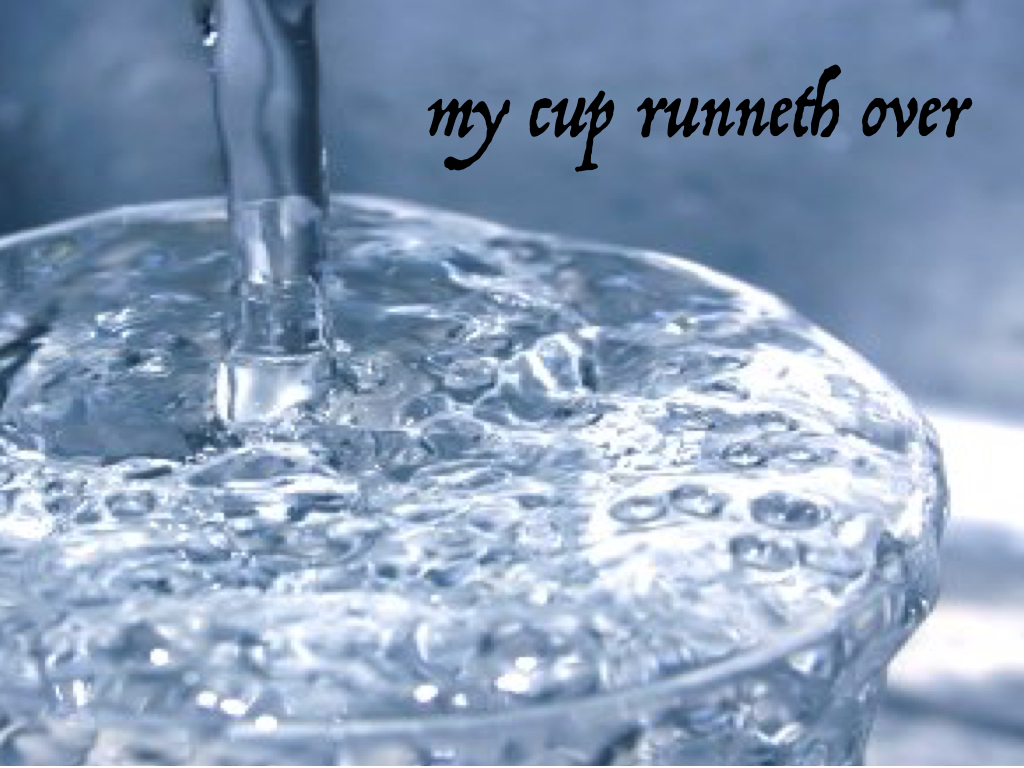
There is a cup in this life, and we are asked to take it, to take it all. Jesus led the way in the garden, and if He could take that cup, the cup that was filled with all the sin of this world and would lead to the death of the cross, then surely, in His power, and in His might, we can drink down the cup given to us. And in just one of the countless paradoxes in the Scriptures, we see that as we willingly drink this cup, there is another cup that simultaneously begins to fill and overflow………..Psa 23:5 You prepare a table before me in the presence of my enemies: anointest my head with oil; my cup runneth over.
The very opening line from David in Psalm 18 is “I will love you O Lord…..my strength.” He is our strength at all times. His love for us and our love for Him creates the Kingdom of God in our hearts. It creates the atmosphere of heaven that surrounds us. It creates the light that shines forth from us to a dark world. In this particular psalm, David is writing about many years of trials and brokenness, years when he was hounded by Saul and surrounded by enemies. Years mind you. Not a day or a week or a season, but multiple years when, for all intents and purposes, he was not moving in victory. His enemies seemed to have the upper-hand. Now the question becomes “shall we be faithful yet.” Shall we still follow the Lord with all of our hearts even when our prayers are not answered? Even when we have been backed into a corner? There have been times with all the great saints of the Bible when for multiple seasons and multiple years nothing seems to be going right.
Abraham waited so very long, over twenty five years, for the child of promise to be born and with every passing year, at least in the natural, the promise became less likely. Did he stand? Jacob, on the run so to speak for multiple years, not fulfilling his destiny. Moses, all that time in the desert, having run from the Egyptians. Over and over again the story goes. Joseph and his dream, yet between the dream being fulfilled there lay ahead of him rejection and betrayal and slavery and imprisonment. And so here we are with David. Saul is dead, his most implacable enemy. God has delivered him after countless years of wilderness wanderings and betrayals and rejections and tests. And David begins His thanksgiving to God by highlighting his love for God and acknowledging His strength. He is the Lord His rock and his fortress and his deliverer. The God in whom, all through the dark days, the valleys and the caves, he trusted. God was his very shield, the horn of his salvation and his stronghold.
He called upon the Lord his God when the “pangs of death,” surrounded him. He called upon his great love when the “floods of ungodliness,” made him afraid. When the “sorrows of hell,” surrounded him and the “snares of death,” confronted him, he called upon God. In his distress he “cried out to God.” And time after time he got the breakthrough. Not necessarily from his circumstances, no, his breakthrough was “He heard my voice from his temple.” His cry had come before His Lord and even just in the knowing that God knew and saw his afflictions, there was victory in that alone and he was encouraged by living waters. How many times was Paul told not be afraid for the Lord his God was with him? The breakthrough in every situation is first and foremost to “know” that “God is with you.” Now some may say that we should always know that as His saints. I would just answer with saying that it is one thing to know something in our heads, it is quite another to recognize the manifest presence of a God who walks with His children.
Look at the response of God starting in the seventh verse, this is the response to David who was constantly crying out to the Lord His God. “Then the earth shook and trembled.” Not unlike what happened to Paul and Silas in the dungeon. A devouring fire came forth from the Lord and “He bowed the heavens and came down…………He rose upon the cherub……He flew upon the wings of the wind.” “He sent from above and He drew me out of many waters.” He saw the many situations of David and He moved on his behalf, this faithful man of God who ever cried out to Him. And in the end , after many many faithful years in the valley and in the cave, God himself delivered David from all his enemies, especially his greatest enemy, Saul. Shall He not also deliver us dear brothers and sisters? Shall He not hear our cries from the valley?
If you have been going through a long and arduous test or tests. If there seems to be no light at the end of your circumstances. If you have been surrounded by the pangs of death and great ungodliness and sorrow besets you on every side and the gates of hell themselves has come against you, keep crying out to God. He is your strength. He is the Rock upon which you stand. He is your fortress and you can run into Him. He is your deliverer and your strength in whom you can trust. He is worthy to be praised in the midnight hour. He sees the afflictions of His people. He knows, He cares, He is actively working on your behalf even when you are not aware of it. He ever intercedes for you before the throne and in truth, it is the reason you still stand. He prepares a table before you in the very presence of your enemies and in due time He shall bow the heavens and come down. He is faithful even in the midst of darkness and when we cannot see the way ahead, He is the way ahead brothers and sisters, cry out to Him today for He is your strength.
Speaking of man, Paul says in Act 17, to men on Mars hill, that God has determined their preappointed times and boundaries of their dwellings. That is really quite a mouthful. What does it mean? Can it be true that we have a preappointed time set for us by God? Can it be true that we have boundaries that God has set over us in regard to our “dwellings.” A boundary is a limitation or a line set. In our lives as saints we have boundaries that we are called to live within. And so, where we abide is limited to Gods determination for us and how long we live, likewise. And in this there should be great peace. Yet, for the most part, we find that our boundaries are the source of most of our anxiousness and discontentment.
Is it not true that we lay down boundaries for our children? We determine where they can go and the times in which they can carry out their activities. We set curfews for them and discipline them in order that they would know and respect their boundaries. We do it with a loving heart and a desire to see them grow up into the best adults they can be. It seems to be universally true that most children despise their boundaries and long to go where they cannot. They want what their friends have. They want to do what their friends do. And in this they clash with the will of their parents. It often referred to as a “battle of the wills,’ and frequently exhausts parents. Some parents seem to be better than others in these matters. Some are too strict and some are too lax and some put down no boundaries at all. The end result of this is the society we live in.
When you were saved dear saint, God imposed boundaries upon you. He gifted you and then called you to live within the boundaries of that gifting. He has predetermined the number of your days which also constitutes a boundary. Now, the question is, are we at peace within the boundaries that God has set for us? Or, do we rage against them? Do we go to great lengths to go beyond the boundary of our gifting? Do we take extreme measures to try and extend the boundaries of the days of our lives? Can I suggest to you that the work of the flesh, our flesh, is to deny the boundaries God has set for us. We try and go beyond our calling and are jealous of others for the same reason that Adam and Eve took what they were told not to take. It’s sin and rebellion. And in this sin and rebellion there can be no peace. Only when we surrender to the boundaries God has set for each of us personally can we truly know the peace that surpasses understanding.
In the world we saw, back in the 60s, women discontent with their lot, wanting to have what men had. They were discontent with their boundaries and therefore simply pushed beyond them. They raged against their boundary. No doubt they were cheered on by any number of voices telling them they could be whatever they wanted to be and that they had no limits. It has become a virtue of the world. People who are not happy with their gender are told that their gender is not a boundary and that they can be whatever they want to be. They rage against their boundary. Men desire their neighbors wife. they want what they cannot have and they rage against this boundary. People are told that they are going to die and they go to every conceivable lengths to avoid this. They rage against the boundaries of time. Saints not happy with the gifting God has given them, strive to be something they are not. This is raging against the will of God for our lives, it is all sin.
It is within the boundaries that God has laid down for us that we are to seek Him who desires to be found. It is within these boundaries that we are told “He is not far from each one of us.” To go beyond our boundaries is to wander far from God. It is in our nearness to God, that we “live and move and have our being.” We cannot shape our own destinies and then call it God’s destiny for us. God is not like gold or silver or stone, something that can be shaped by art or the devices of men. It is He who lays down the foundations. It is He who determines the place in which we shall live and it is He who determines the number of our days on this earth and it is He who has appointed a day in which He will judge the world by the Lord Jesus Christ. Note the words used by Paul “determines, appoints, sets, boundaries.” Our God is a God of order and He calls us to His order. And this order, this peace, this joy, this contentment can only ever be found when we are found living within the boundaries He has set down for each of us individually.
Col 1:6 Which has come to you, as it is in all the world; and bringing forth fruit, as it is also in you, since the day you heard of it, and knew the grace of God in truth:
What had come to them? Faith. Since the day they trusted in God they abounded in grace and in truth and in love. Note that they did not just “hear,” the good news. Many hear the good news. They chose to trust in it and in that moment they “knew,” the grace of God. Hearing and knowing are entirely different. It’s in the “knowing,” that we are transformed. It’s in the knowing that that we experience the manifest reality of His grace. This grace, this unmerited favor that we “know,” we have, changes us from the inside out. So, what is this mysterious “knowing,’ that does not flow from the head but rather from the heart? It is the presence of God that has taken up residence in our hearts and from that place all good things flow.
Imagine a stone thrown into a pond. Concentric circles emanate out until every part of that pond is touched by them. Small unstoppable waves that touch every part of who we are. There is a still, small voice that dwells within the heart of the truly born again that speaks to us and we know “its,’ voice. It is the voice of the Master who has taken up residence in us by the power of the Holy Spirit. He speaks to every part of who we are. He leaves no stone un-turned for He bought us with a price. He purchased us and we now belong to Him.
In Matthew 1:25 we are told that Joseph did not “know,” Mary until after Jesus was born. This prolonged primary verb is to know intimately. The text gives us the context. There is of course a more intimate knowledge to be had with the Lord than there could ever be with a spouse. One is carnal in nature and creates a oneness in the flesh and soul. The other is the combining of two spirits, our spirit with Jesus by the power of the Holy Spirit. This is the source of everything. It is from this place that we are devastated if we sin. It is from this place that “know,” His grace and His love and His mercy and His forgiveness. From here comes all good desires. The desire to follow Him. The desire to want to come into His manifest presence. From this place He opens up a door that leads to heavens throne room where we can come before the throne of God and cry “Abba.”
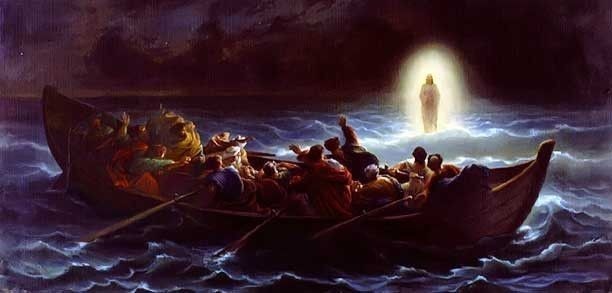
Mat 14:28 And Peter answered him and said, Lord, if it be thou, bid me come unto thee on the water.
Peter sees Jesus walking on the water in the midst of the great storm. Jesus says to them that are on the boat to “be of good cheer, for it is I, do not be afraid.” Just seeing Jesus put their minds at ease. Our hearts are at peace when we “know” that Jesus sees our afflictions. And yet we see Peter, caught up in the presence of God. It is not good enough that he sees him from a distance, he wants to be right where He is, no matter the circumstance, and he is taken up by the Lord’s presence. In the Lord’s presence, when we are captivated by Him, then the roar of the wind dies down. The tumultuous waves that were otherwise so terrifying, cease to present any threat in the manifest presence of God. Nature itself loses all of its power as the water loses its ability to swallow whole those who stand with Jesus.
And we see what happens when Peter takes His eyes off Jesus. Immediately the noise of his present circumstances comes roaring back and would have been deafening. The waves would rise up and reach out to take him under to his watery grave. Nature comes back into its own and Peter begins to sink. Yet Jesus. He is still there even when we have momentarily lost our focus and our faith. He will not let us drown. He is faithful even when we are not. He will catch us. He will come into our boat and suddenly the storm is completely gone. And then all who witnessed this fell down before Jesus and worshiped Him. Brothers and sisters, we are called to come to Jesus. Oftentimes we are so tempted to “batten down the hatches,” yet in many cases this just delays the inevitable sinking of the ship in the great storms of life.
We must come to Jesus and follow Him. Whether out of the boat into the teeth of the storm, or out of the storm back into the boat. Where He is there is peace whether in the eye of the storm or the stilled storm. It is all the same. He is our peace. Where He is there is glory and all things are possible. Perfect peace casts out all fear and only in Jesus can we stand, whether that is upon solid ground or on the water. Let the whole world shake. Let the mountains begin to crumble. Let the seas rise up and roar. Let the skies fall down and the stars fall from the heavens. He still rules and He still reigns. No matter what you are facing today saints, He still reigns sovereign over all that exists. Look to Jesus today. Step out of the boat. Or reach out and take His hand. Or follow Him back into the boat. Wherever He goes, let us follow Him to the ends of the earth and to the gates of eternity. He shall lead us home.
Gal 3:1 O foolish Galatians, who hath bewitched you,
Are we modern day Christians really any different from our Galatians brothers and sisters of old? Paul says to the Galatians that they have fallen from Grace, those who desire to be under anything other than the Gospel that he himself had presented to them, but now he was an enemy to them for telling them the truth. This word “bewitched,” means to be “fascinated by a false presentation.” In the Galatians case it was the law they were fascinated with and men, who should have known better, who seem to be something in Christian circles from Jerusalem, had enticed them away from the truth, away from the Spirit and away from freedom. A fall from grace is a tragedy for it is by grace through faith that we are saved and not of works, including the works of the law, less we should boast and then the free gift is not free indeed but rather debt.
We have so many in our day who are “fascinated by a false presentation.” Consider the Charismatics and their prosperity gospel? How about men like Benny Hinn with a singular obsession with healings? MacArthur and his denial of the sign gifts of the Spirit? Catholics and every other denomination who are fascinated by their own dogmas and decrees which are quite apart from Scriptures. One man rodeo shows in the non denominational systems who promote themselves. What is the one thing they all have in common with each other and the Galatians? “They zealously court you, but not for good; yes, they want to exclude you, that you may be zealous for them.”(Gal 4:17) Think about the horror of that statement. Men and systems of men set up to promote themselves and in doing so, exclude those who follow them from entering into the freedom that Christ brought for them. It was for freedom that Christ set us free. It is for bondage that men would have you zealous for them and their systems that elevate them. Jesus has been usurped.
Who is hindering you from following the Word? This is not from God. Who elevates themselves rather than the Lord Jesus Christ and the Word of God and the Holy Spirit. In the third epistle of John he writes to “the church,” in Asia Minor. He runs headlong into a man called Diotrephes. A man who had zeaously courted the church in that region to elevate himself. A man who loved the preeminence and just like Paul, John had become their enemy because he spoke the truth. Yet there were still men like Gaius and Demetrius. Good men. Men who followed after Jesus and who “walked in the truth.” There are good men and women today who still walk in the truth. God has His remnant. They are few and far between. And there are is a scourge of men like Diotrephes who would hinder you from walking according to the truth because when we do that, Jesus, and only Jesus is elevated.
There is an inevitable clash between God’s people and men who promote themselves. John would clash with Diotrephes if he traveled there. Paul clashed with the Christian religious men of his day, and even with Paul and Barnabas over what was right and what would cause men to fall from grace. If one were in MacArthur’s church and criticized him openly, the same fate would befall them as those who criticized Diotrephes. They would be removed from the church, with violence if need be. To criticize the Catholic church over 1500 years would cause one to be excommunicated and most likely burned at the stake. To criticize the reformers would have resulted in certain banishment and oftentimes imprisonment and burnings too. It is the mark of insecure men who have set up their own systems in direct violation of God’s Word and the leading of the Holy Spirit.
And then of course there is the genuine Body of Christ to be found everywhere. Oftentimes isolated perhaps. Lonely and without a church home to call their own, but always part of the Body of Christ and the family of God. Sons and daughters scattered to the four winds but not abandoned. Faithful to the Word of God and the leading of the Spirit. Illuminated by the light of Christ and the freedom that dwells within them. At liberty to speak the truth in love despite the consequences. Seeking no office and seeking no titles. Only willing to wash the feet of their brothers and sisters and feed them spiritually. Discipling everywhere they go whether to the one or the two or the two hundred. The number is not important. I encourage you this day my brothers and sisters. Stand fast therefore in the liberty by which Christ has made you free and do not be entangled by the religious systems of men which causes you to become entangled by a yoke of bondage.
Walk in and according to the Spirit and men shall know you by the fruit of the Spirit. Love, joy, peace, long-suffering, kindness, gentlesness, and self control. They shall also know you by your fierce loyalty to the Lord and to the Gospel of the Kingdom and to the Word of God. Live in the Spirit and walk in the Spirit and you shall avoid jealousies pride and envy. Those who sow these things shall reap everlasting life. We shall run and not grow weary, we shall walk and not faint. We shall not lose heart when we pay due attention to the condition of our heart and walk in the aforementioned fruit of the Spirit. Love the Body of Christ with a lavish and reckless love. Let us boast in nothing other than the cross of the Lord Jesus Christ and the cross upon our own backs. Let us rejoice in infirmities that God may be glorified by the excess grace He pours upon us. The world has been crucified to us, it no longer courts us. We have been crucified to the world and we no longer have any taste for its pleasures. Let the peace and the mercy and grace of God fall apon the genuine saints today and let all who read this be encouraged.
In Mark 11 Jesus speaks to His disciples and gives them precise instructions. They are to go into the village and as soon as they get there they will find a horse, a colt to be precise, tied up. Untie it and take it. Now, it was not that long ago in America that if you stole a horse you could be hung, it was a capital offense. Yet here was Jesus telling His disciples to just take it. I don’t know about you, but as someone who has dealt with lots of fears and anxiety over the years, and overthinking things, my mind would have been racing as I walked towards the village. “What if there is no horse there?” Now I would actually be hoping there would be no horse there, then I would not have to deal with it. I turn the corner and there is the horse. Ooh no, now I have to deal with it. Anxiousness and thoughts begin to assault my very soul like a swarm of angry bees intent on stinging me and doing the most harm that they could.
Of course its all a part of my unbelief. I don’t really trust God who has spoken to me. I am falling back on my flesh and my flesh is not my spirits friend in fact it is its sworn enemy. It counters the words of the Lord. It wants to rule over me and protect itself. It wars against my spirit and If I am not careful it will wear me down and make me sick. The flesh wont mind that, as long as its in charge. It would rather be dying than controlled. What my flesh does not know nor cares about is that the Lord has already spoken to the horse’s owner either in person or in a dream or a vision. The way of the Lord is already paved. We just have to walk down it and follow His instructions. Whose report will I believe? Will I walk according to what the Spirit says or will I walk according to what the flesh says? We know that in Romans 8 we are told that there is therefore now no condemnation to those who walk according to the Spirit and not according to the flesh.
Therefore we must know, we who have the Spirit of the Lord, that any condemnation, any doubts and any fears come not from the Lord but from the flesh, the domain of sin. We must pursue and keep our eyes upon Jesus and trust Him and trust His word and the work of the Holy Spirit in us. Torment is not from the Lord. Anxiety is not from the Lord. Fears in all its many forms are not from the Lord ( not talking about the fear of the Lord which is the beginning of wisdom) We have an enemy and it will lie to us. We have our Lord Jesus and He will never lie to us. Peace comes in knowing that. Peace comes in obedience. Peace comes when we reject what the flesh that is screaming in our ear and listen to the still small voice. The Word of God draws us near to the Lord. It points us towards the truth. Let us determine in our hearts to just take the horse already!
Mat 5:13 Ye are the salt of the earth: but if the salt have lost his savour, wherewith shall it be salted? it is thenceforth good for nothing, but to be cast out, and to be trodden under foot of men.
This is a very well known passage from the sermon on the mount. Upon reading it in my study from Matt 5 something occurred to me that made me think about it in a different light. I looked up the meaning of the phrase ” have lost its flavor.” in the Greek, it is “moraino.” It means to become insipid. So I looked up the definition of the word insipid. It is “without distinctive, interesting or stimulating qualities. Without sufficient taste to be pleasing as food or drink, bland.” For most of my Christian life I have heard men preach on this in regard to preservation. How salt preserves food. Yet the word is clearly flavor. I would imagine that almost every household in America has salt in it. We use it, not to preserve anything but to flavor it. If it did not flavor it then we would not buy it, what good would it be?
Have we, Christians, become “insipid.” Are we “without distinction,” in the world? Have we ceased to stimulate society but rather do we strive to simply blend in? For much of Christendoms it is almost entirely impossible to tell us apart from the world. If that is indeed the case then what are we good for? Are we not called to be distinct? A people clearly called out from the world? A people that would, by our lives and by our words, stimulate and convict and interest the people around us with our Godlike qualities? The definition of the phrase “have lost its flavor,” goes on ………From G3474; to become insipid; figuratively to make (passively act) as a simpleton: – become fool, make foolish, lose savour. And the word G347 is “moros.” Here is the definition of that word is …..”dull or stupid, absurd or foolish.” In a world of foolishness, foolishness meaning that they have rejected God, are we any good to anyone if we simply just blend in with the world? Are we then “good for nothing,” have we also become like fools?
In the context of this scripture salt has a purpose as does light. We are salt and light. Light brings illumination to darkness, but if we cover up the light that is in us, then what purposes do we have? Light is likened to a city set upon a hill. A lamp that is put on a lamp-stand that lights the whole room. If it is covered up then what purpose do we serve? We have been called to let our lights so shine before men that they may see the works of God in us. We have been called to be salt in every situation we find ourselves in, family, neighbors, workplace. We should stimulate people by our words and by our deeds. We should be clearly distinct in a world that is more and more walking in lockstep, allowing for no distinction. And our distinction should be in no way contrived. I’m not talking about wearing a cross, I’m talking about changing the very atmosphere around us by the power of the light that dwells in us. Do you change the atmosphere that surrounds you or are you simply swallowed up by it?













 A Call To The Remnant