You get caught, the pressure builds, the crisis reaches critical mass, and suddenly something must be done. So the machinery groans into motion, statements are issued, gestures are made, hands are wrung. Damage control. Optics. Containment. It’s what politicians do, it’s what Hollywood does, it’s what the world does when exposure becomes unavoidable.
But it is not repentance. It is not the brokenness that comes when the Holy Spirit convicts a soul and strips it bare before God. It is theater, not truth. We’ve seen it before, paraded as humility, recycled as reform, trotted out whenever the spotlight burns too hot. But the repentance of the world does not lead to life, it leads to death.
And the system that birthed this spectacle, the swollen engine of charismania, is rotten clear through. It has flooded the earth with slogans instead of Scripture, promises instead of obedience, “name it and claim it” in place of the fear of the Lord.
Health and wealth, prosperity without holiness, gold dust and feathers, signs without substance, every unclean counterfeit dressed up as revival. Its leaders have fattened themselves on the flock and boasted in their excess without shame. This road has only one destination. It does not end in awakening. It ends in judgment.
Agitprop, short for agitation propaganda, is not a modern invention, nor a harmless media trend. It was systematized by Lenin and perfected under Mao as a tool to emotionally mobilize populations, fracture societies, and replace truth with narrative loyalty. Its method is simple and ruthless, reduce reality to moral binaries, inflame grievance, personalize victims, demonize opponents, and keep people in a constant state of agitation so they no longer think, discern, or rest. What began as a political weapon has proven to be an extraordinarily effective spiritual one, because a soul kept in outrage is a soul distracted, divided, and cut off from peace, clarity, and communion with God.
For the Christian, this is not merely a cultural concern but a spiritual one. Agitprop trains the heart to live in reaction rather than reflection, to respond more quickly to headlines than to Scripture, and to feel moral urgency without seeking divine wisdom. It slowly displaces prayer with outrage and discernment with slogans. The result is not deeper faith, but constant inner noise, and where there is no stillness, the voice of God is easily drowned out.
Its fruit is division. Agitprop fractures families, friendships, and even churches by collapsing complex realities into a false righteousness, they are evil, we are good. Once this lens is adopted, love becomes conditional and unity becomes impossible. This is not accidental. Division has always been the enemy’s strategy, because a divided people lose their peace, their clarity, and ultimately their witness. The call for believers is not withdrawal, but vigilance, guarding the heart, resisting agitation, and remaining anchored in the peace and truth of Christ.
“For God is not the author of confusion, but of peace, as in all churches of the saints.” 1 Corinthians 14:33
“See to it that no one takes you captive through hollow and deceptive philosophy, which depends on human tradition and the elemental spiritual forces of this world rather than on Christ.” Colossians 2:8
“You will keep him in perfect peace, whose mind is stayed on You, because he trusts in You.” Isaiah 26:3
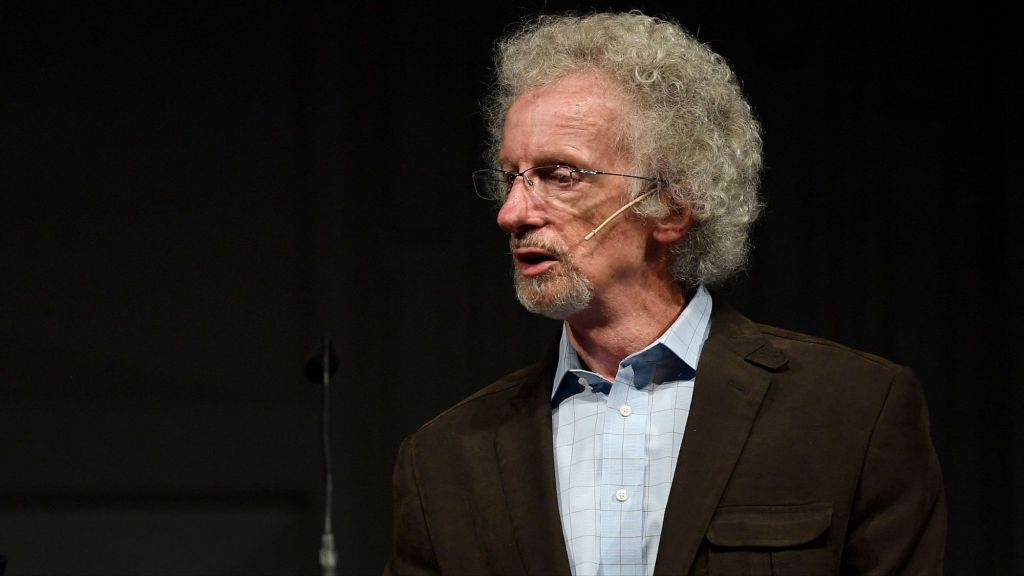
I want to respond to some objections raised against my initial piece on Yancey, though in truth it was never really about Yancey at all. It was about grace, what it is, how Scripture defines it, and why it matters. If the Body of Christ is ever to walk in true holiness and righteousness, so that a dying world can genuinely contrast us with itself, then grace must be taught and held in its proper biblical place. We have not been called to soothe the conscience of the saint, nor to dull the edge of God’s holiness, but to bear faithful witness to a God who is righteous, holy, and not to be treated lightly.
Philip Yancey presents a grace-first theology in which God’s mercy precedes human response, repentance is real but functions relationally rather than judicially, and the fear of God is redefined primarily as reverence and relational grief rather than warning or dread.
In this framework, repentance restores fellowship but does not place salvation genuinely at risk, and passages that warn of falling away are treated pastorally rather than with the full weight that tge words carry.. Yet Scripture speaks of those who were “once enlightened,” who “shared in the Holy Spirit,” and still “fell away,” and of judgment that is described as “a fearful thing to fall into the hands of the living God.” Jesus Himself warned that not everyone who says “Lord, Lord” will enter the kingdom, and that “the one who endures to the end will be saved.” The tension lies in whether these words are allowed to carry their full weight.
“Those once enlightened… who shared in the Holy Spirit… and then fell away.”
Hebrews and the warnings of Jesus present a gospel in which grace and holy fear coexist without contradiction.
Grace initiates salvation, yet believers are repeatedly urged to “hold fast,” to “take care lest there be an evil, unbelieving heart,” and to remember that “our God is a consuming fire.” This fear is not terror for the weak or the repentant, but sober awareness that holiness is real, covenant is serious, and perseverance matters. Scripture never pits love against Godly fear, but assumes they walk together in a proper union.
“Take care… lest there be an evil, unbelieving heart… for our God is a consuming fire.”
This tension is made unmistakable in the account of Ananias and Sapphira.
They were not outsiders but members of the church, and God judged deliberate hypocrisy in such a way that “great fear came upon the whole church.” The text offers no apology and no softening. The early believers learned, in a single moment, that the God who pours out grace also disciplines His people, and that His presence is not merely comforting but holy.
“Great fear came upon the whole church and upon all who heard these things.”
Throughout Scripture, promises are consistently attached to endurance and overcoming.
Life is promised to “the one who overcomes,” rest to those who “do not draw back,” and reigning with Christ to those who “remain faithful.” The other side of that promise is never hidden: hardening the heart, refusing to repent, or presuming upon grace carries consequence. These warnings are not written to frighten the faithful, but to awaken the complacent.
“To the one who overcomes… do not draw back… hold fast.”
This is why a softened, purely pastoral presentation of grace is ultimately dangerous. Grace was never meant to remove fear altogether, but to place it rightly. When grace is framed mainly to comfort, it risks producing peace without perseverance and assurance without obedience. There has always been a market for teachers who tell people what they want to hear, but Scripture was not written to soothe the unwatchful — it was written to form a people who endure, overcome, and remain faithful to the end.
“They will not endure sound teaching… turning aside to what they want to hear.”
I am less interested in his fall than I am in the response. Many who have read anything I have written over the years will note, much of it has been on grace, and of course, Phillip had much to write on that subject. This is my response to much of what I hear, and much of what I hear plays into “cheap grace,” and it’s multiple shades.
Grace That Saves vs. Grace That Reigns: A Cautionary Reflection
The issue before us is not whether sin is real, nor whether grace is necessary. Scripture is clear on both. The question is what kind of grace we are talking about, and what kind of Christianity it ultimately produces.
In recent years, public moral failures among respected Christian figures have often been framed almost exclusively as inevitable expressions of “shared human brokenness.” While this language sounds humble, it subtly shifts sin from a moral failing into some kind of inevitable human failing. In doing so, it does not merely acknowledge weakness, it lowers the expectation of transformation for the redeemed.
Scripture never denies that believers can sin. But it emphatically denies that sin remains our identity, our default, or our governing power. “How shall we who died to sin still live in it?” (Romans 6:2)
When Christian theology repeatedly insists that believers are always on the brink of collapse, always fundamentally the same as before conversion, it may sound realistic, but it is not apostolic. It is Romans 7 isolated from Romans 6, and Romans 7 elevated over Romans 8. It treats ongoing struggle as the final word, rather than the cross, the resurrection, and the indwelling Spirit.
The familiar phrase “we are just sinners saved by grace” is often offered as a summary of humility, yet it is theologically inncorrect. Scripture does not primarily identify believers as sinners with an added provision. It calls them saints, new creations, those freed from sin, those led by the Spirit, those no longer under condemnation.
Grace in the New Testament is not merely pardon after failure. It is power for obedience. It is the power to overcome. “For the grace of God has appeared… training us to renounce ungodliness and worldly passions.” (Titus 2:11–12)
When long-term, concealed patterns of sin emerge in the lives of Christian leaders, the appropriate response is not surprise, but neither is resignation. Scripture does not reduce such failures into “this is simply what humans do.” It speaks instead of accountability, sobriety, discipline, and, in some cases, disqualification. “Be not many teachers, for you will incur a stricter judgment.” (James 3:1)
An extended pattern of deception is not merely a momentary lapse. It reflects a sustained resistance to conscience and to the sanctifying work of the Spirit. To explain such outcomes primarily in terms of “low anthropology” is to misdiagnose the problem. The issue is not that we expected too much of human nature, but that we expected too little of regeneration.
Grace does not erase distinctions between light and darkness, faithfulness and betrayal, maturity and self-indulgence. Nor does it dissolve moral responsibility under the banner of shared frailty.
The New Testament does not warn believers against being shocked so much as it warns them to be sober. It is not unspiritual to be sobered by contradiction between confession and conduct. It is a recognition that truth was professed while obedience was withheld.
Grace does not merely arrive after the wreckage. Grace, when obeyed, prevents the wreckage. “The law of the Spirit of life in Christ Jesus has set you free from the law of sin and death.” (Romans 8:2)
To insist on this is not moralism, nor denial of weakness. It is fidelity to the gospel’s claim that sin no longer reigns, that believers are not trapped in inevitability, and that holiness is not exceptional but normative Christian life.
Grace that only forgives after the fall but never empowers before it is not amazing grace. It is cheap grace.
And cheap grace inevitably reframes defeat as realism and victory as naïveté.




 A Call To The Remnant