


The Doctrine That Christ Hates: The Rise and Return of the Nicolaitans (Did They Ever Leave?)
Christ’s Piercing Words
In the opening chapters of Revelation, the risen Christ speaks directly to His Church—piercing words, burning eyes, a two-edged sword proceeding from His mouth. Among the commendations and rebukes, there is one name that echoes with particular disdain: the Nicolaitans.
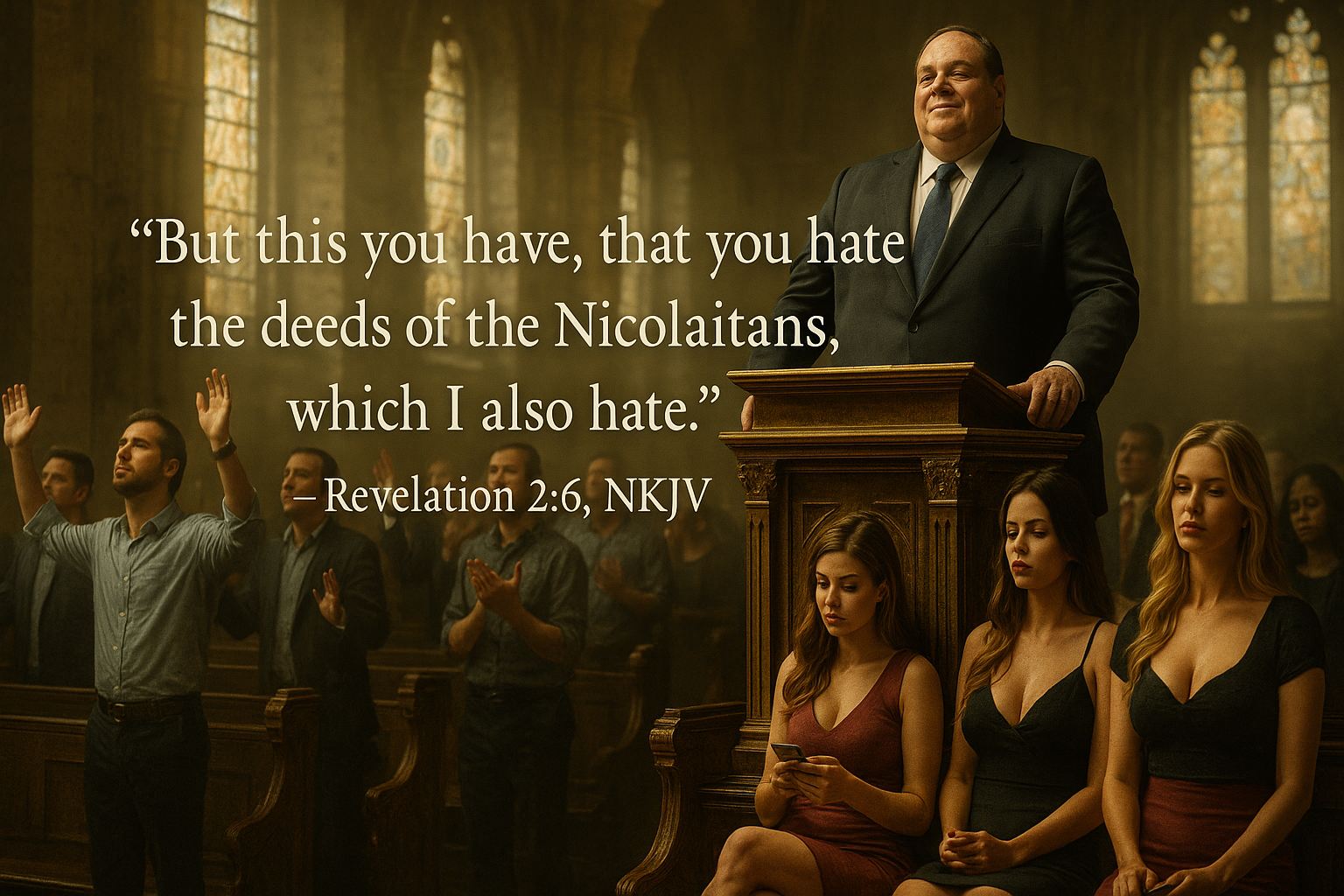
To the church in Ephesus, He says, “You hate the deeds of the Nicolaitans, which I also hate.” To Pergamos, a more grievous charge: “You have there those who hold the doctrine of the Nicolaitans, which thing I hate.”
Rarely does the Lord speak with such pointed hatred. What was it that provoked such divine revulsion?
Who Were the Nicolaitans?
The Nicolaitans were not outsiders attacking the faith. They were insiders—wolves in sheep’s clothing—sowing seeds of compromise. Rooted in a doctrine that perverted liberty and corrupted grace, they encouraged the early believers to indulge in idolatry and sexual immorality under the guise of Christian freedom. They blurred the line between the sacred and the profane. They whispered, “God is gracious,” while leading souls into darkness.
Many early church fathers—Irenaeus, Hippolytus, Epiphanius—linked them to Nicolas of Antioch, one of the first seven deacons. Whether or not this connection is historically solid, what is certain is the nature of their teaching: a doctrine that offered a crown without a cross, a kingdom without righteousness, and grace without repentance.
The Meaning of Their Name
The very name “Nicolaitan” is telling: Nikao—to conquer, and Laos—the people. The conquerors of the people.
This was a sinister inversion of Christ’s model of leadership, where the greatest is the servant of all. In their wake rose a clerical hierarchy, a division between clergy and laity—a spiritual caste system that stripped power from the Body and vested it in a ruling class.
The Nicolaitan spirit enthroned man-made authority in the place of the Spirit’s leading. It built platforms and pulpits where once there had been tables and towels.
A Doctrine of Compromise
But the sin of the Nicolaitans was not merely institutional—it was deeply immoral. They taught that one could follow Christ and still feast at pagan altars. They sanctified sensuality. They preached a gospel without holiness, a salvation without separation, a Christ without a cross.
In them was the spirit of Balaam, who taught Balak to seduce Israel through compromise. And like Balaam, they prophesied for profit.
Has the Doctrine Returned?
And now, we must ask with trembling hearts: Has the doctrine of the Nicolaitans returned to us in this present age? Or worse, has it never left?
Look around the modern Church. In the pursuit of relevance, we have forsaken reverence. In the name of love, we have lost truth. Preachers boast of grace, yet never speak of sin. Congregations are entertained but never convicted. Holiness is ridiculed. Repentance is optional.
Sexual immorality is tolerated—even celebrated—and leaders who should be shepherds build kingdoms in their own names. The altar has become a stage, and the sanctuary a marketplace. We have fashioned a Jesus who fits into our culture, but not a Christ who calls us out of it.
The Nicolaitan Spirit Today
The Nicolaitan spirit thrives where there is no fear of God. It preaches freedom, but enslaves. It promotes unity, but at the cost of truth. It claims to speak for Christ, yet it is the very doctrine He hates.
Yet not all have bowed the knee. Even in Pergamos, where Satan’s throne was, there were those who held fast to His name. And even now, Christ calls out to His people:
“Repent, or I will come to you quickly and will fight against them with the sword of My mouth.” (Revelation 2:16)
The Call to the Remnant
This is no small matter. The Lord of glory will not share His bride with Baal. He will not allow His house to be defiled with the teachings of those who flatter the flesh and poison the soul. The time has come for judgment to begin at the house of God. The line is being drawn.
Let every remnant heart arise and echo the cry of the saints in Ephesus:
“We hate the deeds of the Nicolaitans, which our Lord also hates.”
Let us cast down the altars of compromise, break the scepters of clerical control, and return to the simplicity and power of the faith once delivered to the saints. Let us be those who love truth more than comfort, holiness more than relevance, and Christ above all.
For the sword of His mouth still speaks. And the One who walks among the lampstands is watching.
 A Call To The Remnant